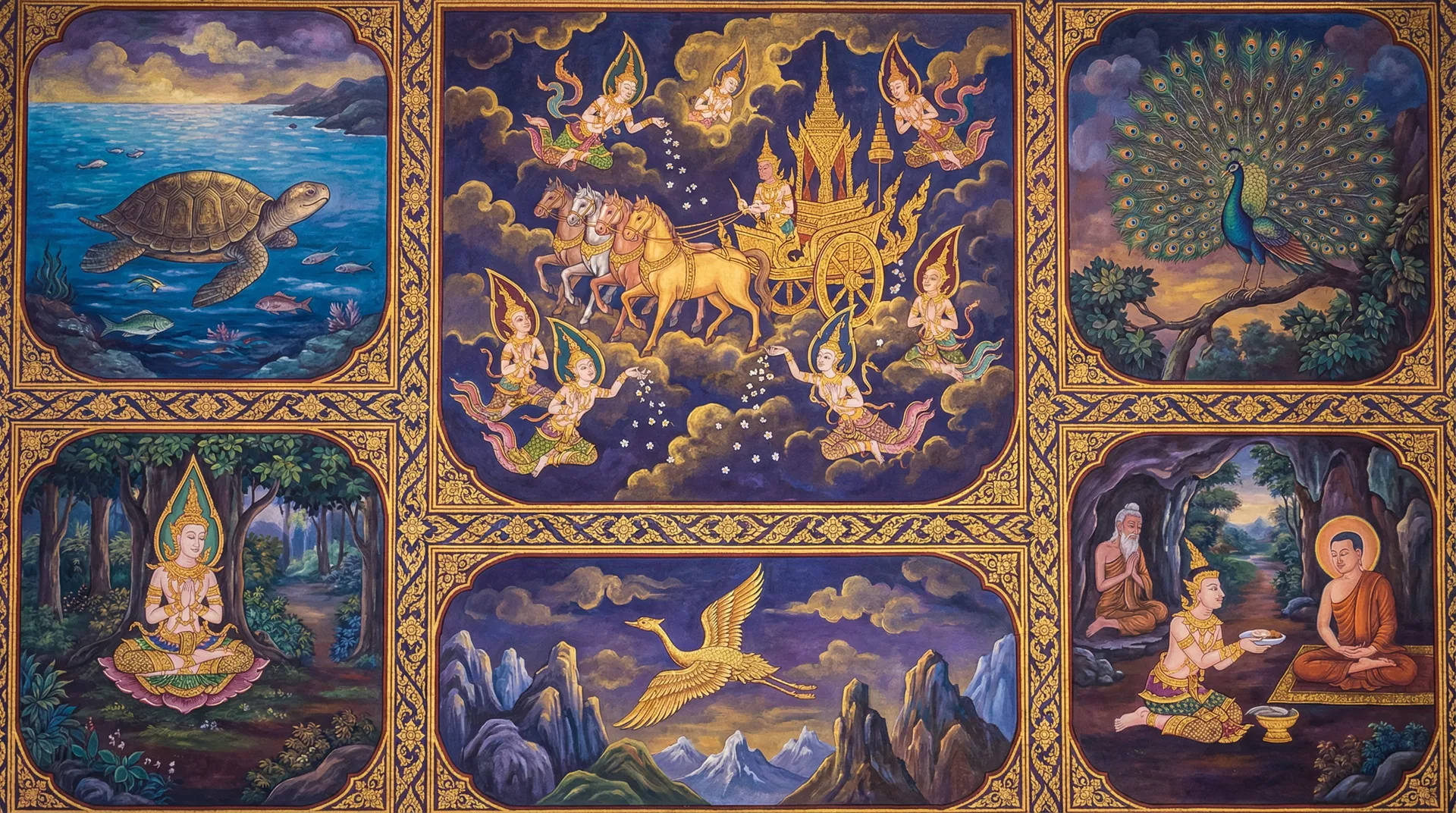
Mahosadha Jataka
Mahosadha Jataka
In the ancient kingdom of Mithila, a city famed for its wise ruler, King Vedeha, there lived a young man of extraordinary intellect named Mahosadha. Even from childhood, Mahosadha displayed a mind that was sharp, perceptive, and capable of solving the most complex problems with remarkable ease. He possessed an uncanny ability to foresee consequences, understand human nature, and devise ingenious solutions.
The king, hearing tales of this young prodigy, summoned Mahosadha to his court. He was intrigued by the boy's reputation and wished to test his wisdom firsthand. Upon meeting Mahosadha, the king was immediately impressed by his calm demeanor, his articulate speech, and the profound depth of his understanding, far beyond his years.
King Vedeha, recognizing Mahosadha's immense potential, appointed him as his chief advisor. From that day on, Mahosadha became the king's most trusted confidant, guiding him through matters of state, mediating disputes, and ensuring the prosperity and well-being of the kingdom.
The Jataka story recounts numerous instances of Mahosadha's brilliance. One famous tale involves a dispute between two wealthy merchants who claimed ownership of a beautiful, highly spirited horse. Both presented compelling arguments, and the king was at a loss to decide. Mahosadha, after observing the horse and listening to the merchants, proposed a simple yet brilliant test. He instructed that the horse be brought to a field. If the horse ran towards the merchant who claimed it, then that merchant would be deemed the true owner. The horse, however, remained indifferent to both.
Mahosadha then suggested a different approach. He had the horse brought to the field again, and this time, he had the first merchant lead it away. The horse followed willingly. Then, he had the second merchant lead it away. The horse followed just as willingly. The merchants were confused. Mahosadha then revealed his insight: the horse was not owned by either, but was a stray that had been cared for by both. He suggested they share the cost of its upkeep and the benefits it provided, a solution that satisfied both parties.
Another time, a dispute arose between the king and the queen regarding the true nature of a courtier who was ostensibly loyal but harbored ill intentions. The king believed the courtier was faithful, while the queen suspected his duplicity. Mahosadha, tasked with resolving this disagreement, devised a clever scheme. He arranged for a public ceremony where valuable gifts were to be awarded. The courtier, driven by his greed, subtly maneuvered himself to receive the most prized gift, revealing his self-serving nature to all, including the king, without a word being spoken against him.
Mahosadha's wisdom extended beyond resolving disputes. He was instrumental in advising the king on matters of law, economics, and even defense. He foresaw potential conflicts and devised strategies to prevent them, often through diplomatic means rather than warfare. He understood that true strength lay in foresight, justice, and the well-being of the populace.
Once, a neighboring kingdom threatened Mithila with war. The king was advised by some to prepare for battle, but Mahosadha suggested a different course. He proposed that Mithila should appear weak and vulnerable, encouraging the enemy to advance further into their territory. Once the invading army was deep within Mithila's borders, far from their supply lines and accustomed to easy victories, Mahosadha orchestrated a series of strategic maneuvers, utilizing the terrain and the local population's knowledge, to surround and capture the enemy forces with minimal bloodshed. His strategy was not one of brute force, but of calculated deception and superior planning.
Mahosadha's wisdom was not limited to worldly affairs. He also possessed deep spiritual insight and often guided King Vedeha and the people towards righteous living. He understood that a just and prosperous kingdom was built not only on cleverness but also on ethical principles and compassion.
His counsel was sought far and wide, and his reputation as the wisest man in the land grew with each passing year. He never misused his intelligence for personal gain, always prioritizing the welfare of the kingdom and its people. His actions were driven by a profound sense of duty and a desire to uphold justice and truth.
The reign of King Vedeha, guided by the unparalleled wisdom of Mahosadha, became a legendary era of peace, prosperity, and justice. The kingdom of Mithila flourished, a testament to the power of intelligence, foresight, and a commitment to righteous governance.
The Mahosadha Jataka serves as a timeless reminder that true wisdom is not merely about accumulating knowledge, but about applying it with discernment, compassion, and foresight for the benefit of all beings.
— In-Article Ad —
💡Moral of the Story
Exceptional intelligence, when coupled with foresight, justice, and compassion, is the greatest asset for ensuring the well-being, prosperity, and peace of a kingdom and its people.
Perfection: Wisdom (Panna Paramita)
— Ad Space (728x90) —
More Jataka Tales You May Enjoy
 478Terasanipāta
Titthira Jataka
Titthira Jataka In the verdant kingdom of Kosala, nestled beside the gentle flow of the Sarayu River...
💡 The truth, though sometimes difficult to speak or to hear, ultimately prevails and exposes the destructive consequences of greed and dishonesty.
 347Catukkanipāta
Mūkapakkha Jātaka
The Mute Bird JātakaIn the lush, vibrant jungle of the Himalayan foothills, where ancient trees touc...
💡 True expression and inner beauty can be conveyed through actions and creations, transcending physical limitations and fostering understanding and peace.
 353Pañcakanipāta
Sama Jataka
Sama Jataka In the verdant foothills of the Himalayas, nestled beside a crystal-clear river, lived a...
💡 Selfless devotion, compassion, and understanding the consequences of one's actions are paramount.
412SattakanipātaKusa-Jataka
Kusa-JatakaIn the ancient kingdom of Videha, nestled beside the mighty River Ganges, reigned King Ok...
💡 True worth is not measured by wealth or status, but by compassion, wisdom, integrity, and the courage to face challenges with a pure heart. Inner beauty and strength are far more valuable than outward appearances.
 281Tikanipāta
Mahājanaka Jātaka
Mahājanaka JātakaIn the ancient city of Mithila, nestled beside the sacred river Aciravatī, reigned ...
💡 Even in the face of overwhelming adversity, perseverance and unwavering courage can lead to success. Never give up on your dreams, no matter how difficult the path may seem.
 386Chakkanipāta
Mugapakkha Jataka
Mugapakkha JatakaIn the heart of a lush, ancient forest, where sunlight dappled through emerald cano...
💡 True strength lies not in power or ambition, but in compassion, forgiveness, and unwavering virtue. Even the deepest betrayal can be overcome by a benevolent heart.
— Multiplex Ad —