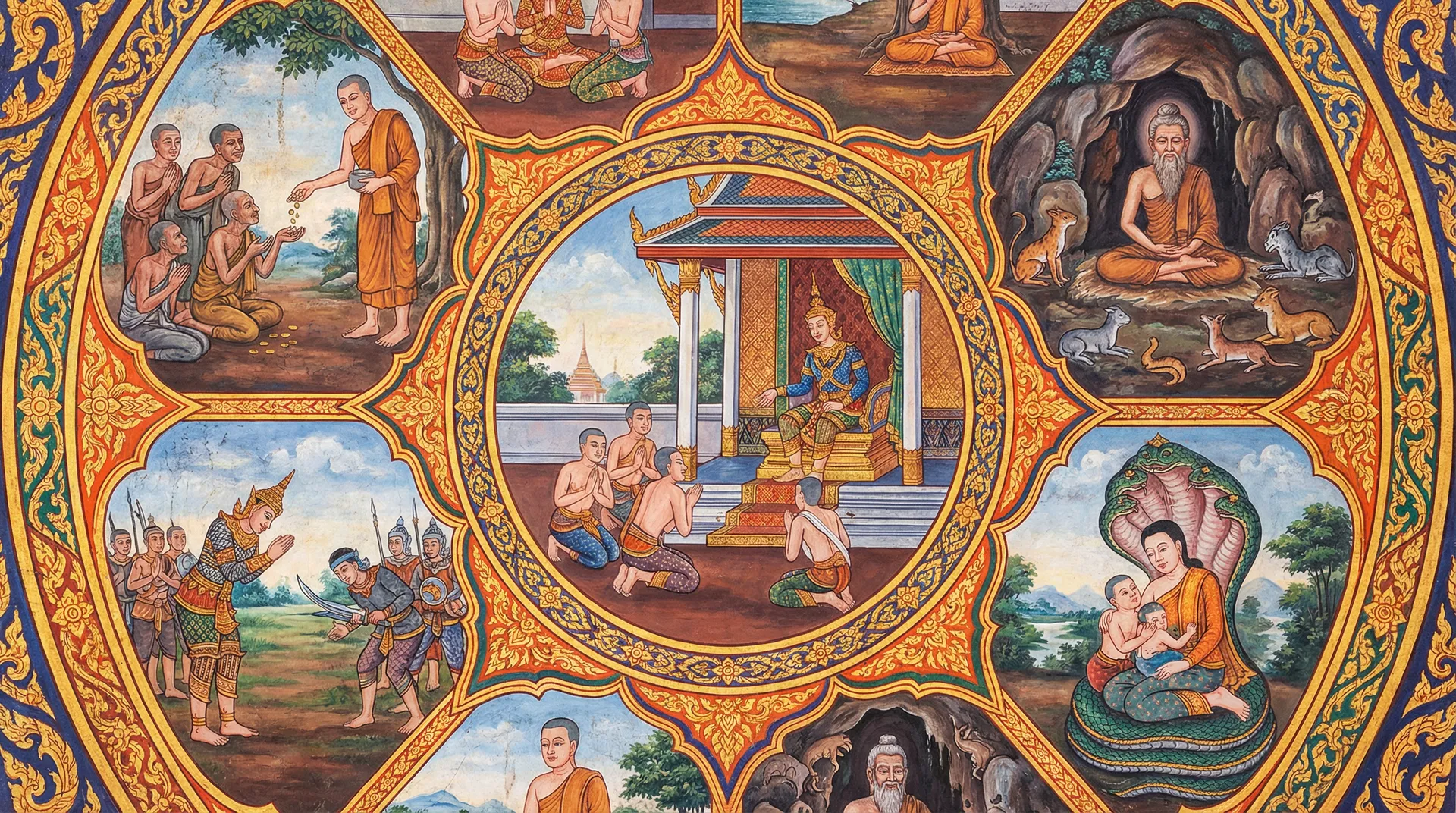
Sama Jataka
Sama Jataka
In the verdant foothills of the Himalayas, nestled beside a crystal-clear river, lived a hermit named Mandavya and his wife. They were devout ascetics, living a life of simplicity and meditation. Their greatest joy and devotion, however, was their son, Sama. Sama was a child of unparalleled purity and devotion. He loved his parents with a boundless affection, dedicating his days to serving them and assisting them in their spiritual practices.
One fateful day, while Sama was out collecting fruits and herbs in the forest to prepare meals for his parents, disaster struck. The King of Benares, a man known for his passion for hunting, was on a royal expedition in the same forest. Lost in the thrill of the chase, the King, with his bow and arrow, mistook the young Sama, who was bending down to drink water from the river, for a deer.
In a moment of tragic misjudgment, the King loosed his arrow, striking Sama. The young man, mortally wounded, fell into the river. The King, realizing his grave error, was filled with immense remorse. He rushed to Sama's side, but it was too late. Sama, with his dying breath, displayed an extraordinary level of compassion, asking the King not to grieve excessively, but to break the news to his parents with gentleness.
The King, devastated, carried Sama's body back to the hermitage. When he confessed his deed to the hermit and his wife, their grief was immeasurable. They cried out in anguish, their hearts broken by the loss of their beloved son. The King, witnessing their profound sorrow, felt the weight of his karma crushing him.
In his despair, the King pleaded with the hermit and his wife to forgive him. He offered them riches, titles, and the services of his entire kingdom, anything to alleviate their suffering. But the hermit and his wife, though devastated, were also individuals of great spiritual fortitude. They understood the nature of impermanence and the laws of karma.
The hermit, with a heavy heart but a calm demeanor, said to the King, "Your Majesty, we forgive you. We understand that this was a tragic accident, and we do not harbor ill will. However, our grief is deep, and we wish to perform the funeral rites for our son according to our traditions."
The King, humbled and deeply ashamed, agreed to their request. He personally helped them carry Sama's body to the cremation ground and waited patiently while they performed the sacred rituals. The King, filled with a profound sense of guilt, decided to stay at the hermitage and serve the grieving parents, taking care of their needs and offering whatever comfort he could.
As he served them, the King began to witness the extraordinary devotion and love that Sama had for his parents. He saw how the hermit and his wife, despite their immense loss, continued their spiritual practices with unwavering dedication, drawing strength from their faith and their understanding of dharma.
One day, the hermit and his wife, weakened by grief and the rigors of their ascetic life, fell gravely ill. The King, seeing their suffering, was overcome with compassion. He remembered Sama's pure heart and his selfless love for his parents. Driven by a desire to alleviate their pain and to honor Sama's memory, the King prayed with all his might. He prayed for the hermit and his wife to be healed, and in his prayer, he offered his own life in exchange, if it would bring them relief.
As the King finished his prayer, a miracle occurred. The hermit and his wife miraculously recovered from their illness. The King, exhausted but filled with a sense of peace, felt his own life force ebbing away. He had indeed given his life for theirs, a selfless act born from his deep remorse and compassion.
The story of Sama, his selfless love, and the King's ultimate sacrifice became a legend. It taught that the highest form of devotion is selfless service, and that true compassion can lead to miraculous outcomes. It also underscored the profound consequences of our actions and the importance of mindfulness, especially for those in positions of power.
— In-Article Ad —
💡Moral of the Story
Selfless devotion, compassion, and understanding the consequences of one's actions are paramount.
Perfection: Compassion (Karuna)
— Ad Space (728x90) —
More Jataka Tales You May Enjoy
 144Ekanipāta
Maca Hamsa Jataka
The Tale of the Golden Swan King In the realm of the Himalayas, amidst snow-capped peaks and crystal...
💡 True wealth lies in inner virtue, wisdom, and compassion, not in material possessions which are transient.
 306Catukkanipāta
Mahā-Ummagga Jātaka
The Great Tunneling TaleLong ago, in the ancient city of Mithila, ruled a wise and just king named J...
💡 True wisdom lies not just in knowledge, but in the ability to apply it with perseverance and compassion to overcome adversity. Even the most daunting challenges can be surmounted with a clear vision, unwavering determination, and the unity of a community.
115EkanipātaMittavindaka Jātaka
Mittavindaka Jātaka In the bustling city of Savatthi, there lived a wealthy merchant named Mittavind...
💡 Extreme stinginess leads to isolation, regret, and a life devoid of true happiness. Generosity and compassion are the real treasures that enrich life.
83EkanipātaSihaccha Jātaka
Sihaccha Jātaka In the ancient city of Vārāṇasī, there lived a king named Dhṛtarāṣṭra, a ruler known...
💡 Pride can blind us to wisdom. True strength lies in humility and the willingness to learn from others, regardless of their status or perceived intelligence.
72EkanipātaThe Golden Elephant Jataka
In a tranquil land, blessed with lush forests and a clear, flowing river, lived a herd of wild eleph...
💡 Wisdom is found in careful observation, unbiased listening, and the humility to admit one's mistakes.
 249Dukanipāta
Sarabhanga Jataka
Sarabhanga JatakaIn the ancient land of Gandhara, amidst rolling hills and fertile valleys, lived a ...
💡 True strength lies not in external power or worldly achievements, but in the unwavering discipline and mastery of one's own mind.
— Multiplex Ad —