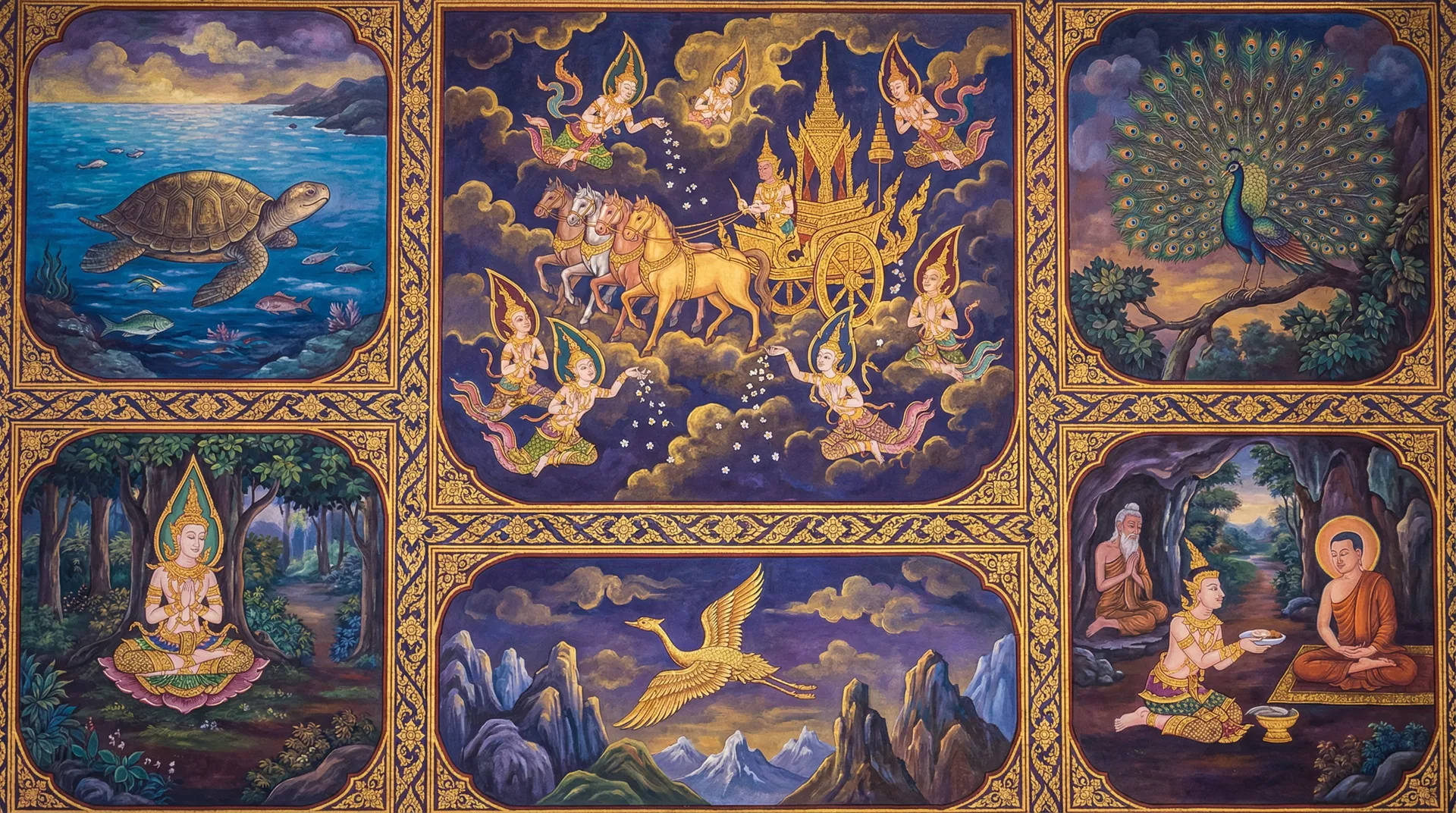
Nimi Jataka
Nimi Jataka
In the ancient and glorious city of Mithila, capital of the Videha kingdom, ruled King Nimi. He was a monarch of great virtue, renowned for his unwavering commitment to righteousness, his generosity, and his profound spiritual insights. His reign was a beacon of dharma, inspiring his subjects to live lives of truth and compassion.
King Nimi was a devout follower of the teachings of the Brahmins, who emphasized the importance of virtuous living, adherence to duty, and the performance of meritorious deeds. He was particularly fond of listening to discourses on righteousness and the path to spiritual liberation. He often performed great sacrifices, not with the intention of harming animals, but as symbolic acts of offering his ego and worldly attachments.
One day, a group of Brahmins, who were skilled in celestial arts, approached the king. They spoke of a heavenly realm, a celestial city called Sunimitta, where beings of great merit resided. They described its beauty, its tranquility, and the unending bliss experienced by its inhabitants. Intrigued, King Nimi expressed his desire to witness this celestial abode.
The Brahmins, with their magical abilities, offered to transport the king to Sunimitta. However, they warned him that the journey and the stay would depend on his continued adherence to the highest virtues. The king, eager to experience this heavenly realm, readily agreed.
The Brahmins performed their rituals, and through their mystic powers, they transported King Nimi to the celestial city. He arrived in Sunimitta, a place of breathtaking beauty, filled with luminous beings and serene landscapes. He was welcomed by celestial maidens and celestial beings who offered him exquisite food and drink. He was given a magnificent palace to reside in and was treated with the utmost honor and reverence.
King Nimi was overjoyed. He reveled in the celestial pleasures, the music, the dances, and the delightful company. He lived in Sunimitta for what seemed like a glorious eternity, forgetting his kingdom and his responsibilities back on Earth.
However, the celestial realm, though wondrous, was not eternal. The Brahmins had explained that such experiences were temporary and dependent on the king's merit. As King Nimi indulged in the pleasures, his adherence to strict virtuous conduct began to subtly waver. He became accustomed to the ease and luxury, and the rigorous discipline required to maintain his presence in such a realm started to fade.
Meanwhile, back in Mithila, the kingdom began to suffer from the king's absence. His ministers tried to govern, but without their wise ruler, discord and neglect began to creep in. The people grew restless and worried about their king's disappearance.
The Brahmins, observing the subtle decline in King Nimi's virtue and the subsequent weakening of his connection to Sunimitta, realized that his time there was drawing to a close. They approached him once more. "Your Majesty," they said gently, "your time in this celestial realm is nearing its end. Your merit, which sustained your presence here, is diminishing. You must prepare to return to your earthly kingdom."
King Nimi, jolted from his blissful reverie, felt a pang of regret. He had become so enamored with the celestial pleasures that the thought of returning to the mundane world filled him with disappointment. He had forgotten the lessons of impermanence and the true nature of spiritual progress.
The Brahmins then imparted a crucial teaching. "Your Majesty, the true celestial realm is not a place one visits, but a state of mind cultivated through unwavering adherence to dharma. The pleasures of Sunimitta are temporary, but the peace and joy derived from a virtuous heart are eternal. You have experienced the fruits of merit, but you must now cultivate the seeds of true liberation."
They explained that the real purpose of such experiences was not to indulge, but to gain wisdom and inspiration to live a more righteous life back on Earth. They reminded him of his duties as a king and the importance of guiding his people towards spiritual well-being.
With a heavy heart but renewed understanding, King Nimi bid farewell to Sunimitta and its celestial inhabitants. The Brahmins, through their powers, returned him to his throne in Mithila.
Upon his return, King Nimi was a changed man. The experience in Sunimitta had not been in vain. He had tasted the rewards of merit, but he had also learned a profound lesson about the impermanence of even the most blissful states and the importance of continuous spiritual effort.
He addressed his court, his voice filled with newfound wisdom. "My dear ministers and subjects," he declared, "I have witnessed a wondrous realm, a place of great beauty and joy. But I have also learned that true happiness does not lie in external pleasures, however divine, but in the cultivation of a pure and virtuous heart. The celestial realm is not a destination to be reached, but a state of being to be achieved through unwavering dedication to dharma, compassion, and selfless service."
From that day forward, King Nimi ruled his kingdom with even greater wisdom and devotion. He focused on spiritual development, encouraging righteousness, generosity, and compassion among his people. He understood that the true celestial realm was within, accessible to all who dedicated themselves to the path of virtue.
The story of King Nimi's celestial sojourn became a celebrated teaching, reminding all that while the fruits of merit are sweet, the path to true liberation lies in cultivating the virtues that lead to an unshakeable inner peace, independent of external circumstances.
— In-Article Ad —
💡Moral of the Story
True spiritual attainment and lasting happiness are not found in temporary heavenly pleasures, but in the continuous cultivation of virtue, compassion, and righteousness within one's own heart.
Perfection: Wisdom / Righteousness (Dhamma)
— Ad Space (728x90) —
More Jataka Tales You May Enjoy
 271Tikanipāta
Nimi Jataka
Nimi JatakaLong ago, in the ancient city of Mithila, ruled a wise and just king named Nimi. His reig...
💡 True fulfillment is found not in escaping worldly duties for heavenly pleasures, but in embracing one's responsibilities with virtue and compassion, thereby continuing spiritual growth amidst life's challenges.
 18Ekanipāta
The Bodhisatta as a King of Deer
The Bodhisatta as a King of DeerIn the heart of a vast and ancient forest, where sunlight dappled th...
💡 True leadership and love manifest in selfless sacrifice, inspiring even the hardest hearts.
140EkanipātaSaranadbhu Jataka
The Tale of the Generous King and the WeaverIn the ancient and prosperous city of Varanasi, there re...
💡 True generosity lies not just in giving material possessions, but in empowering others to utilize their skills and potential, thereby ensuring their long-term well-being and prosperity.
16EkanipātaThe Monkey King's Courage
The Monkey King's CourageIn the heart of a verdant jungle, teeming with life and vibrant with the ch...
💡 True courage lies in facing fear and acting for the protection of others, regardless of the odds.
 492Pakiṇṇakanipāta
The Tale of the Grateful Swan
The Tale of the Grateful Swan Once upon a time, in a kingdom blessed with verdant forests and sparkl...
💡 Kindness shown to any living being, no matter how small or seemingly insignificant, is never wasted and can return to us in unexpected and miraculous ways. Gratitude is a powerful force for healing and good.
59EkanipātaThe Tale of the Kassapa City Maiden
In the prosperous realm of Kosala, in days long past, there lay a small city named Kassapa. This cit...
💡 True intentions are often revealed through actions, not words. Observe closely, for the subtlest signs can uncover the deepest truths.
— Multiplex Ad —