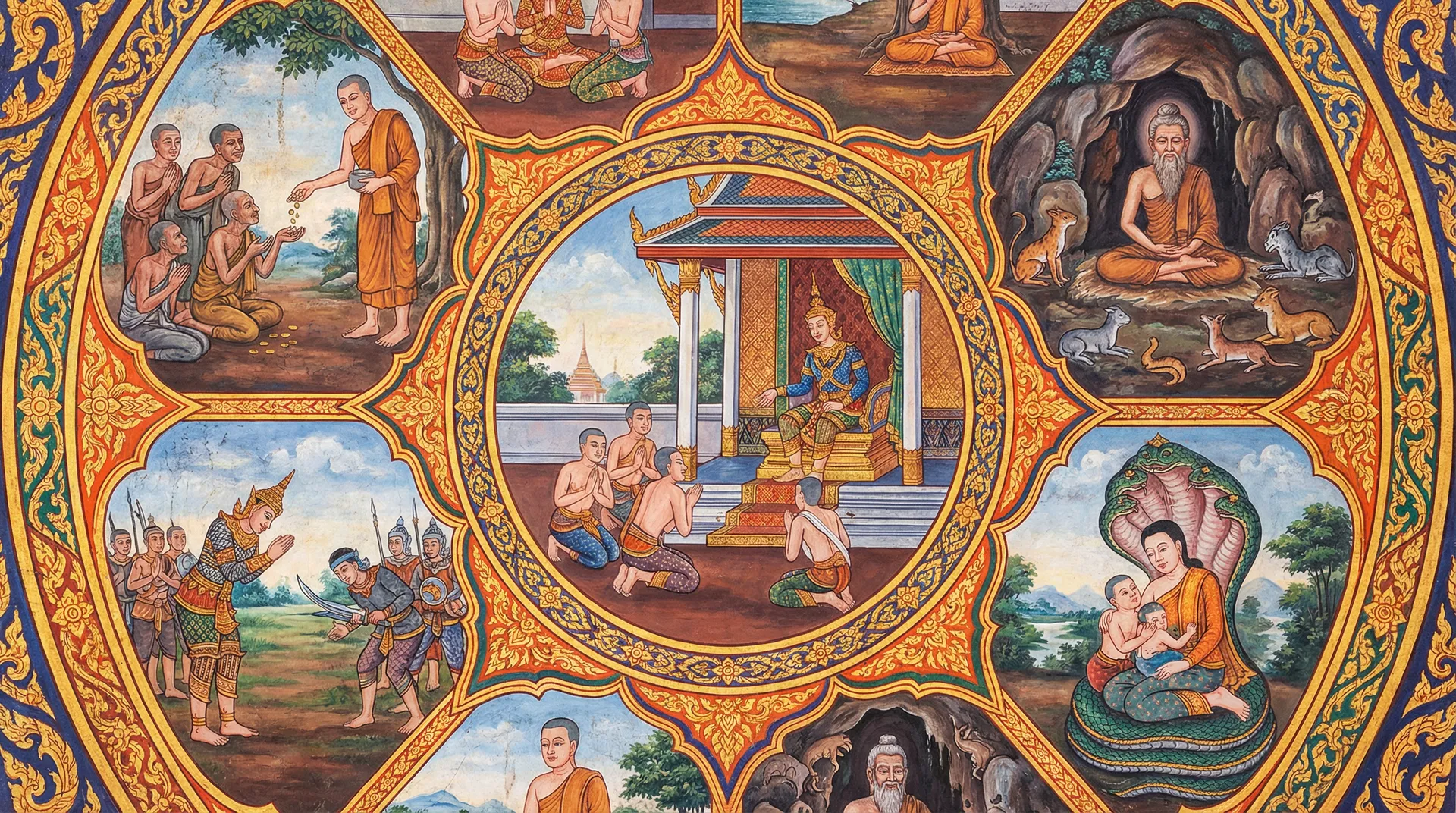
MUGA-PAKKA JATAKA
MUGA-PAKKA JATAKA
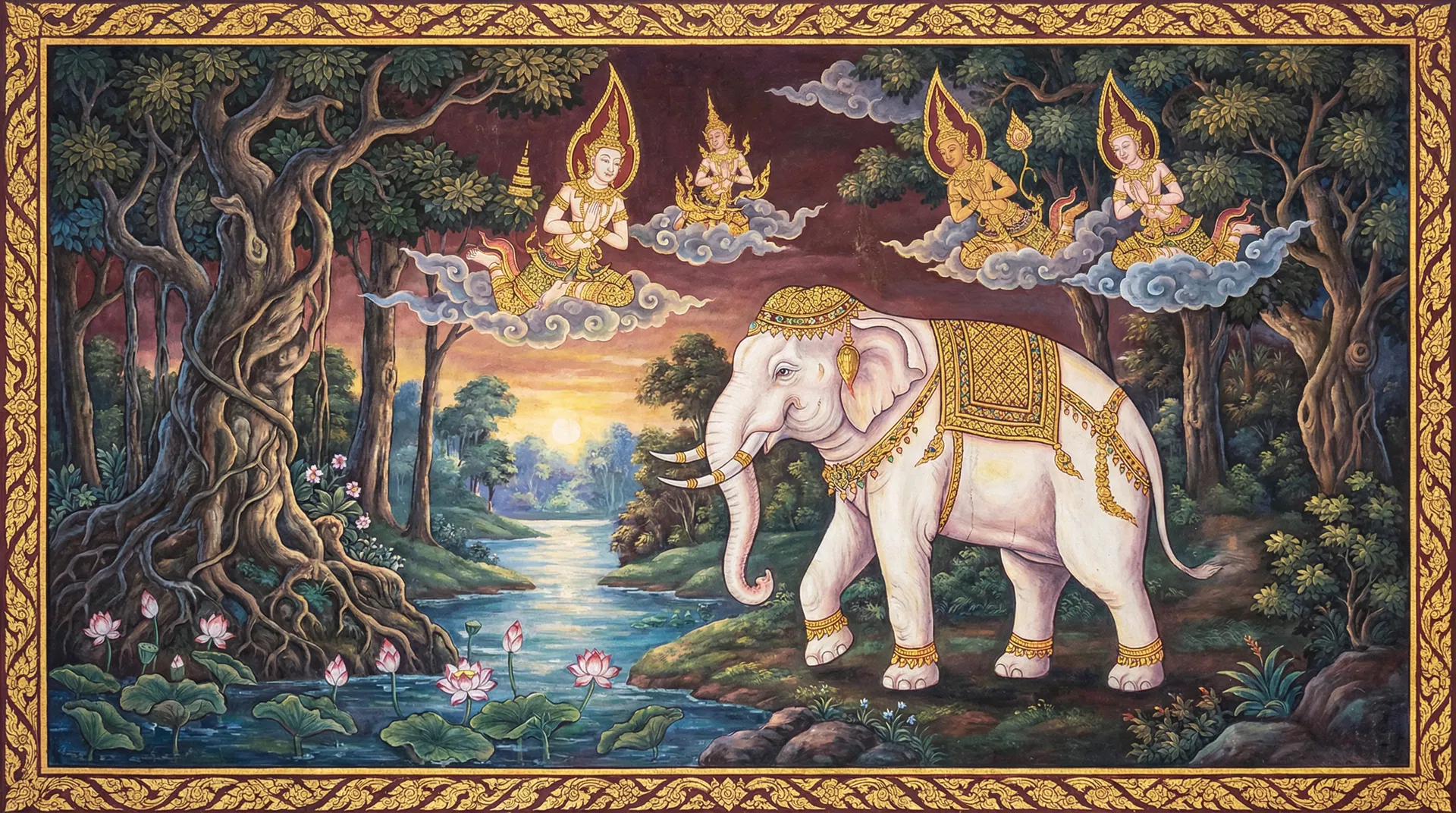
In the heart of a vast jungle, where ancient trees stood like silent sentinels and a winding river flowed with a gentle murmur, lived a herd of elephants. Among them was a magnificent bull elephant, known for his immense strength, his unwavering courage, and his profound sense of justice. This noble elephant, in his past life, was the Bodhisattva, and he dedicated his existence to protecting the weaker members of his herd and upholding righteousness.
One day, a formidable lion, known for its ferocity and its insatiable hunger, entered the elephants' territory. The lion, driven by pride and a thirst for dominance, began to terrorize the herd, preying on the young and the old, spreading fear and chaos. The elephants, though strong, were filled with dread. Their leader, an old and weary bull, could do little to deter the lion's onslaught.
The Bodhisattva elephant, witnessing the suffering of his kin, could no longer stand idly by. He knew that the lion, though powerful, was driven by malice and a lack of true understanding. He decided to confront the lion, not with brute force alone, but with wisdom and unwavering resolve.
He approached the lion, who was basking in the sun, a cruel glint in its eyes. "Lion," the Bodhisattva boomed, his voice resonating with authority, "you have brought great suffering to my herd. Your actions are born of cruelty and a disregard for the lives of others. Why do you behave in such a manner?"
The lion, startled by the elephant's boldness, sneered. "I am the king of the jungle!" it roared. "My strength is unmatched, and I take what I please. Your pathetic herd is merely a source of sustenance for me. Your pleas for mercy are as weak as your resolve."
The Bodhisattva remained calm. "Strength without wisdom is but brute force," he replied. "And hunger without restraint leads only to destruction. You claim to be king, but a true king protects his subjects, he does not devour them. You are driven by a base instinct, not by true leadership."
The lion, enraged by the elephant's defiance, charged. The Bodhisattva elephant met the charge with his mighty tusks, but he did not aim to kill. He used his immense strength to push the lion back, to subdue it, and to demonstrate his power without resorting to unnecessary violence. The battle was fierce, the ground shaking with their struggle. The Bodhisattva, with his superior size and his calculated movements, managed to overpower the lion, pinning it to the ground with his foot.
"Now, lion," the Bodhisattva said, his voice stern but not cruel, "you see that your brute strength is no match for true resolve and the power of righteousness. I could end your life right now. But I do not wish to shed blood unnecessarily. Instead, I offer you a choice: either leave this territory forever and cease your terrorizing ways, or face the consequences of your continued aggression."
The lion, humbled and terrified by the elephant's power and his unexpected mercy, felt a flicker of shame. It had never encountered such a creature – one so strong, yet so just. The elephant's words about true kingship resonated within its primal mind.
"I... I will leave," the lion stammered, its pride wounded but its life spared. "I will trouble your herd no more."
The Bodhisattva elephant released the lion, watching as it limped away into the depths of the jungle. He then turned to his herd, who had watched the confrontation with bated breath.
"My brothers and sisters," he announced, his voice filled with a gentle reassurance, "the threat has passed. Remember this day. True strength is not in causing harm, but in protecting the innocent and upholding justice. Let us live in peace and harmony, always mindful of our responsibilities to one another."
The elephants, filled with gratitude and admiration for their protector, trumpeted their thanks. From that day forward, the Bodhisattva elephant led the herd with unwavering courage and wisdom. The jungle remained a safer place, as the story of the noble elephant who tamed the ferocious lion spread, serving as a testament to the power of righteousness over brute force and the importance of compassion even towards one's enemies.
— In-Article Ad —
💡Moral of the Story
True strength lies not in aggression or domination, but in courage, justice, and the protection of the vulnerable. Compassion and wisdom are more powerful than brute force, and even enemies can be overcome through righteousness.
Perfection: Courage
— Ad Space (728x90) —
More Jataka Tales You May Enjoy
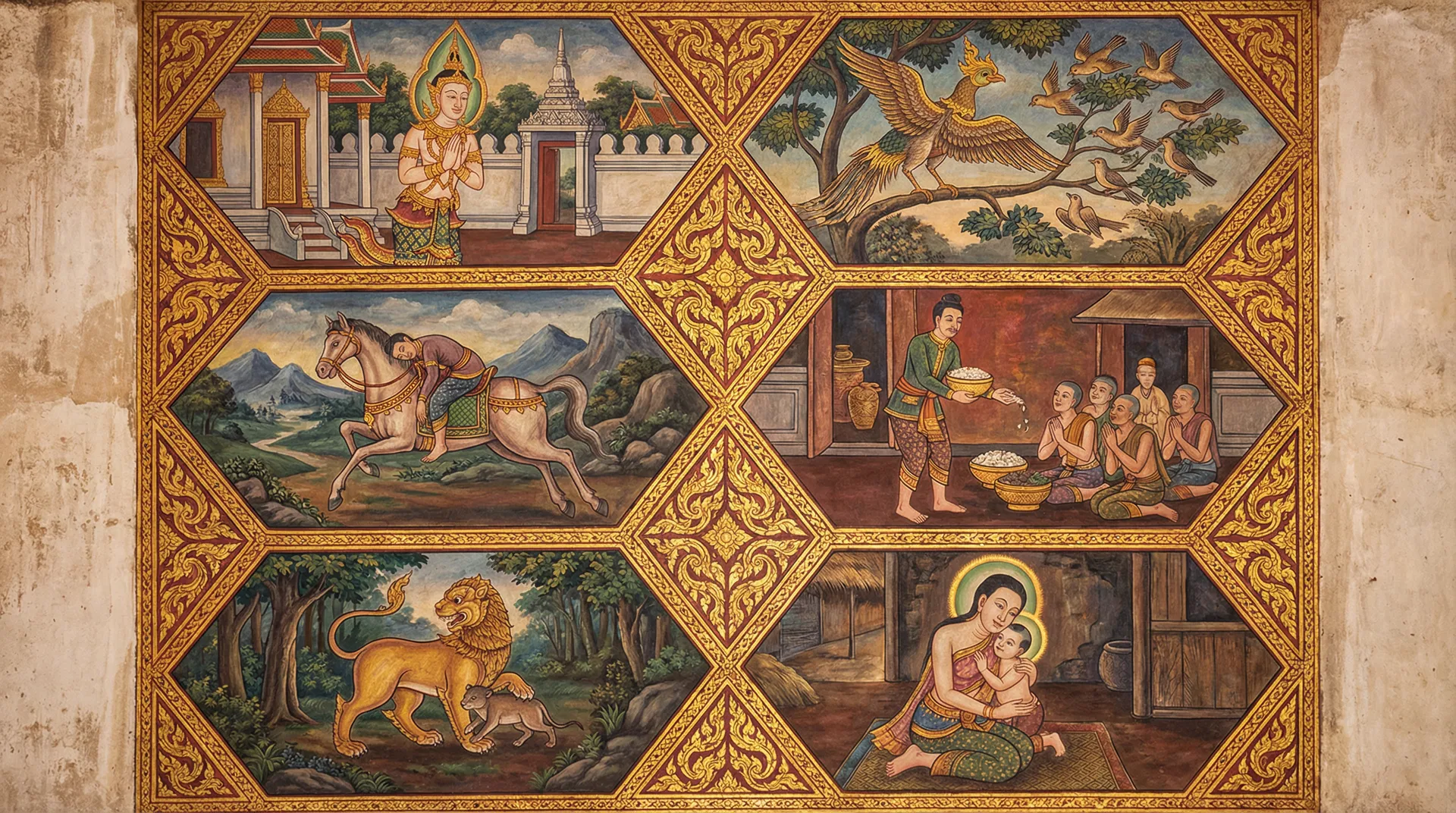 383Chakkanipāta
Nemi Jātaka
Nemi Jātaka In the glorious city of Mithila, renowned for its magnificent architecture and the wisdo...
💡 Understanding the consequences of actions (karma) through a clear vision of heavens and hells strengthens one's resolve to live a virtuous life and seek liberation from the cycle of rebirth.
 319Catukkanipāta
Maha-Ummagga Jataka
Maha-Ummagga JatakaIn the heart of the ancient kingdom of Mithila, under the reign of the wise King ...
💡 Profound intelligence, foresight, and logical reasoning are essential for effective leadership, capable of overcoming even the most daunting challenges and ensuring the prosperity and well-being of a kingdom.
312CatukkanipātaMahosadha Jataka
Mahosadha JatakaIn the ancient city of Mithila, renowned for its bustling marketplaces and magnifice...
💡 True wisdom lies in understanding the heart of matters and the nature of beings, leading to just and insightful solutions.
 283Tikanipāta
Sādhina Jātaka
Sādhina JātakaIn the sun-drenched kingdom of Kalinga, ruled a king named Sādhina, whose reign was ma...
💡 True wealth is not measured by material possessions, but by the well-being of one's people and the purity of one's heart. Greed leads to suffering and the decline of prosperity.
333CatukkanipātaSattigumba Jātaka
Sattigumba JātakaIn the verdant forest of Kosala, where ancient trees whispered secrets to the wind ...
💡 True strength lies not in brute force or domination, but in unwavering courage, righteousness, and the defense of justice.
325CatukkanipātaMaha-Ummagga Jataka
Maha-Ummagga JatakaIn the bustling and prosperous city of Mithila, there reigned a king named Vedeha...
💡 True wisdom is practical, applied for the benefit and welfare of others. Foresight, ingenuity, and a genuine concern for the well-being of the community are far more valuable than mere intellectual cleverness or abstract knowledge.
— Multiplex Ad —