Phanasa Jataka
Phanasa Jataka
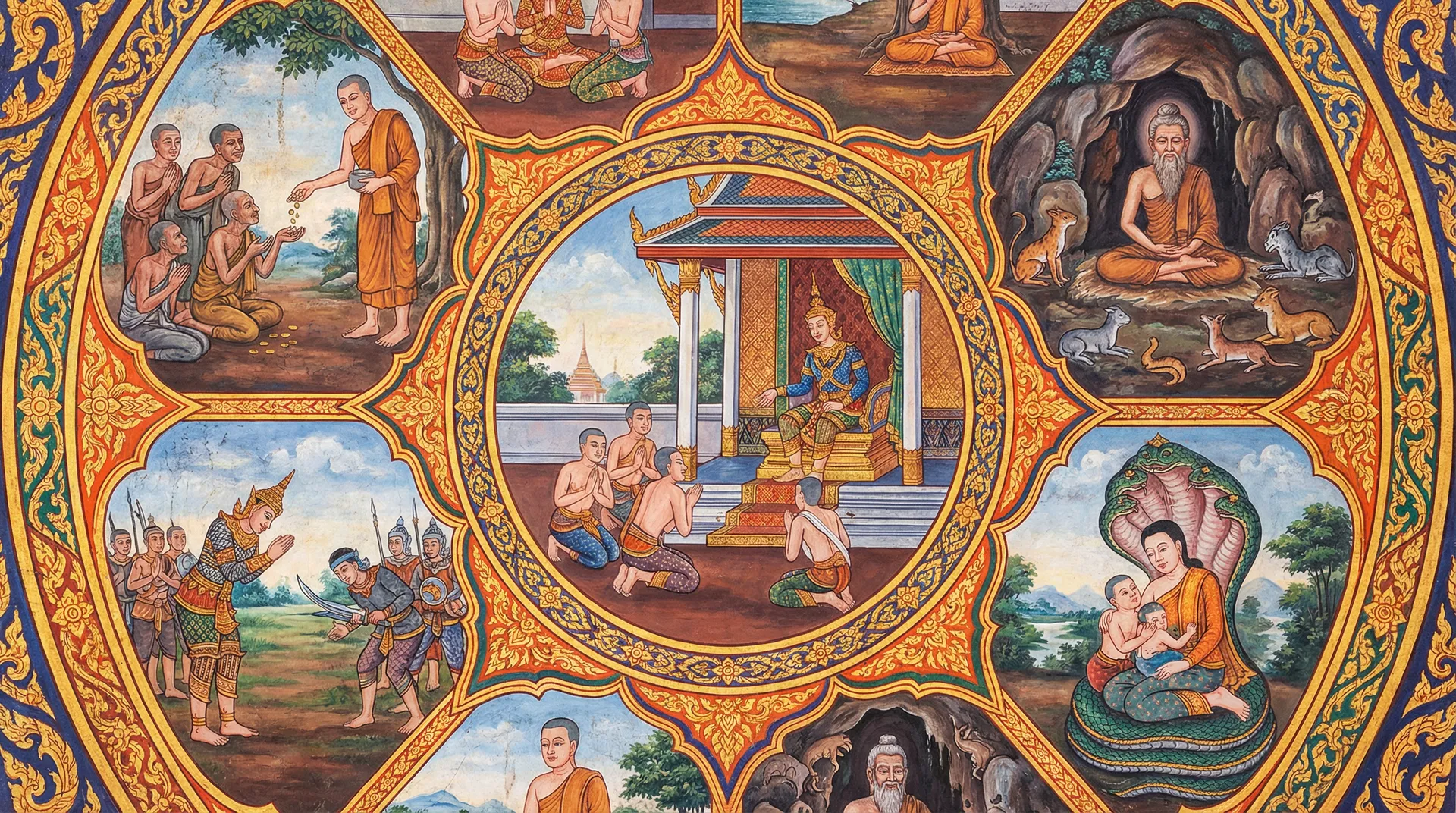
In the ancient city of Ujjeni, lived a kind and virtuous Bodhisattva who was born as a jackal. This particular jackal was known throughout the forest for his wisdom and his unwavering commitment to truth and justice. He lived a simple life, sharing the forest's bounty with his fellow creatures, always offering counsel and support to those in need.
One day, a great famine struck the land. The rivers dried up, the trees withered, and food became scarce. The animals of the forest were on the brink of starvation, their hope dwindling with each passing day. Amidst this despair, the Bodhisattva jackal, despite being weakened himself, rallied the other animals.
"My friends," he proclaimed, his voice resonating with a quiet strength, "we cannot succumb to despair. We must work together, pool our resources, and find a way to survive. If we act with wisdom and unity, we can overcome this hardship."
He then proposed a plan: they would search for hidden springs and undiscovered patches of edible roots and berries. He appointed tasks to each group of animals, assigning the swiftest to scout the farthest reaches of the forest, the strongest to clear paths, and the most knowledgeable to identify safe food sources.
The Bodhisattva himself, though a jackal, possessed an extraordinary sense of smell that could detect water from miles away. He led a group of animals on a perilous journey, guiding them through treacherous terrain, his keen senses constantly alert.
Their search was arduous. They faced exhaustion, fear, and the constant gnawing of hunger. Many animals began to lose hope, their faith in the Bodhisattva's plan wavering. Some even whispered doubts, suggesting that they should abandon the search and succumb to their fate.
One day, a group of animals, led by a cunning but selfish monkey, decided to break away from the main party. The monkey, driven by greed, had secretly discovered a small, hidden grove where a few fruit trees still bore some sustenance. Instead of sharing this discovery with the Bodhisattva and the others, he planned to hoard it for himself and his chosen few.
The Bodhisattva, sensing the discord and the loss of some of his followers, felt a pang of sadness. However, his commitment to truth and his responsibility to the larger group remained unwavering. He continued his search, trusting in the providence of nature and the strength of those who remained loyal.
Meanwhile, the monkey and his followers feasted on the fruits, their greed momentarily satisfied. But their indulgence was short-lived. The fruits, though edible, were from a rare tree that, when consumed in large quantities without proper knowledge, caused a terrible fever and delirium. Soon, the monkey and his group fell gravely ill, their selfish actions leading to their downfall.
The Bodhisattva, after days of relentless searching, finally discovered a hidden valley where a spring still flowed and a few resilient plants had survived. He led the remaining animals to this sanctuary, their hearts filled with gratitude and relief. They drank the cool water and shared the humble sustenance, their lives saved by the Bodhisattva's perseverance and integrity.
When the rains finally returned and the land began to heal, the Bodhisattva jackal and his followers emerged from the valley, stronger and wiser. They learned a profound lesson about the dangers of greed and selfishness, and the immense power of unity, truthfulness, and perseverance.
The story of the Phanasa Jataka became a cherished tale, a reminder that in times of great adversity, true leadership lies in unwavering integrity, selfless dedication to the well-being of all, and the courage to pursue truth even when faced with despair.
— In-Article Ad —
💡Moral of the Story
Integrity, unity, and perseverance are essential virtues, especially in times of hardship. Greed and selfishness lead to downfall.
Perfection: Truthfulness (Sacca)
— Ad Space (728x90) —
More Jataka Tales You May Enjoy
 112Ekanipāta
Mūga-Pakkhaya Jātaka
Mūga-Pakkhaya Jātaka In the ancient city of Mithila, renowned for its scholars and philosophers, liv...
💡 True understanding comes from listening more than speaking. Selfless sacrifice, even of something deeply cherished, can lead to profound healing and growth.
355PañcakanipātaMulasiri Jataka
Mulasiha Jataka In the magnificent city of Savatthi, there lived a king named Mulasiha. He was a rul...
💡 Suspicion and paranoia lead to suffering; true strength and security are found in trust, honesty, and self-acceptance.
 332Catukkanipāta
Mahā-Ummagga Jātaka
Mahā-Ummagga JātakaIn the ancient kingdom of Videha, nestled beside the great river Ganges, stood th...
💡 Supreme intelligence, coupled with unwavering determination and compassionate leadership, can overcome the greatest of challenges and bring prosperity.
351PañcakanipātaNimi Jataka
Nimi Jataka In the heart of a thriving kingdom, ruled a just and wise monarch named King Nimi. His r...
💡 True happiness lies not in external pleasures or worldly possessions, but in the cultivation of inner virtues and selfless service.
 288Tikanipāta
The Tortoise Who Saved His Companions (Nāga Jātaka)
The Tortoise Who Saved His Companions (Nāga Jātaka) In a time when the earth was a tapestry of vibra...
💡 True strength lies not in physical prowess, but in the wisdom and selfless courage to protect and guide others through adversity.
 386Chakkanipāta
Mugapakkha Jataka
Mugapakkha JatakaIn the heart of a lush, ancient forest, where sunlight dappled through emerald cano...
💡 True strength lies not in power or ambition, but in compassion, forgiveness, and unwavering virtue. Even the deepest betrayal can be overcome by a benevolent heart.
— Multiplex Ad —