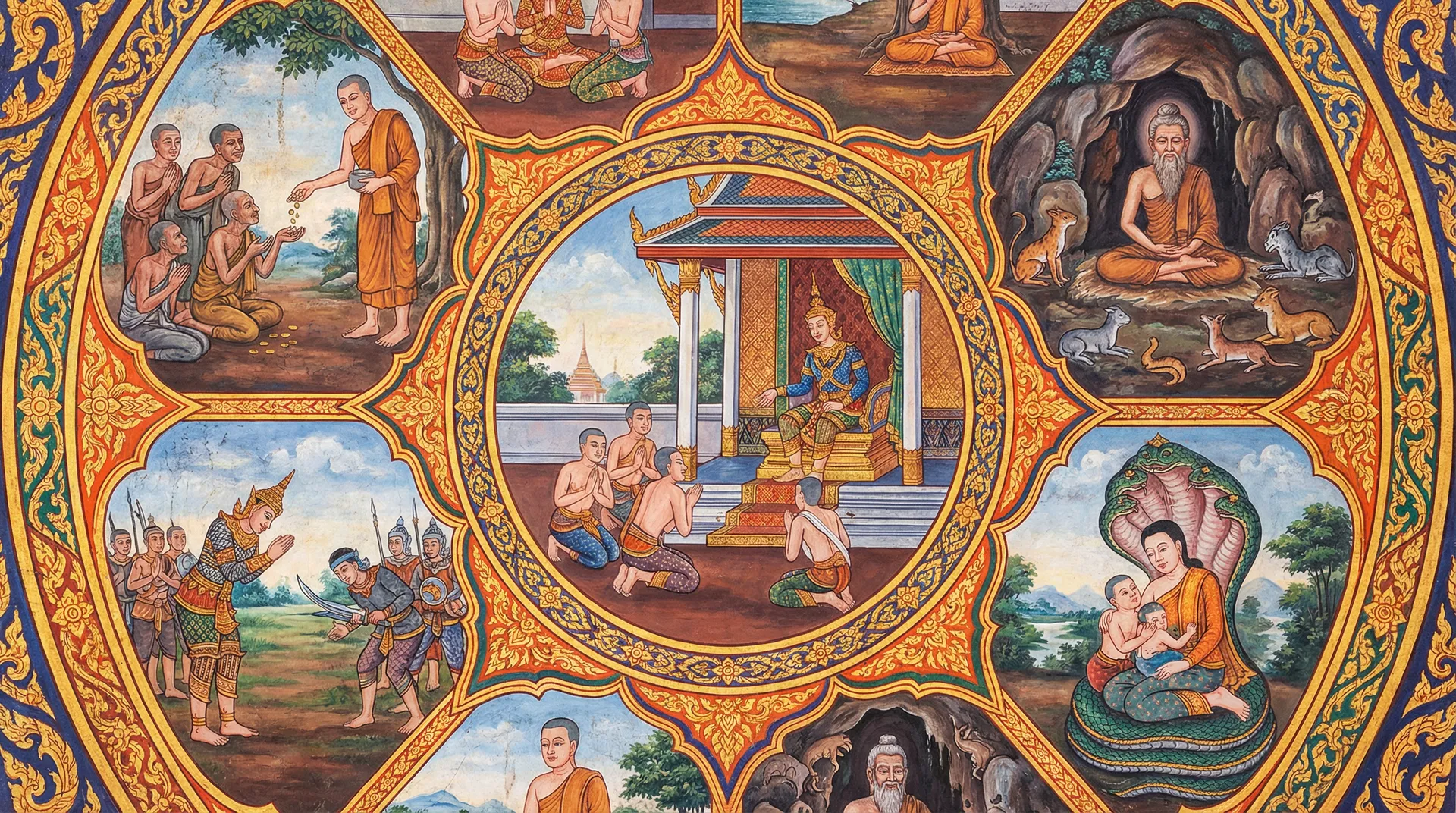
Nimi Jataka
Nimi Jataka
In the heart of a thriving kingdom, ruled a just and wise monarch named King Nimi. His reign was a golden age, marked by prosperity, peace, and unwavering devotion to righteousness. The people adored him, for his heart was as vast as the sky, and his wisdom as deep as the ocean. Yet, even the most benevolent king, surrounded by all the comforts of earthly life, yearned for something more profound, a deeper understanding of the true nature of existence.
One celestial morning, as the sun painted the heavens with hues of rose and gold, a divine chariot descended from the heavens. Astride it sat Matali, the charioteer of the gods, his face radiating celestial light. He had been sent by Sakka, the King of the Gods, with a most extraordinary invitation: King Nimi was invited to the celestial realm to witness the wonders of the divine abode and to learn the secrets of enduring happiness.
King Nimi, though momentarily startled by the divine apparition, accepted the invitation with a heart full of reverence. Bidding farewell to his queen and his kingdom, he mounted the chariot, and with a swift, breathtaking ascent, they soared through the clouds, leaving the earthly realm far behind. The journey was swift, and soon, the magnificent city of Alaka, the dwelling of the gods, came into view. Towers of crystal, gardens of perpetual bloom, and rivers of nectar adorned the landscape, a spectacle that defied earthly imagination.
Matali guided King Nimi through the celestial city, showcasing its glories. They witnessed celestial beings engaged in joyous revelry, their laughter echoing like wind chimes. They saw parks where divine musicians played melodies that soothed the soul, and palaces where celestial maidens danced with ethereal grace. King Nimi was awestruck, his heart filled with a mixture of wonder and humility.
Sakka welcomed King Nimi with great honor. For seven days, the King of the Gods engaged King Nimi in profound discussions, imparting teachings on the nature of virtue, the impermanence of worldly pleasures, and the path to true liberation. Sakka explained that the joys of heaven, though magnificent, were also fleeting, dependent on accumulated merit. True and lasting happiness, he revealed, lay not in external pleasures but in the cultivation of inner wisdom and compassion.
King Nimi absorbed these teachings like a parched land absorbs rain. He understood that even the gods were bound by the laws of karma and that the ultimate goal was to transcend the cycle of birth and death entirely.
On the eighth day, as King Nimi prepared to return to his earthly kingdom, Sakka presented him with a final, crucial lesson. He said, "King Nimi, you have seen the glories of heaven, but remember, all pleasures, whether earthly or divine, are temporary. True fulfillment comes from selfless service, from cultivating virtues like compassion, generosity, and truthfulness. These are the eternal treasures that lead to lasting peace."
Upon his return, King Nimi was a transformed man. He ruled his kingdom with even greater wisdom and compassion than before. He abolished all forms of punishment and instilled a sense of justice and kindness in his court. He dedicated himself to the welfare of his subjects, ensuring that no one suffered from want or injustice. His actions were now guided by a profound understanding of the ephemeral nature of worldly power and pleasure, and a deep commitment to the path of righteousness.
He shared the wisdom he gained from Sakka with his courtiers and his people, encouraging them to cultivate virtues and live lives of purpose. The kingdom flourished not just in material wealth but in spiritual understanding. King Nimi's reign became a beacon of dharma, a testament to the power of wisdom and compassion, echoing through generations.
The story of King Nimi's celestial journey and his subsequent transformation served as a powerful reminder to all that true happiness is not found in fleeting pleasures or worldly possessions, but in the cultivation of inner virtues and the unwavering pursuit of righteousness.
— In-Article Ad —
💡Moral of the Story
True happiness lies not in external pleasures or worldly possessions, but in the cultivation of inner virtues and selfless service.
Perfection: Wisdom (Panna)
— Ad Space (728x90) —
More Jataka Tales You May Enjoy
 103Ekanipāta
Mora Jātaka
The Golden Peacock's Plea In the heart of a vast and ancient forest, where emerald canopies kissed t...
💡 True beauty and value are best appreciated in their natural state. Possessing something or someone against their will diminishes its essence and leads to suffering, both for the captive and the captor. Freedom and dignity are paramount.
 533Mahānipāta
Kusa Jātaka
Kusa JātakaIn the ancient kingdom of Kampilla, ruled a just and virtuous king named Okkāka. His reig...
💡 Integrity and truth will always prevail over deceit and envy. True nobility lies not in birthright, but in character, compassion, and the unwavering commitment to justice, even when faced with personal adversity.
 153Dukanipāta
Daddabha Jātaka
Daddabha JātakaIn the verdant land of Mithila, ruled a king known for his love of music. His palace ...
💡 True mastery and profound communication stem from sincerity and heartfelt emotion, not just technical skill.
95EkanipātaMahasattva Jataka
Mahasattva JatakaIn the heart of ancient India, amidst the lush greenery and the symphony of chirpin...
💡 The highest form of love and compassion is self-sacrifice for the well-being of others. True greatness is demonstrated through selfless acts that bring life and salvation.
23EkanipātaThe Bodhisatta as a King of Birds
The Bodhisatta as a King of BirdsIn the celestial realm of the heavens, where clouds of spun gold dr...
💡 True wisdom lies in selfless compassion, and the greatest sacrifices bring about miraculous salvation.
25EkanipātaThe Bodhisatta as a Swan
The Bodhisatta as a SwanIn the shimmering expanse of a celestial lake, where the water was as clear ...
💡 True compassion knows no bounds, and celestial beings are called to act when suffering is present, bringing salvation.
— Multiplex Ad —