
Kusa Jātaka
Kusa Jātaka
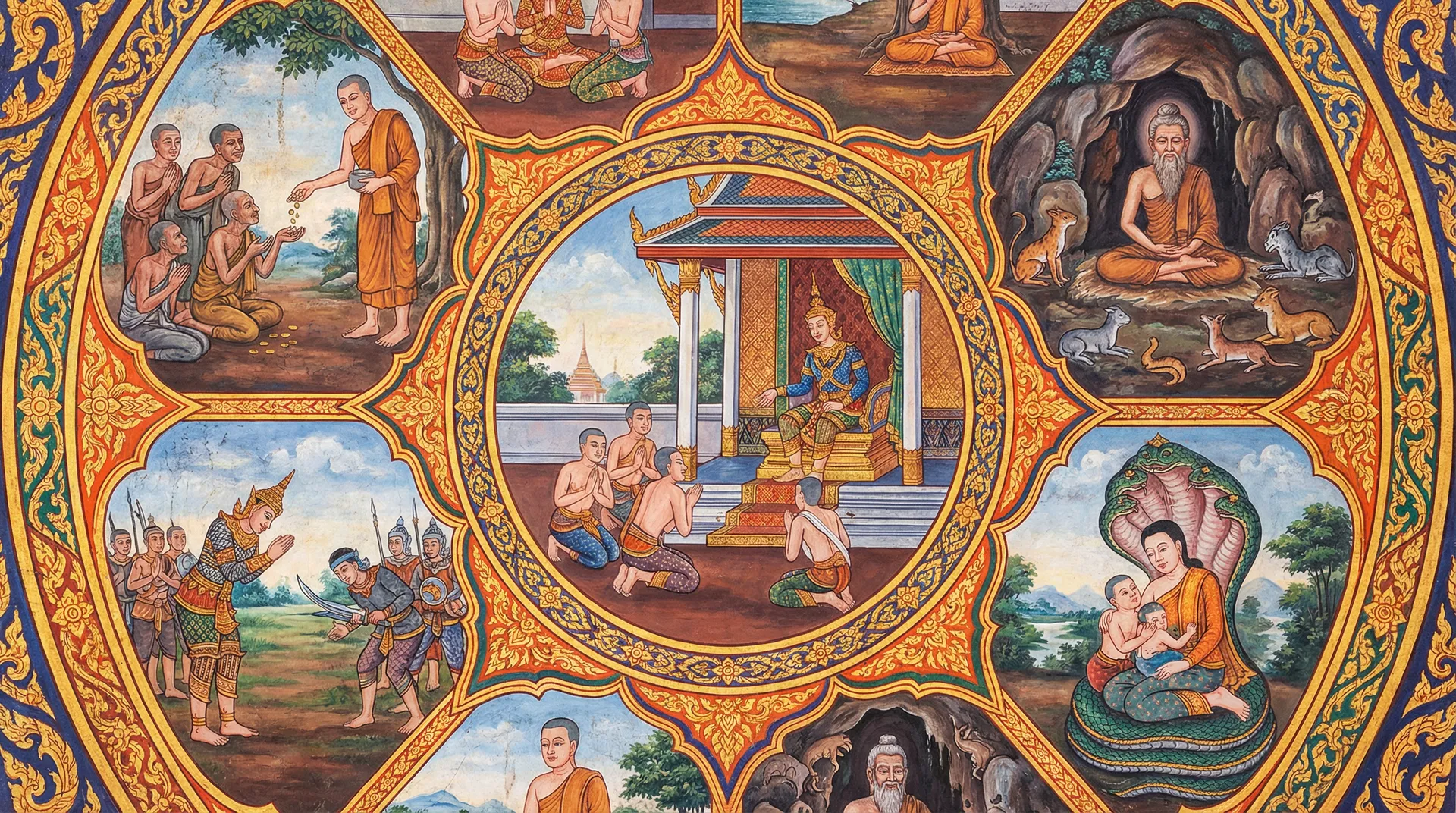
In the magnificent city of Kusāvatī, ruled a king named Dhatarattha, a monarch of great power and influence. Yet, despite his royal status, his heart was burdened by a deep and abiding love for his queen, Pabhavati. Their union was blessed with a son, the young prince Kusa, who possessed all the qualities of a future king. However, fate, as it often does, intervened in the lives of mortals.
Queen Pabhavati, a woman of unparalleled beauty and virtue, fell gravely ill. The royal physicians, despite their knowledge and efforts, could not cure her. As she lay on her deathbed, she made her husband promise that he would never remarry, fearing that any new queen might mistreat her beloved son, Prince Kusa.
King Dhatarattha, heartbroken, gave his solemn vow. Queen Pabhavati passed away, leaving a void in the King's life and a deep sorrow in his heart. The King, true to his word, remained devoted to her memory, spending his days in quiet contemplation and his nights in sorrowful remembrance.
However, the King’s mother, a woman of strong will and a keen political mind, was concerned about the succession and the future of the kingdom. She believed that a king needed a queen, not only for companionship but also to provide an heir and to manage the royal household. She repeatedly urged the King to reconsider his vow, but he remained steadfast in his promise to his departed wife.
One day, the King’s mother, driven by her desire to see her son happy and the kingdom secure, devised a plan. She invited a neighboring princess, known for her beauty and charm, to the court. She then orchestrated a series of events designed to make the King fall in love with her. The King, despite his grief, found himself drawn to the princess’s warmth and wit. He struggled with his conscience, torn between his vow and his growing affection.
Meanwhile, young Prince Kusa, now a spirited youth, grew increasingly aware of the tension at court. He sensed his father’s internal conflict and the pressure from his grandmother. He loved his father dearly and respected his mother’s memory, but he also understood the need for a stable kingdom.
One evening, Prince Kusa approached his father. "Father," he said, his voice earnest, "I see the burden you carry. My mother, in her wisdom, sought to protect me. But perhaps her wish was for your happiness as well. Your vow was made in love, but continuing to live in sorrow may not honor her memory as much as finding peace and ensuring the kingdom’s future."
The King was moved by his son’s maturity and understanding. He explained the difficult promise he had made. Kusa, with a wisdom beyond his years, suggested a way to honor both his mother's memory and his father's vow. He proposed that the King marry the princess, not as a replacement for his mother, but as a new queen for the kingdom, and that Kusa himself would treat her as his own mother, thus fulfilling the spirit of his mother's wish to protect him from a cruel stepmother.
The King, finding solace in his son’s counsel, decided to take the princess as his queen. The wedding was celebrated with much pomp and grandeur. The new queen, a kind and gracious woman, was deeply touched by Prince Kusa’s respectful and loving treatment of her. She, in turn, treated Kusa not as a stepson, but as her own child, and respected the memory of Queen Pabhavati.
The King found peace, no longer burdened by his vow. He ruled justly, with the support of his new queen and his wise son. The kingdom prospered, and the memory of Queen Pabhavati was cherished, not as a source of sorrow, but as a guiding light that had brought about a new era of peace and stability through the love and understanding of her son and husband.
Prince Kusa, having navigated such a complex situation with maturity and empathy, grew to be a wise and beloved ruler, always remembering the delicate balance between vows, love, and the well-being of the kingdom.
— In-Article Ad —
💡Moral of the Story
Wisdom, empathy, and understanding can help navigate complex situations, balancing promises, love, and the needs of the kingdom.
Perfection: Wisdom (Paññā) and Truthfulness (Sacca)
— Ad Space (728x90) —
More Jataka Tales You May Enjoy
 98Ekanipāta
The Bodhisattva as Prince Kumara
In the magnificent city of Varanasi, under the benevolent reign of King Brahmattata, who upheld the ...
💡 True wisdom lies in understanding the consequences of actions and choosing the path of righteousness, rather than succumbing to anger, hatred, or fear.
126EkanipātaDhammapala Jataka
Dhammapala JatakaIn the ancient city of Mithila, nestled amidst lush gardens and bustling marketplac...
💡 True leadership is demonstrated not by power or position, but by selflessness, compassion, and unwavering adherence to truth, even in the face of adversity and false accusations.
13EkanipātaThe Steadfast Brahmin
The Steadfast BrahminIn the ancient city of Varanasi, a beacon of spiritual learning, lived a devout...
💡 Unwavering steadfastness and a pure heart can inspire others and lead to rebuilding.
 260Tikanipāta
Mahākapi Jātaka
Mahākapi JātakaIn the verdant kingdom of Benares, ruled a just and wise king named Brahmadatta. His ...
💡 True leadership is defined by selfless sacrifice and unwavering protection of one's followers.
 355Pañcakanipāta
Mulasiri Jataka
Mulasiha Jataka In the magnificent city of Savatthi, there lived a king named Mulasiha. He was a rul...
💡 Suspicion and paranoia lead to suffering; true strength and security are found in trust, honesty, and self-acceptance.
71EkanipātaThe Jataka of the Clenched Fist
In a time long past, in the prosperous city of Varanasi, the Bodhisatta was born as a young Brahmin ...
💡 True leadership lies in protecting the vulnerable, even at great personal risk.
— Multiplex Ad —