
The Bodhisattva as Prince Kumara
547 Jataka Tales
98

The Bodhisattva as Prince Kumara

Buddha24Ekanipāta
Listen
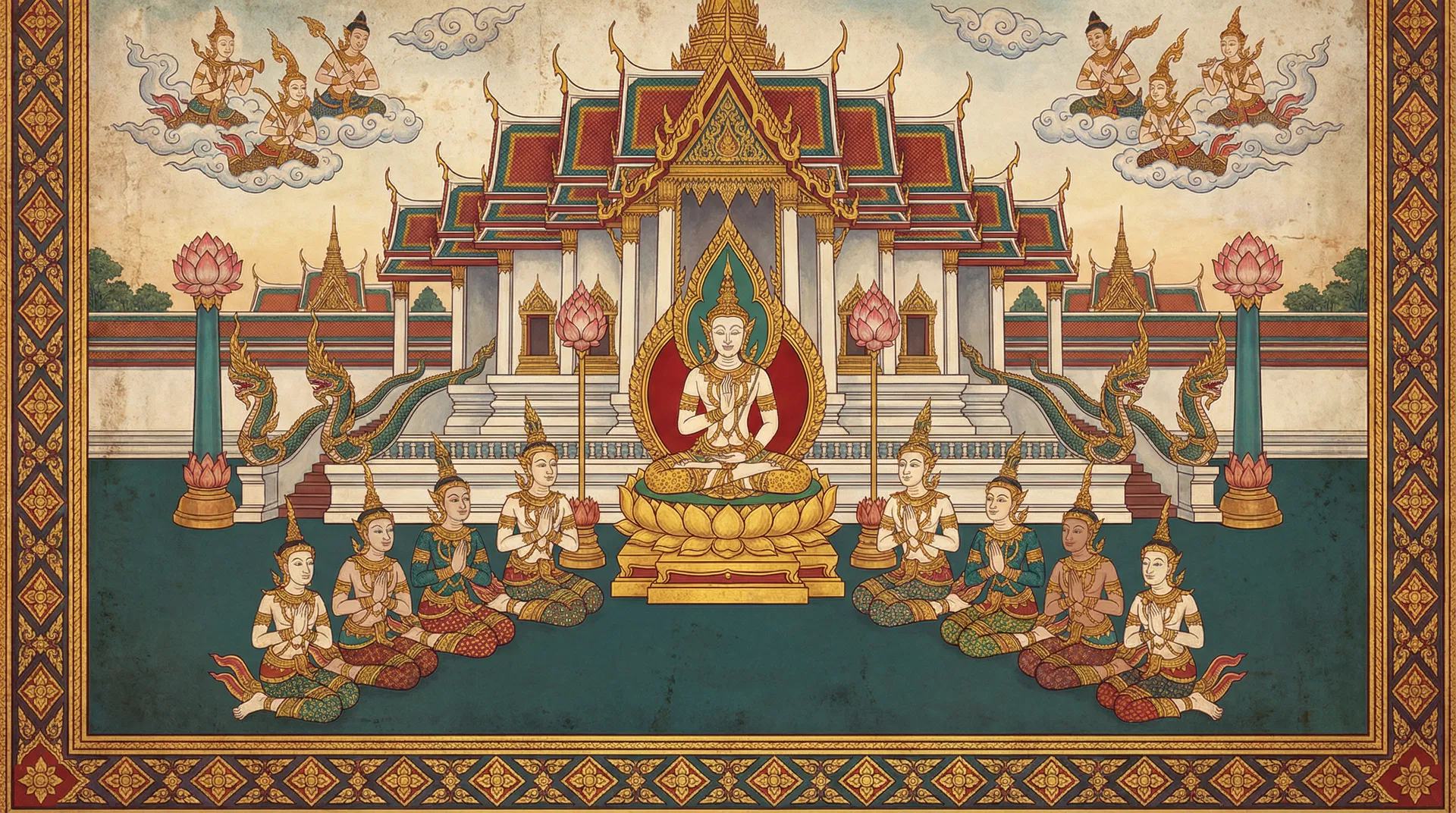
In the magnificent city of Varanasi, under the benevolent reign of King Brahmattata, who upheld the ten royal virtues, the land prospered. However, a dark cloud of sorrow descended upon the royal palace when the Queen fell gravely ill, beyond the skill of the royal physicians. Days turned into weeks, and the Queen grew weaker each day. She knew her end was near. Summoning King Brahmattata to her bedside, her once bright eyes now bore the marks of pain and frailty. "My Lord," she whispered, her voice faint, "my time is short. Before I depart, I have a request, a solemn vow I wish to make you promise." King Brahmattata, his heart heavy with grief, clasped her hand. "Speak, my Queen. Whatever it is, I shall fulfill it." "I wish," she continued, "that our yet unborn child be raised in the forest, away from the luxuries and temptations of the palace. Let him learn the ways of nature, the discipline of austerity, and the wisdom of detachment. Only when he has reached maturity and proven his virtue should he return to claim his rightful place." The King, though bewildered, could not refuse his dying Queen. He promised, and soon after, she breathed her last. True to his word, as soon as the Queen's son, Prince Kumara, was born, he was entrusted to the care of devoted servants who took him to a hermitage deep within the forest. There, under the tutelage of wise ascetics, Kumara grew up, learning the Vedas, the arts of warfare, and the principles of righteous living. He was a prince of unparalleled beauty and virtue, his mind sharp and his spirit unblemished by the world. Years passed. The King, though he ruled justly, was often filled with a quiet longing for his son. He sent messengers to inquire about Kumara's well-being, and the reports always spoke of his exceptional character and his mastery of all he undertook. One day, a great famine struck Varanasi. The people suffered, and the King, despite his best efforts, could not alleviate their plight. Desperate, he remembered his vow to his Queen. He sent for Prince Kumara, who, upon hearing of his father's distress and the suffering of his people, immediately set out for the capital. When Kumara arrived, his presence brought a sense of hope and serenity. He immediately set about organizing relief efforts, sharing his own resources and inspiring others to do the same. His wisdom and compassion shone through, and he devised a plan to revitalize the land, teaching new farming techniques and encouraging communal effort. Under Prince Kumara's guidance, the famine began to recede. The people of Varanasi rejoiced, marveling at the virtuous prince who had returned from the wilderness to save them. King Brahmattata, seeing his son's noble spirit and his ability to lead, gladly abdicated his throne, and Prince Kumara was crowned king, ruling with the same wisdom and compassion he had learned in the forest, bringing prosperity and peace to his kingdom. The moral of this Jataka tale is that true leadership and wisdom are cultivated through discipline, detachment, and a deep understanding of the world, not just by birthright or material possessions.

— In-Article Ad —

💡Moral of the Story

True wisdom lies in understanding the consequences of actions and choosing the path of righteousness, rather than succumbing to anger, hatred, or fear.

Perfection: Wisdom (Prajna)

— Ad Space (728x90) —

More Jataka Tales You May Enjoy

Mugapakkha Jataka
125Ekanipāta

Mugapakkha Jataka

Mugapakkha Jataka In the ancient city of Uttarapancala, there lived a wise and just king named Dighi...

💡 True atonement and spiritual growth can be achieved through sincere repentance, mindful silence, and the cultivation of inner peace, leading to the rectification of past mistakes and the well-being of all.

Mahāsuvanna Jataka
107Ekanipāta

Mahāsuvanna Jataka

The Tale of the Golden Swan and the Covetous Merchant In the vibrant city of Benares, nestled beside...

💡 Greed leads to destruction and disgrace. True value is found in honesty and integrity, not in material possessions.
Nimi Jataka
433Navakanipāta

Nimi Jataka

Nimi JatakaIn the vibrant city of Mithila, nestled beside a flowing river and surrounded by fragrant...

💡 Virtuous actions and the cultivation of merit lead to happiness and favorable rebirths. True leadership involves not only ruling justly but also guiding one's people towards spiritual understanding and well-being.

The Bodhisatta as a Tortoise King
30Ekanipāta

The Bodhisatta as a Tortoise King

The Bodhisatta as a Tortoise KingIn the tranquil waters of a vast, ancient lake, where lotus blossom...

💡 True leadership, guided by wisdom and compassion, inspires courage and unity to overcome daunting challenges.

The Tale of the Fragrant Tree
76Ekanipāta

The Tale of the Fragrant Tree

The Tale of the Fragrant Tree In the heart of a vast and ancient forest, where sunlight dappled thr...

💡 Curiosity, coupled with the courage to learn new things, can lead to great discoveries that benefit society.

The Tale of the Clever Crow
41Ekanipāta

The Tale of the Clever Crow

The Tale of the Clever Crow In the ancient city of Varanasi, nestled beside the sacred River Ganges...

💡 Disobedience to the teachings of experienced and benevolent individuals leads to suffering and destruction. Leaders must possess patience, sacrifice, and guide people towards the right path.

— Multiplex Ad —

This website uses cookies to improve your experience, analyze traffic, and display relevant advertisements. Privacy Policy