
Phra Sang Thong Jataka
Phra Sang Thong Jataka
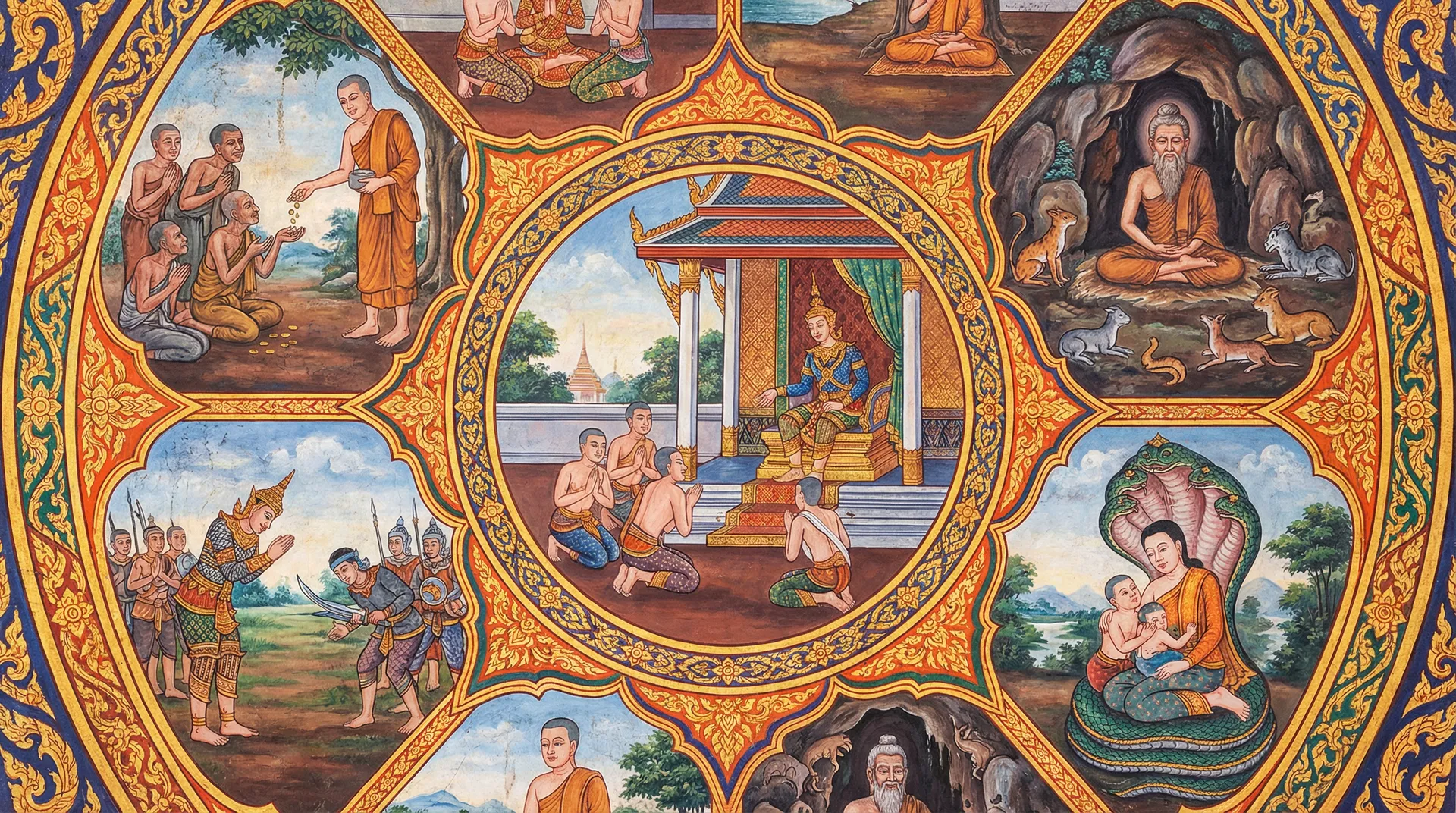
In the ancient kingdom of Suvarnabhumi, nestled between shimmering rivers and emerald forests, lived a king named King Viriyachak. He was a just ruler, beloved by his people, but his heart yearned for an heir. One day, while reflecting on his kingdom's future, a wise hermit appeared, his beard like spun silver, his eyes twinkling with ancient knowledge. "Your Majesty," the hermit proclaimed, "your wish for a son shall be granted. But know this: the child shall be born with a golden conch shell on his chest, a sign of great destiny, and his life will be fraught with trials." The king, overjoyed, thanked the hermit profusely, eager for the prophecy to unfold.
True to the hermit's words, a prince was born, and indeed, a lustrous golden conch shell adorned his chest. They named him Sang Thong. As Sang Thong grew, his parents showered him with love, but the conch shell was a constant reminder of his unique fate. The king, fearing the prophecy's darker implications, kept Sang Thong close, shielding him from the world. However, Sang Thong, despite his sheltered upbringing, possessed an extraordinary intellect and a kind heart.
One fateful day, a grand archery competition was announced, the winner to receive the hand of the beautiful Princess Suwanna. The king, seeing an opportunity for his son to prove his worth and perhaps break free from his confinement, reluctantly allowed Sang Thong to participate, unaware of the true extent of his son's abilities. Sang Thong, disguised as a humble hunter, entered the arena. His skill with the bow was astounding. He shot with precision, his arrows flying true, hitting the mark with effortless grace. The crowd erupted in cheers, amazed by this mysterious newcomer.
The princess, observing from her pavilion, was captivated by Sang Thong's prowess and his humble demeanor. She felt an instant connection, a sense of destiny drawing her towards him. However, as Sang Thong stepped forward to claim his prize, the golden conch shell on his chest was revealed. A gasp rippled through the crowd. The king, witnessing this, felt a pang of fear and regret. The other princes, envious and shocked, accused Sang Thong of deceit.
In his confusion and fear, Sang Thong fled the kingdom, carrying the princess's unspoken affection in his heart. He wandered through forests and mountains, his golden conch shell a beacon of his identity. He encountered many challenges. He faced fierce beasts, navigated treacherous terrains, and met both kind souls and deceitful tricksters. During his travels, Sang Thong discovered his true strength lay not just in his archery, but in his wisdom and his unwavering compassion. He learned to use his unique gifts to help those in need, often disguising himself to understand their plight better.
One day, he stumbled upon a village ravaged by a terrible plague. The villagers were desperate, their hope dwindling. Sang Thong, moved by their suffering, used his knowledge of herbs and his innate healing abilities to create a cure. He worked tirelessly, his golden shell gleaming in the torchlight as he tended to the sick. The villagers, witnessing his selfless dedication, were filled with gratitude and awe. They saw beyond the golden shell, recognizing the pure heart of a true hero.
Meanwhile, back in Suvarnabhumi, the kingdom was in turmoil. The king was heartbroken, and the princess pined for her lost love. News of a fearsome dragon terrorizing a neighboring kingdom reached Suvarnabhumi. The king, desperate to protect his people and restore peace, called for brave warriors. Sang Thong, hearing of this threat, knew he had to return. He donned his royal attire, the golden conch shell now a symbol of his courage and his rightful place.
He returned to Suvarnabhumi, not as a disguised hunter, but as Prince Sang Thong, ready to face the dragon. The battle was epic. Sang Thong, with his unwavering resolve and skillful combat, fought the dragon with all his might. The beast roared, its fiery breath scorching the earth, but Sang Thong stood his ground, his inner strength radiating outwards. With a final, decisive blow, he vanquished the dragon, saving both kingdoms from its wrath.
The people rejoiced, hailing Sang Thong as their savior and rightful prince. The king, humbled and filled with pride, embraced his son. The princess, her heart overflowing with joy, was reunited with Sang Thong. The golden conch shell, once a symbol of fear and ostracization, was now a testament to his courage, his wisdom, and his noble spirit. Sang Thong, having overcome his trials and proven his worth, ascended the throne, ruling with the same compassion and justice that had guided him through his arduous journey.
— In-Article Ad —
💡Moral of the Story
True worth is found not in outward appearances or hidden identities, but in the courage, wisdom, and compassion one demonstrates through their actions.
Perfection: Wisdom (Prajna) and Courage (Virya)
— Ad Space (728x90) —
More Jataka Tales You May Enjoy
 364Pañcakanipāta
Kuṇāla Jātaka
Kuṇāla JātakaIn the magnificent city of Sāvatthī, under the reign of a wise and just king, lived the...
💡 True beauty resides not in physical appearance, but in inner purity, wisdom, and virtue. Sacrifice made for the sake of righteousness and truth can lead to profound spiritual insight and liberation, transcending physical limitations and worldly suffering.
 188Dukanipāta
Kacchapa Jataka
The Tale of the Steadfast TortoiseIn the heart of a vast, sun-drenched jungle, where ancient trees r...
💡 Steadfastness, patience, and unwavering determination are virtues that can overcome immense challenges and lead to salvation.
 259Tikanipāta
Mūgapakkha Jātaka
Mūgapakkha JātakaIn the bustling city of Ujjeni, a hub of commerce and culture, resided King Candapa...
💡 True greatness is found not in worldly fame or ambition, but in inner peace, profound wisdom, and a deep connection to life.
229DukanipātaVirocana-jātaka
The Tale of the Radiant Prince In the ancient and prosperous kingdom of Kosala, nestled beside the s...
💡 Pride and suspicion can cloud judgment and lead to injustice. True wisdom is found in humility, the willingness to listen to others, and the courage to confront and correct past mistakes. Forgiveness and reconciliation heal karmic wounds.
226DukanipātaMūga-pakkhajātaka
The Tale of the Mute Bird In the ancient city of Mithila, nestled amidst lush greenery and shimmerin...
💡 Past actions and their consequences can be overcome through genuine compassion, empathy, and a transformed heart. Understanding and alleviating the suffering of others can lead to the resolution of past karmic debts.
232DukanipātaPhra Ong Khong Khon (The Bodhisatta as a King Who Values Honesty)
Phra Ong Khong Khon (The Bodhisatta as a King Who Values Honesty) In the bustling city of Varanasi, ...
💡 Honesty is the most valuable treasure, far surpassing any material wealth. True worth lies in integrity and truthfulness, which form the bedrock of a just and prosperous society.
— Multiplex Ad —