
Muni-Jātaka
Muni-Jātaka
In the ancient land of Mithila, where wisdom was revered and philosophers debated the nature of existence, there lived a king named Janaka. He was a man of profound intellect and righteous conduct, but he harbored a peculiar obsession: he believed that true enlightenment could only be achieved by becoming a 'Muni' – a silent, ascetic sage who renounced all speech. He was convinced that words were the root of all confusion and suffering in the world.
King Janaka, in his pursuit of this singular ideal, declared to his court, "From this day forth, I shall observe complete silence. I shall communicate only through gestures and written words. This is the path to ultimate wisdom." His ministers and advisors were perplexed. How could a king govern a kingdom without speaking? How could he dispense justice, command armies, or negotiate treaties?
Undeterred, King Janaka retreated to a specially constructed chamber, adorned with scrolls and writing implements. He began his silent regimen. His queen, a woman of exceptional understanding, and his chief minister, a man of keen discernment, were tasked with interpreting his wishes and conveying his commands. This proved to be a challenging endeavor. Gestures were often misinterpreted, and written pronouncements, though clearer, lacked the immediate impact and nuance of spoken words.
News of the king's vow of silence spread throughout the land and beyond. Many came to witness this unusual king, hoping to glean some wisdom from his silent contemplation. Among them was a wise hermit, known for his ability to understand the deepest truths of life. He approached the palace and, after being granted an audience, observed the king intently.
The hermit, seeing the king's earnestness but also the practical difficulties his silence imposed, decided to test the king's resolve and the validity of his belief. He approached King Janaka and, with a knowing smile, presented him with two objects: a lute and a pair of cymbals. He then made a gesture asking the king to produce a sound.
King Janaka, bound by his vow, could not speak. He picked up the lute and strummed it, producing a beautiful melody. The hermit nodded, acknowledging the sound. Then, King Janaka picked up the cymbals, intending to clash them together. However, the hermit quickly intervened, placing his hand between the cymbals, preventing them from making any sound. He then gestured again, as if to ask, "Where is the sound?"
The king, frustrated but still silent, tried to strike the cymbals together. They remained mute, pressed between his hands and the hermit's. He then looked at the lute, then at the cymbals, then at the hermit, his eyes conveying a dawning realization. He understood the hermit's subtle lesson.
The hermit then finally spoke, his voice gentle but clear. "Your Majesty," he said, "you believe that silence is the path to wisdom. But consider this: the lute produces music when its strings are strummed, an action. The cymbals produce sound when they are struck together, an interaction. Even silence, in its truest sense, is not an absence of all things, but a state of profound inner stillness achieved through understanding and practice. To be truly wise, one must not merely abstain from speaking, but cultivate inner peace and communicate effectively when necessary."
The hermit continued, "Words, when spoken with truth, compassion, and clarity, can be powerful tools for guidance, understanding, and connection. They are not inherently the cause of suffering, but rather how they are used, and the attachments we form to them. True wisdom lies in mastering the art of communication, both through speech and silence, understanding when to speak and when to be still, and always speaking from a place of sincerity."
King Janaka, having reflected deeply on the hermit's words and the experiment, understood the flaw in his rigid belief. He realized that his silence, while an act of discipline, had led to misunderstanding and inefficiency. He saw that true wisdom was not about avoiding interaction, but about engaging with the world mindfully and constructively.
With a grateful heart, King Janaka broke his vow of silence. He thanked the hermit profusely for opening his eyes. "You have shown me," he declared, his voice clear and resonant, "that while silence has its place, the skillful use of speech, guided by wisdom and compassion, is essential for the well-being of oneself and others. True Muni-ship is not about the absence of voice, but the presence of mindful awareness in all actions and communications."
From that day forward, King Janaka ruled with renewed vigor, using his words wisely and compassionately, always striving for clarity and truth. He became known not just as a king, but as a wise communicator, understanding that the greatest silence was not the absence of sound, but the absence of unnecessary, harmful, or deceitful words.
— In-Article Ad —
💡Moral of the Story
True wisdom is not achieved by mere abstinence from speech, but by mindful communication and the cultivation of inner peace. Words, when used with truth, compassion, and clarity, are powerful tools for good, not inherently the cause of suffering.
Perfection: Wisdom (Prajna)
— Ad Space (728x90) —
More Jataka Tales You May Enjoy
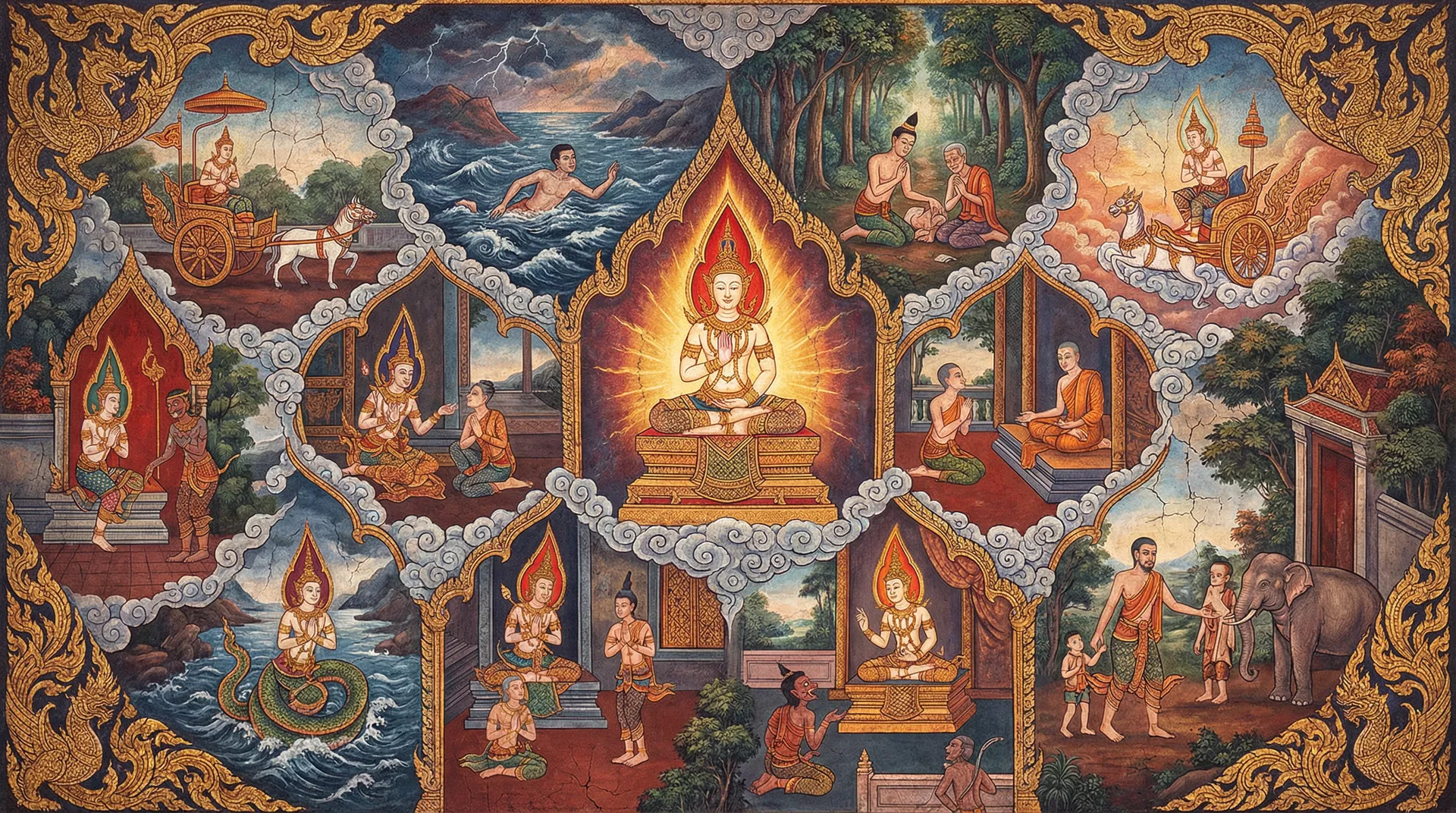 542Mahānipāta
Sasa Jātaka
The Hare Who Sacrificed HimselfIn a time long past, when the forests teemed with life and the stars ...
💡 Selfless compassion and the willingness to sacrifice for the well-being of others are the highest virtues.
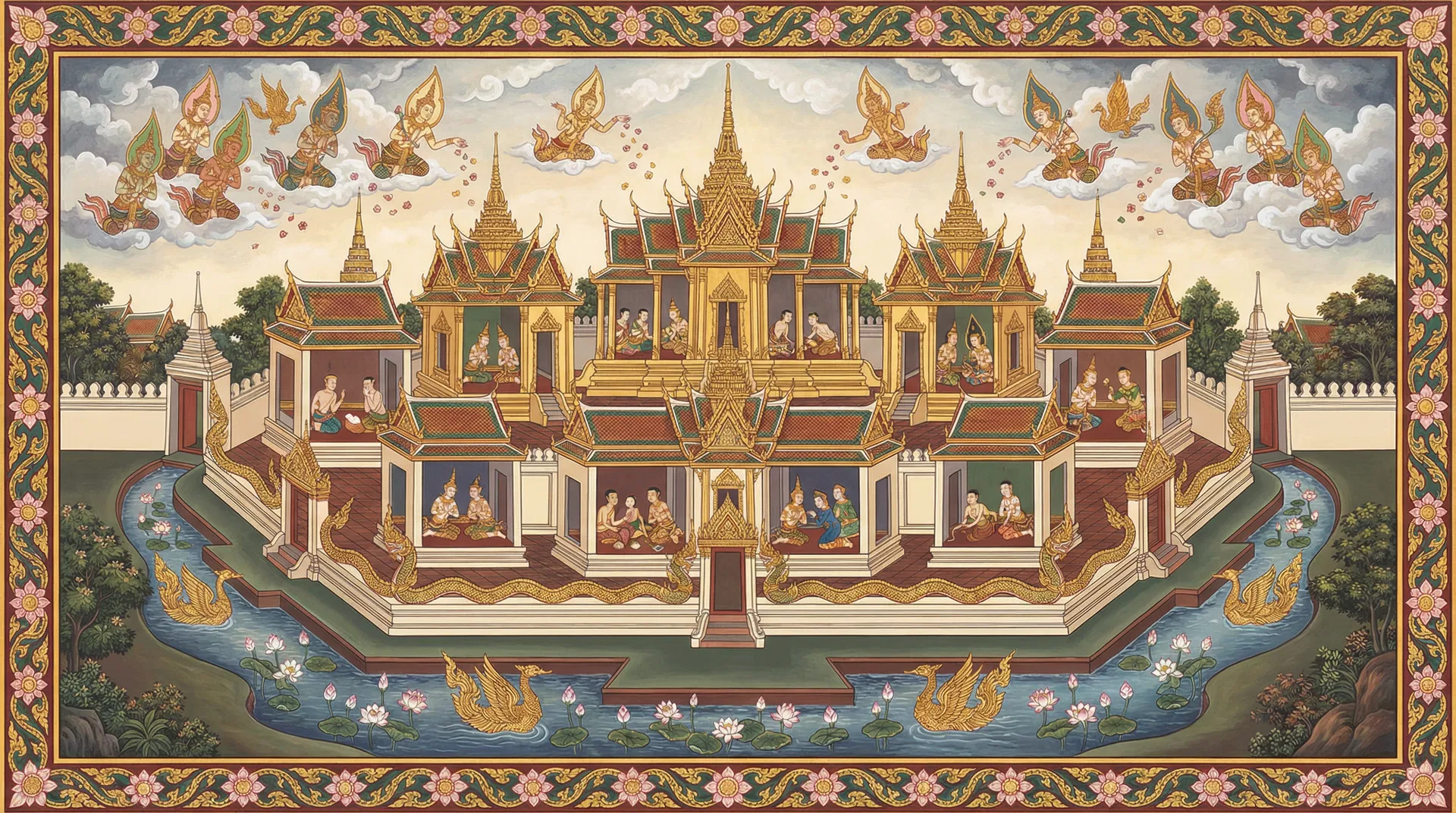 465Dvādasanipāta
Mahiḷāmuga Jātaka
Mahiḷāmuga JātakaIn the vibrant city of Varanasi, during an era of great prosperity, there lived a w...
💡 True virtue and influence are demonstrated through consistent acts of compassion, integrity, and wisdom, rather than through outward displays or deceitful words. Jealousy and malice are ultimately exposed by the light of truth and virtuous action.
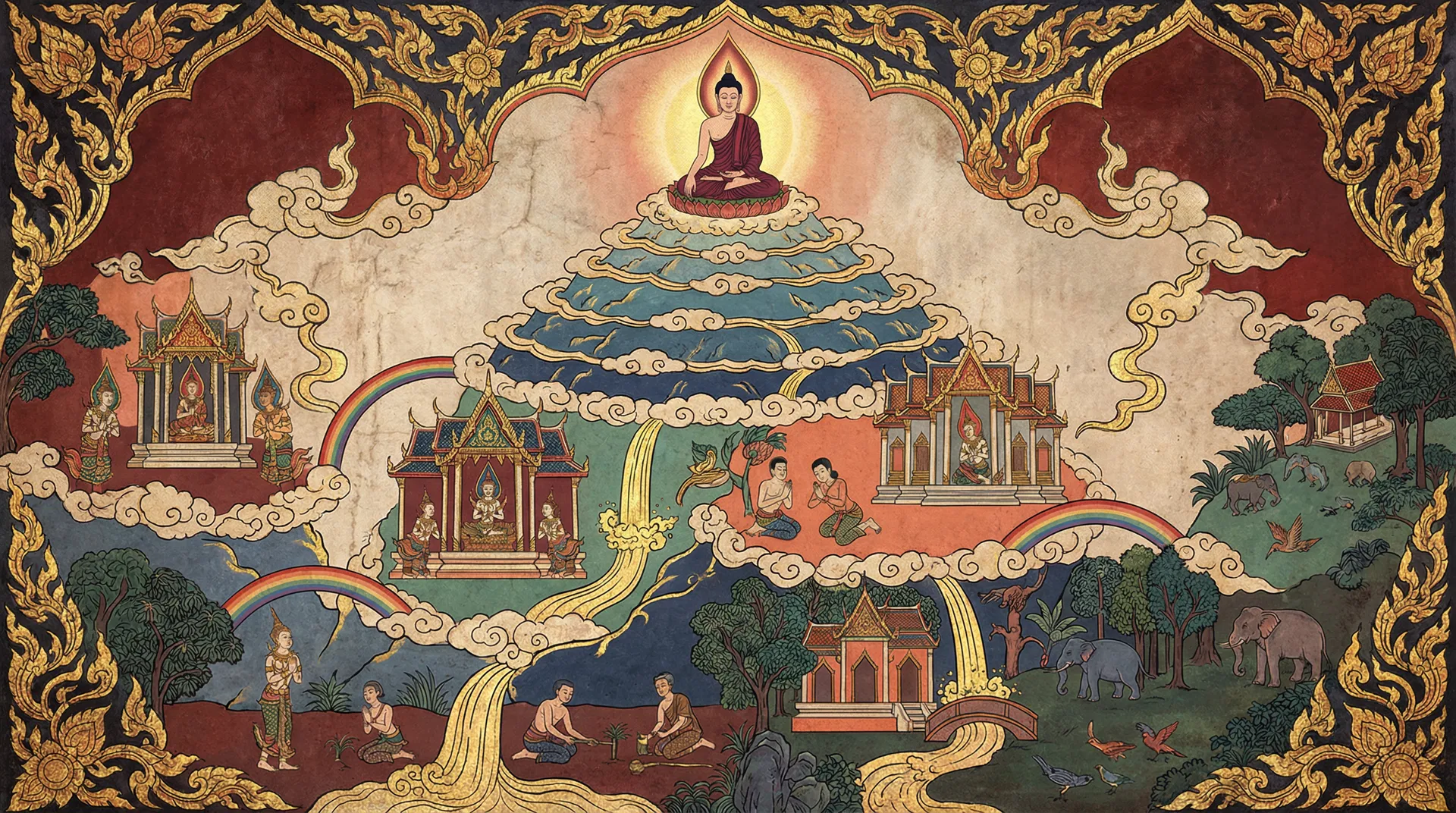 487Pakiṇṇakanipāta
Sutasoma Jātaka
Sutasoma JātakaIn the heart of the ancient kingdom of Kampilya, a kingdom famed for its magnificent ...
💡 True strength lies not in violence or the taking of life, but in unwavering compassion, understanding, and the courage to break cycles of suffering through acts of profound kindness and non-violence.
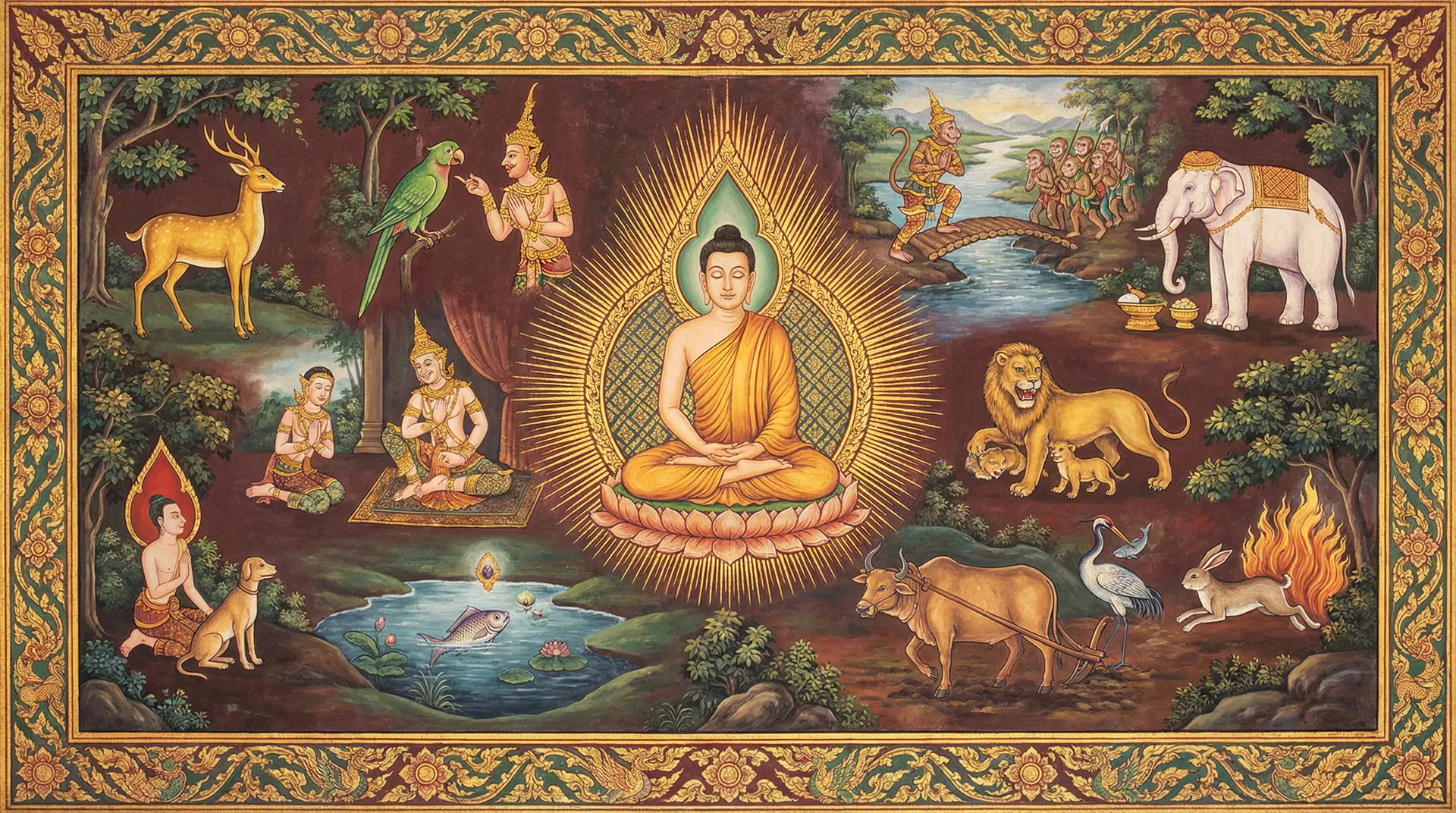 439Dasakanipāta
Maha-Ummagga Jataka
The Bodhisatta's Ten Thousand IllusionsIn the ancient city of Kusavati, ruled King Bhammadaja with f...
💡 Supreme generosity is the ultimate form of charity, involving the willingness to give away even the most beloved possessions and relationships for the greater good. True giving transcends attachment and cultivates immeasurable merit.
 414Sattakanipāta
Anusa-Jataka
Anusa-JatakaIn the ancient land of Kashi, where the mighty Ganges flowed majestically, lived a king ...
💡 Virtuous upbringing, self-awareness, and a steadfast commitment to compassion and justice can overcome even the most dire prophecies. Destiny is not merely predetermined, but shaped by our choices and actions.
 313Catukkanipāta
Sasa Jataka
Sasa JatakaIn the dappled sunlight of a vast forest, where ancient trees whispered secrets to the wi...
💡 Selfless sacrifice and boundless compassion are the highest virtues, offering the greatest merit and inspiring all beings.
— Multiplex Ad —