
Kusa-Jātaka
Kusa-Jātaka
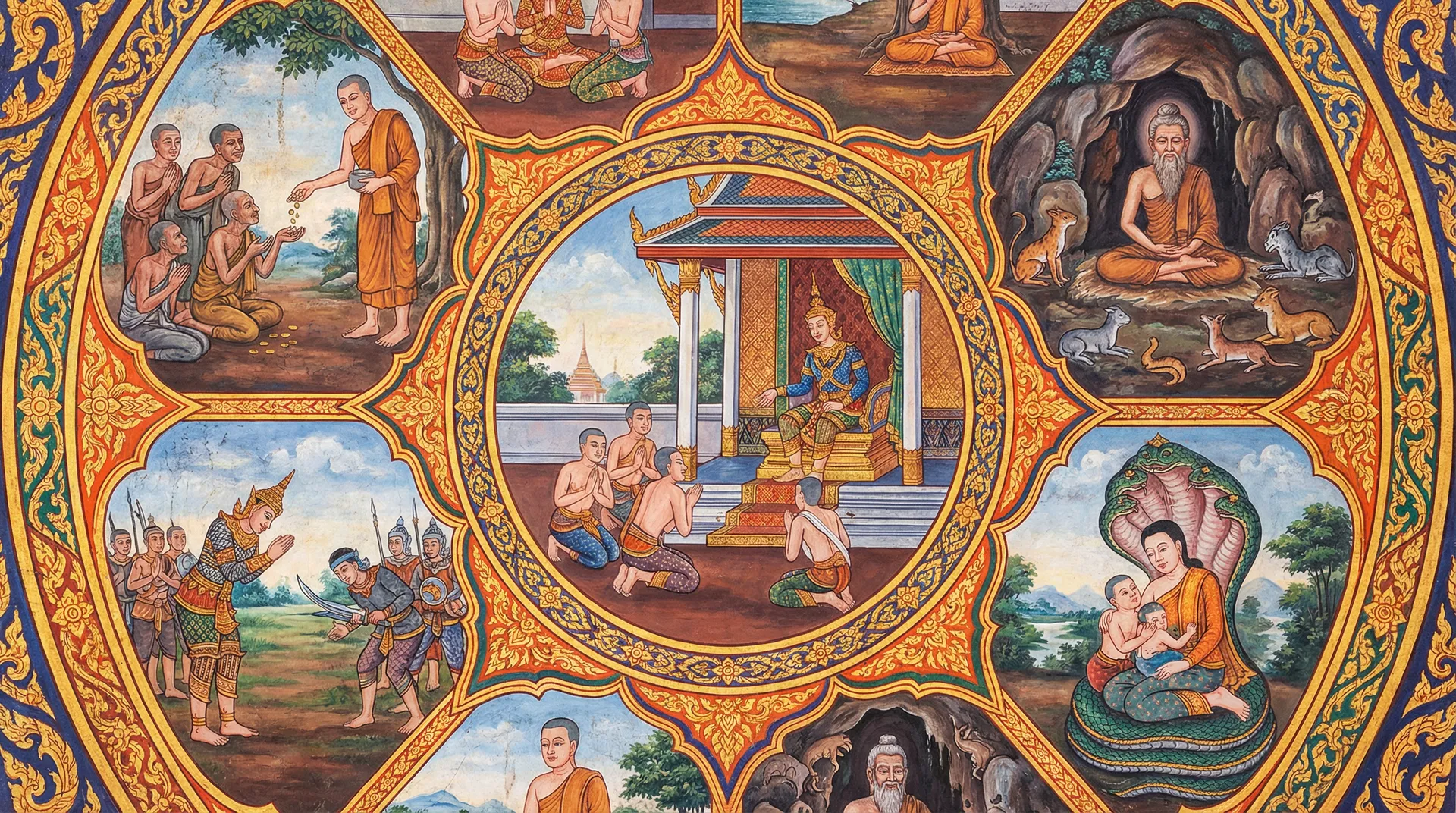
In the kingdom of Kampilla, nestled beside the sacred River Ganges, lived a king named Udaya. He was a just ruler, beloved by his people, but his heart was consumed by a deep and unshakeable love for his queen, Pabhavati. She was a woman of unparalleled beauty and grace, and the king's devotion to her was absolute. However, their blissful union was destined to face trials that would test the very fabric of their love and commitment.
One day, a fearsome demon, known for his malevolent magic and insatiable greed, cast his envious gaze upon Queen Pabhavati. He devised a wicked plan to possess her. Using his dark arts, the demon transformed himself into a likeness of King Udaya and, under the guise of the king, visited the queen. He spoke honeyed words, weaving a spell of enchantment around her, and in a moment of confusion and enchantment, she was deceived.
When the true King Udaya discovered this deception, his heart was shattered. He could not comprehend how his beloved queen could have been so easily swayed. In his anguish and fury, he banished her from the kingdom, decreeing that she should never return. Queen Pabhavati, heartbroken and innocent, was forced to flee into the wilderness, carrying with her the shame and sorrow of the king's unjust decree.
She wandered for many days, her beauty and grace dimmed by hardship and despair. Eventually, she found refuge in a humble hermitage, where a wise ascetic offered her shelter. The ascetic, sensing her purity and suffering, became her confidant and guide. He taught her the ways of patience, perseverance, and inner strength, helping her to endure her ordeal.
Meanwhile, King Udaya, though he had banished his queen, could not forget her. His days were filled with regret, and his nights with sleepless torment. He began to doubt his own judgment, wondering if he had been too hasty, too cruel. He sent out spies to search for his queen, but they returned with no news, deepening his despair.
Years passed. Queen Pabhavati, under the guidance of the ascetic, had cultivated immense inner resilience. She had learned to find peace in adversity and had dedicated herself to spiritual practices. She gave birth to a son, who was named Kusa. Kusa grew up in the hermitage, unaware of his royal lineage but possessing a noble spirit and a keen intellect, nurtured by his mother's love and the ascetic's teachings.
One day, Kusa, now a young man, learned the truth of his mother's banishment and his father's unjust anger. His heart burned with a desire to reunite his parents and restore his mother's honor. He resolved to return to Kampilla and confront his father.
Upon arriving at the palace, Kusa, with his regal bearing and eloquent speech, managed to gain an audience with King Udaya. He presented himself not as the king's son, but as a messenger from a distant land. He spoke of a queen of unparalleled virtue who had suffered greatly due to a king's rash judgment, and he subtly revealed the truth of the demon's deception.
King Udaya listened, his heart stirring with a mixture of disbelief and dawning hope. The messenger's words echoed the turmoil in his own soul. He ordered that the queen be brought before him, hoping against hope that it was indeed his beloved Pabhavati.
When Queen Pabhavati was brought to the court, her presence commanded respect and awe. Though years had passed, her innate grace was undeniable. King Udaya, seeing her, was overwhelmed with remorse and love. He realized the depth of his mistake and the cruelty of his actions.
He fell at her feet, begging for forgiveness. "Pabhavati, my love, my life," he cried, his voice choked with emotion, "I have wronged you terribly. My jealousy blinded me, and my pride prevented me from seeing the truth. Can you ever forgive me?"
Queen Pabhavati, her heart filled with compassion, looked at her husband. She saw the genuine remorse in his eyes. "Udaya," she replied softly, "my suffering has been great, but my love for you has never wavered. I forgive you, for I know your heart was led astray by deception."
And so, the family was reunited. King Udaya, humbled and contrite, embraced his queen and son. He learned a profound lesson about the destructive nature of jealousy and the importance of trust and forgiveness. He realized that true love requires not only passion but also understanding, patience, and the willingness to see beyond immediate appearances.
King Udaya then learned the story of Kusa's upbringing and the wisdom he had gained. Recognizing his son's noble character, he declared Kusa his heir and ensured that his mother's honor was restored. The kingdom rejoiced at the reunion, and King Udaya ruled thereafter with a newfound wisdom, forever cherishing his queen and son, and understanding that even the deepest love can be tested, but also strengthened, by adversity and forgiveness.
— In-Article Ad —
💡Moral of the Story
Jealousy and hasty judgments can lead to terrible suffering and separation. True love is tested by adversity, and forgiveness is essential for healing and reconciliation. Patience, inner strength, and understanding are virtues that can overcome even the most profound injustices.
Perfection: Patience (Khanti)
— Ad Space (728x90) —
More Jataka Tales You May Enjoy
 1Ekanipāta
The Tale of the Great Lotus
The Tale of the Great Lotus In a time long past, when the world was a canvas of verdant forests and...
💡 Impatience is like a fire that burns everything, but wisdom and concentration are the tools that allow us to control situations and achieve goals with stability.
 364Pañcakanipāta
Kuṇāla Jātaka
Kuṇāla JātakaIn the magnificent city of Sāvatthī, under the reign of a wise and just king, lived the...
💡 True beauty resides not in physical appearance, but in inner purity, wisdom, and virtue. Sacrifice made for the sake of righteousness and truth can lead to profound spiritual insight and liberation, transcending physical limitations and worldly suffering.
76EkanipātaThe Tale of the Fragrant Tree
The Tale of the Fragrant Tree In the heart of a vast and ancient forest, where sunlight dappled thr...
💡 Curiosity, coupled with the courage to learn new things, can lead to great discoveries that benefit society.
109EkanipātaSutasoma Jataka
The Tale of the Compassionate Prince and the Hungry Ogress In the grand kingdom of Gandhara, renowne...
💡 True compassion understands and alleviates suffering, even in the face of fear. Selfless kindness can transform even the most hardened hearts.
110EkanipātaMora Jataka
The Tale of the King, the Queen, and the Golden Peacock In the prosperous kingdom of Varanasi, nestl...
💡 True beauty lies not in outward appearance but in inner virtues like wisdom, compassion, and kindness. Superficial fascination can blind us to the enduring value of character.
113EkanipātaMahāgovinda Sutta Jātaka
Mahāgovinda Sutta Jātaka In the opulent city of Varanasi, a kingdom blessed with peace and prosperit...
💡 True wisdom lies in maintaining balance and equanimity in the face of both pleasure and adversity. Integrity and unwavering loyalty are the foundations of trust.
— Multiplex Ad —