
Mataṅga Jataka
Mataṅga Jataka
In the ancient city of Ujjeni, a city renowned for its scholarship and its vibrant intellectual life, there lived a young Brahman named Mataṅga. He was born into a family of great learning, and from his earliest years, he displayed an extraordinary intellect and an insatiable thirst for knowledge. His parents, proud of their son’s brilliance, spared no expense in his education, ensuring he received the finest tutelage in the Vedas and all the sacred scriptures.
Mataṅga excelled in his studies, mastering complex philosophies and intricate rituals. He became a renowned scholar, sought after for his wisdom and his profound understanding of the ancient texts. Yet, despite his intellectual prowess and his prestigious lineage, a deep dissatisfaction gnawed at him. He felt that true wisdom, the wisdom that could alleviate suffering and bring lasting peace, could not be found solely in books and rituals.
One day, while contemplating the limitations of his current path, Mataṅga heard tales of a wise ascetic who lived in the deep forest, a hermit who possessed an extraordinary insight into the nature of reality. This hermit, it was said, had renounced all worldly possessions and lived a life of extreme austerity, dedicating himself to meditation and the pursuit of ultimate truth.
Driven by his yearning for true wisdom, Mataṅga decided to seek out this ascetic. He bid farewell to his family and the comforts of his city life, and ventured into the dense, untamed wilderness. The journey was arduous, filled with challenges that tested his physical endurance and his mental fortitude. He faced wild animals, treacherous terrain, and the gnawing loneliness of solitude, but his determination to find true wisdom kept him going.
After many days of travel, he finally found the hermit’s dwelling – a simple hut nestled amidst ancient trees, bathed in the serene light of the forest. The hermit, with his emaciated frame and eyes that shone with an inner luminescence, greeted Mataṅga with a gentle smile. Mataṅga, deeply impressed by the hermit’s aura of peace and profound understanding, prostrated himself before him.
“Venerable sir,” Mataṅga implored, his voice filled with humility and earnestness, “I have come seeking the true wisdom that transcends the scriptures. I have studied the Vedas and learned much, yet my heart remains restless. Please, impart to me the knowledge that will lead to the cessation of suffering.”
The hermit, observing Mataṅga with compassion, spoke in a voice that was as calm and clear as a mountain stream. “Young scholar, the path to true wisdom is not found in the accumulation of knowledge, but in the purification of the mind and the practice of virtue. It requires renunciation, discipline, and a deep understanding of oneself.”
The hermit then began to teach Mataṅga. He instructed him in the principles of meditation, teaching him to observe his thoughts and emotions without attachment. He guided him in the practice of ethical conduct, emphasizing the importance of kindness, compassion, and non-violence. He taught Mataṅga to detach himself from desires and aversions, to cultivate inner peace, and to see the interconnectedness of all beings.
Mataṅga, under the hermit’s tutelage, underwent a profound transformation. He shed his pride and arrogance, his intellectualism giving way to a deep, intuitive understanding. He learned to see beyond the superficial distinctions of caste and creed, recognizing the inherent divinity in all beings. His mind, once filled with the complexities of scriptures, became clear and radiant, illuminated by the light of wisdom.
He realized that true wisdom was not an external acquisition but an internal realization, a state of being rather than a body of knowledge. He understood that the Vedas, while valuable, were merely pointers, not the destination itself. The ultimate truth lay in direct experience, in the realization of the impermanent and selfless nature of all phenomena.
After many years of dedicated practice, Mataṅga attained a profound state of enlightenment. He had found the true wisdom he had sought, a wisdom that brought him inner peace and liberated him from the cycle of suffering. He thanked the hermit profusely, his heart overflowing with gratitude for the profound gift of understanding.
Mataṅga eventually returned to the world, not as a proud scholar, but as a humble sage, radiating compassion and wisdom. He dedicated the rest of his life to guiding others on the path to true understanding, teaching them that wisdom is not merely intellectual but experiential, a journey of self-discovery and inner purification. His teachings spread far and wide, inspiring countless individuals to seek the same liberation he had found, reminding them that the greatest knowledge lies not in what we learn, but in what we realize within ourselves.
— In-Article Ad —
💡Moral of the Story
True wisdom is not found in mere intellectual knowledge or scriptural study, but in the purification of the mind, ethical conduct, and direct inner realization. The path to enlightenment requires discipline, renunciation, and compassion for all beings.
Perfection: Generosity (Dāna), Virtue (Sīla), Renunciation (Nekkhamma), Wisdom (Paññā), Energy (Viriya), Patience (Khanti), Truthfulness (Sacca), Resolution (Adhiṭṭhāna), Loving-kindness (Mettā), Equanimity (Upekkhā)
— Ad Space (728x90) —
More Jataka Tales You May Enjoy
 289Tikanipāta
The Serpent King's Generosity (Phala Jātaka)
The Serpent King's Generosity (Phala Jātaka) In a realm where the boundary between the mortal world ...
💡 True wealth lies in selfless generosity and the willingness to share one's blessings, for compassion nourishes not only others but also the giver and the world around them.
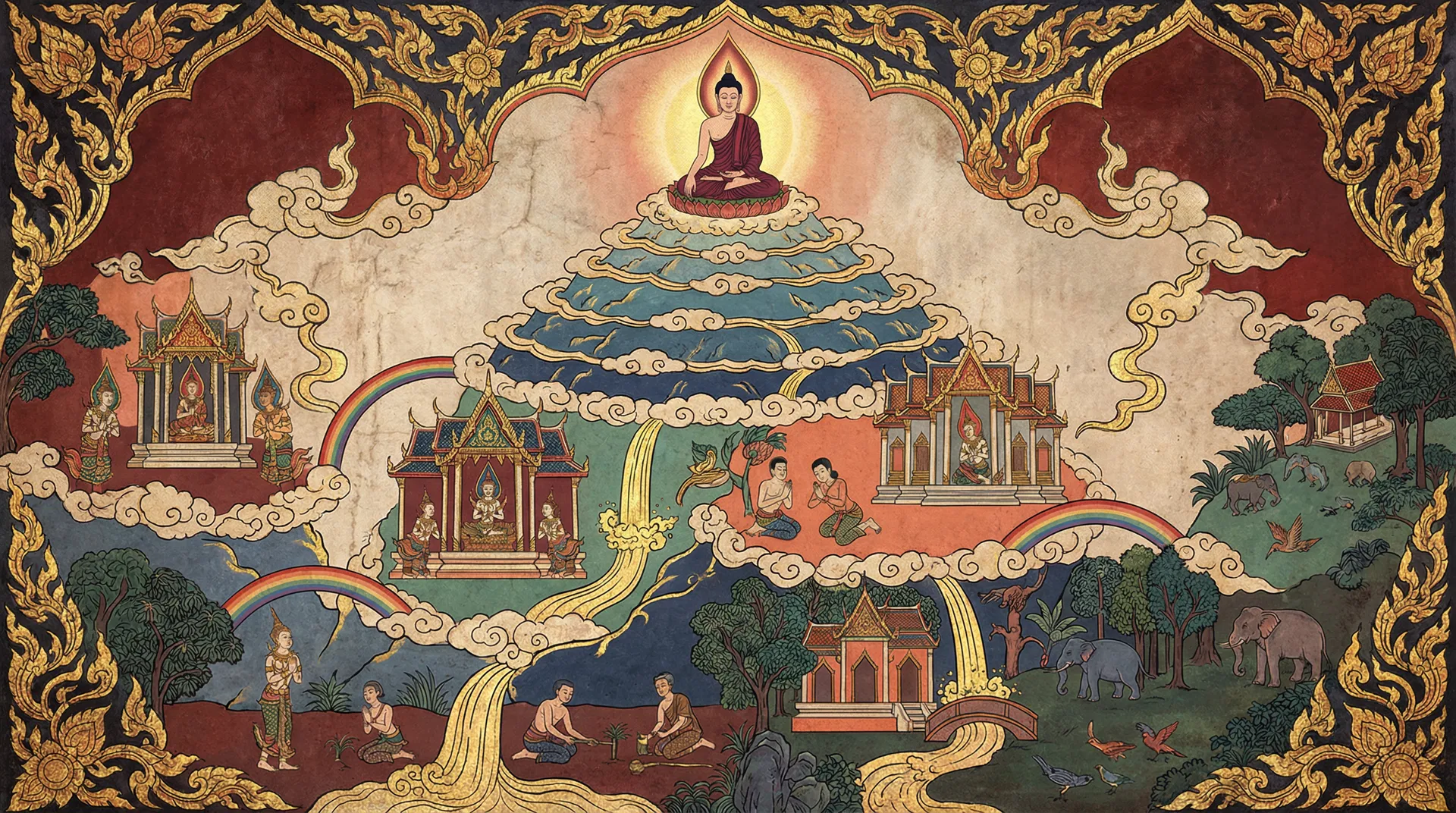 487Pakiṇṇakanipāta
Sutasoma Jātaka
Sutasoma JātakaIn the heart of the ancient kingdom of Kampilya, a kingdom famed for its magnificent ...
💡 True strength lies not in violence or the taking of life, but in unwavering compassion, understanding, and the courage to break cycles of suffering through acts of profound kindness and non-violence.
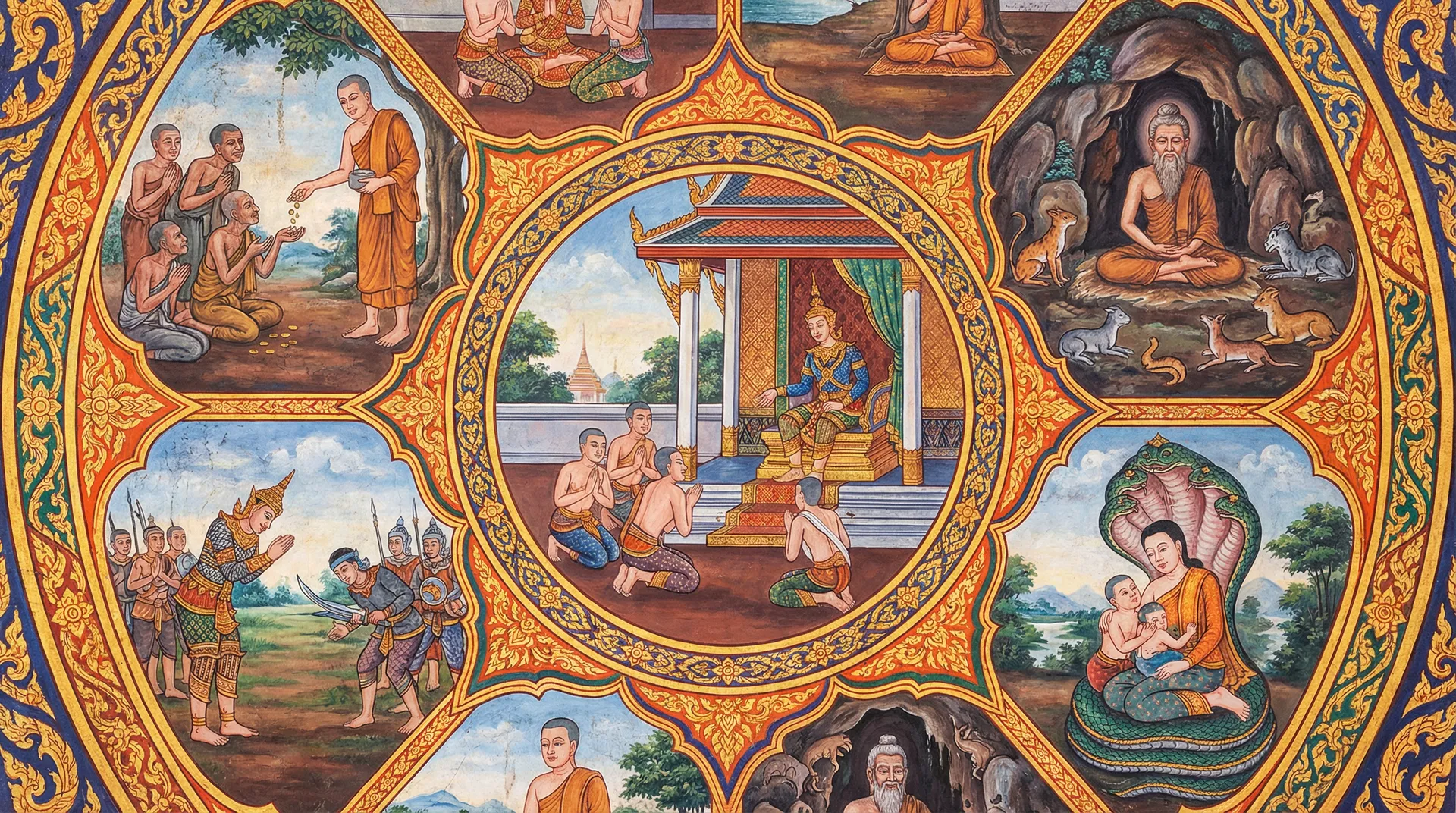 359Pañcakanipāta
Mulaka Jataka
Mulaka Jataka In the bustling city of Savatthi, renowned for its vibrant markets and learned scholar...
💡 Integrity and honest hard work are virtues that ultimately bring true reward and respect, even when initially met with injustice. True perfection lies in dedication and honesty, not in pleasing the whims of the corrupt.
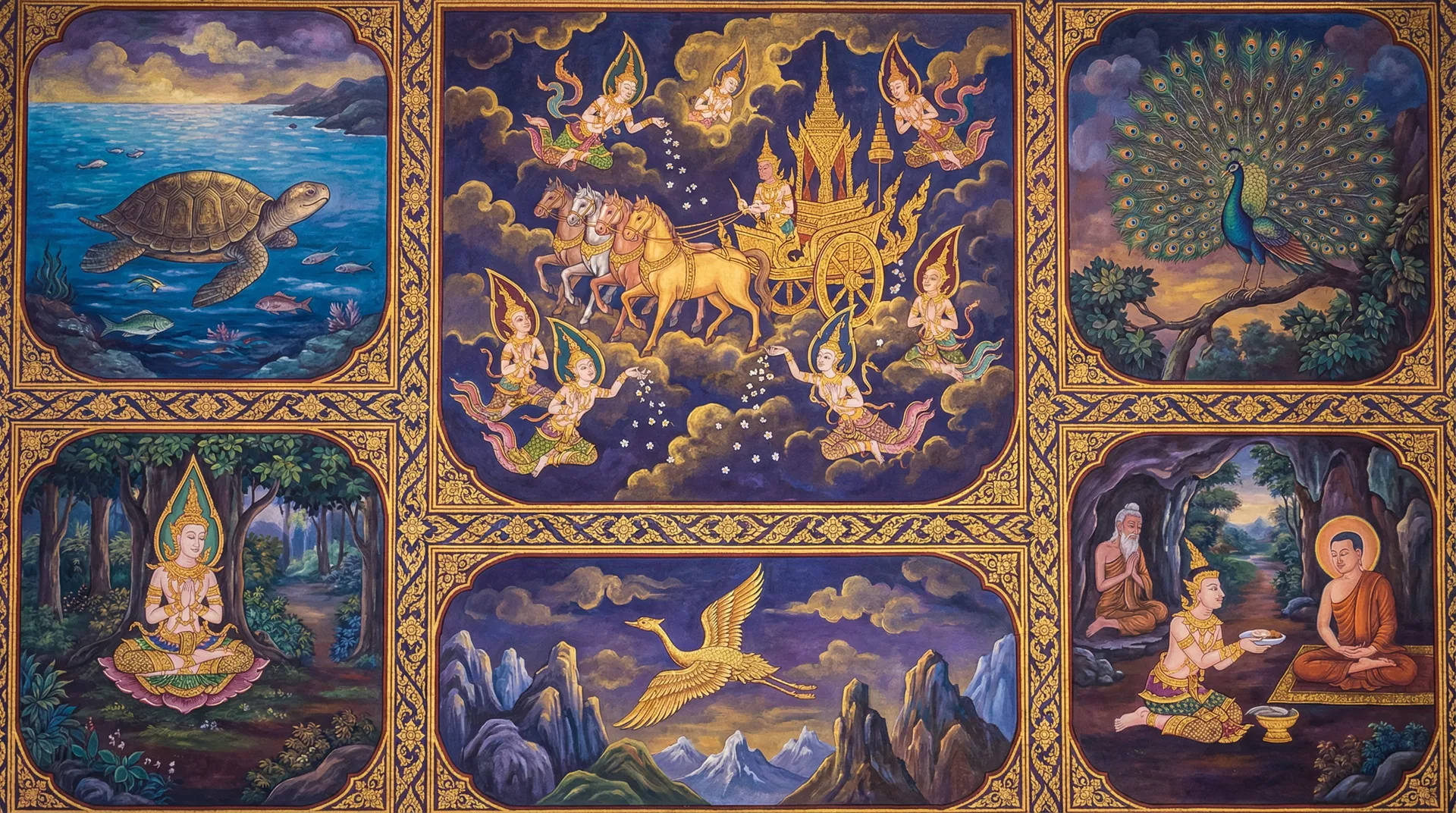 404Sattakanipāta
Sama Jataka
Sama JatakaIn the tranquil foothills of the Himalayas, where the air was crisp and the scent of pine...
💡 Filial piety (devotion to parents) and a life lived with unwavering virtue and sincerity possess immense power, capable of overcoming even the gravest of misfortunes.
 324Catukkanipāta
Kusa Jataka
Kusa JatakaIn the ancient kingdom of Mithila, there lived a king named Kusa. He was a wise and just ...
💡 Pride and anger lead to injustice and suffering. True strength and leadership are found in wisdom, compassion, patience, and the humility to admit one's mistakes and seek forgiveness.
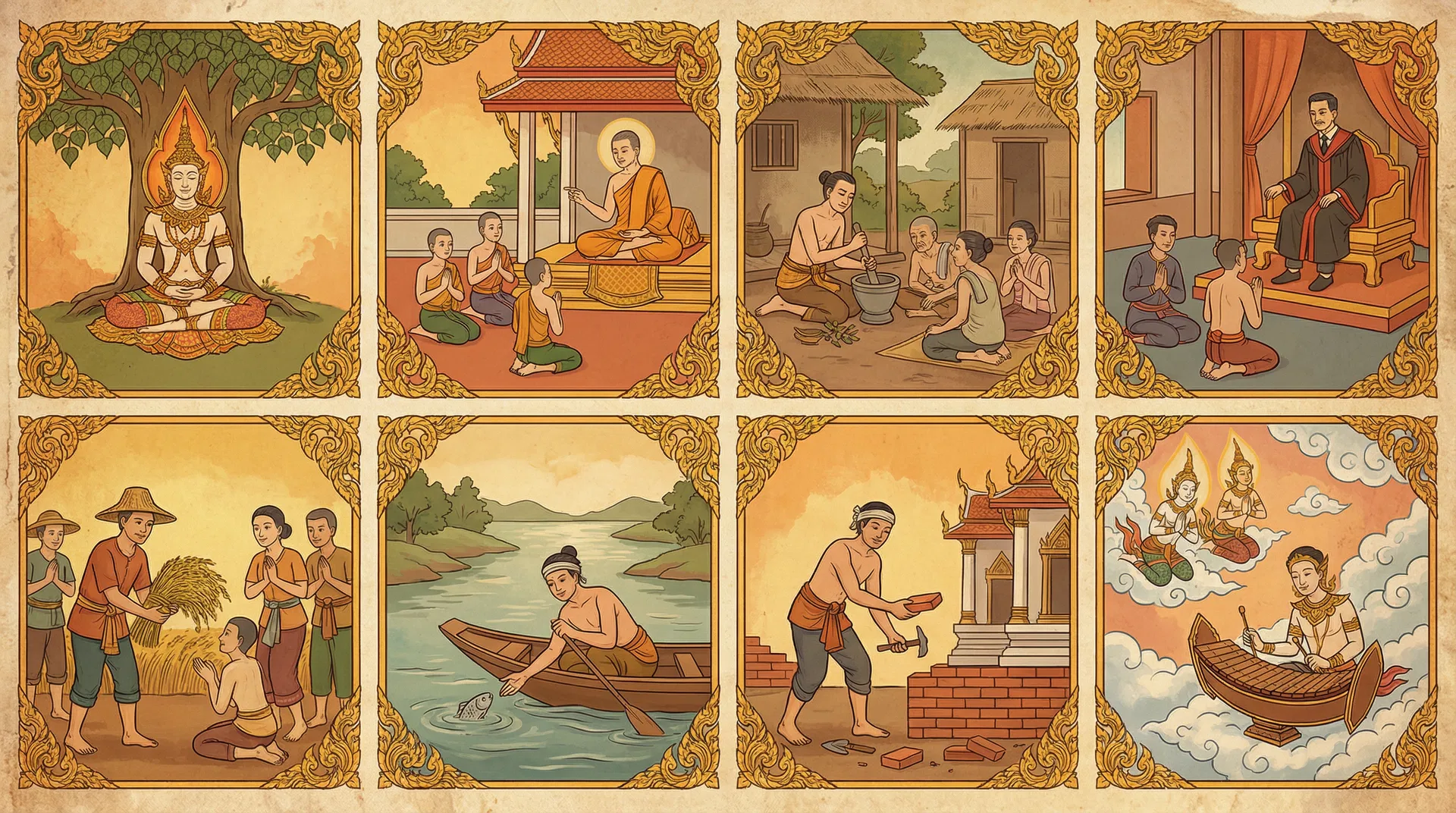 420Aṭṭhakanipāta
Mahakapi Jataka
The Tale of the Great Monkey KingIn the verdant jungles of the Himalayas, where snow-capped peaks ki...
💡 Selflessness, justice, and keeping one's word are the highest virtues of leadership, even when faced with personal loss.
— Multiplex Ad —