
Kusa Jataka
Kusa Jataka
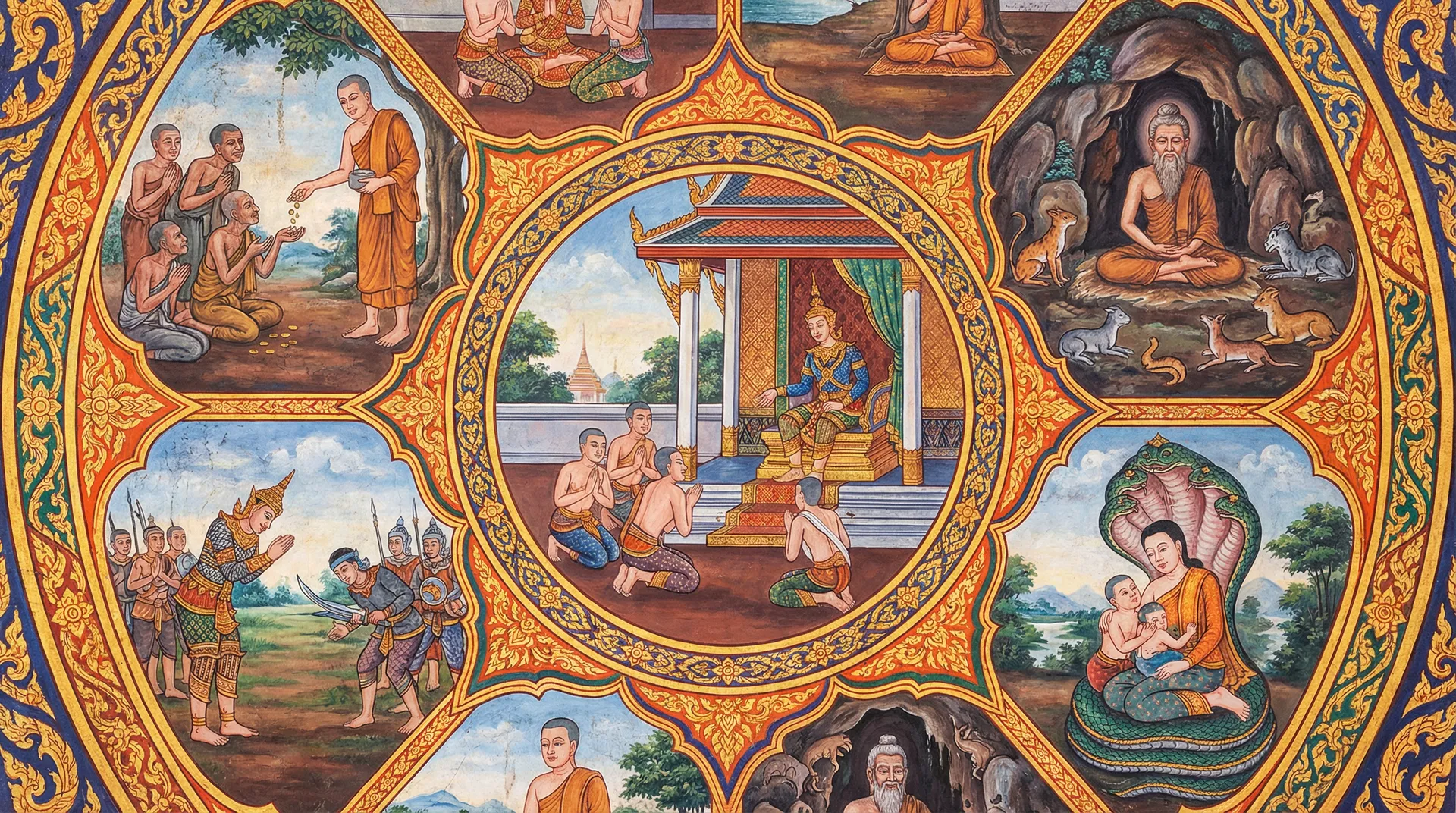
In the ancient kingdom of Mithila, there lived a king named Kusa. He was a wise and just ruler, but his heart was troubled by a deep-seated pride and a tendency towards harshness, particularly towards his queen, Pabhavati. The queen was a woman of immense beauty and virtue, beloved by the people, but the king, due to a misunderstanding and his own inherent flaws, harbored suspicions and often spoke to her with unkindness.
One day, King Kusa, influenced by malicious whispers and his own pride, decided to banish Queen Pabhavati from the palace. His heart was hardened, and he ordered her to be taken far away and left in a remote forest. The queen, though heartbroken and unjustly treated, accepted her fate with grace and dignity. She was accompanied by a loyal attendant, and together they ventured into the wilderness.
Meanwhile, the Bodhisattva, in this lifetime, was born as a prince named Bodhisattva. He was the younger brother of King Kusa. Prince Bodhisattva was known for his gentle nature, his profound wisdom, and his unwavering commitment to truth and righteousness. He was deeply saddened by his brother's treatment of the queen and yearned to see justice prevail.
As Queen Pabhavati wandered in the forest, lost and despairing, she stumbled upon a hermitage where an ascetic, who was none other than the Bodhisattva in disguise, resided. The ascetic, with his keen insight, immediately recognized the queen and understood the injustice she had suffered. He welcomed her and offered her refuge, providing her with food and shelter. He saw her suffering and the inherent goodness of her character, untouched by the king's cruelty.
The Bodhisattva, still in his ascetic guise, decided to intervene. He knew that direct confrontation with his proud brother would be fruitless. Instead, he devised a plan to awaken the king's conscience and reveal the truth. He sought out the king's chief minister, a wise and trusted advisor, and revealed his true identity to him.
Together, the minister and the Bodhisattva planned a subtle yet powerful strategy. The Bodhisattva continued to live in the forest, tending to the queen, while the minister began to sow seeds of doubt and remorse in the king's mind. He would subtly praise the queen's virtues, remind the king of her loyalty, and speak of the suffering she must be enduring.
One day, the minister approached King Kusa with a seemingly innocent request. "Your Majesty," he said, "there is a wise ascetic in the forest who possesses great knowledge. I wish to seek his counsel. May I have your leave to visit him?" The king, intrigued and perhaps feeling a flicker of curiosity or even guilt, granted permission.
The minister then went to the Bodhisattva's hermitage. There, in the presence of the queen, the Bodhisattva, as the ascetic, engaged in a profound discourse on the nature of kingship, justice, and the consequences of pride and anger. He spoke of the importance of treating loved ones with kindness and respect, and the suffering that arises from suspicion and injustice. He emphasized that true strength lies not in wielding power cruelly, but in ruling with wisdom and compassion.
During their conversation, the Bodhisattva subtly wove in analogies that alluded to the queen's situation, speaking of a precious jewel cast aside due to a misunderstanding, or a pure stream polluted by false accusations. The minister, understanding the deeper meaning, would then relay these teachings to King Kusa, framing them as wisdom gained from the ascetic.
King Kusa, hearing these teachings through his minister, began to feel a deep sense of unease. The words resonated with his conscience, stirring memories of his queen's goodness and the harshness of his actions. He realized the folly of his pride and the suffering he had inflicted.
Finally, the Bodhisattva decided it was time for a more direct revelation. He instructed the minister to invite the king to visit the hermitage, under the pretense of seeking spiritual guidance. When King Kusa arrived, accompanied by his minister, he was astonished to find the ascetic was none other than his own brother, Prince Bodhisattva, living in humble attire. And beside him, serene and virtuous, was Queen Pabhavati.
Seeing his brother and queen together, and understanding the profound wisdom and compassion that had guided his brother's actions, King Kusa was overcome with remorse. He fell at his brother's feet and begged for forgiveness. "My brother," he cried, "I have been a fool, blinded by pride and anger. You have shown me the true path of righteousness and compassion. Please, forgive my cruelty towards my queen and my foolishness towards you."
Prince Bodhisattva, with his characteristic gentleness, helped his brother to his feet. "Brother," he said, "the path of righteousness is always open. Let this be a lesson learned. True kingship lies in wisdom, compassion, and the ability to admit one's mistakes. Your queen's virtue has remained untarnished, a testament to her strength and your misguided actions."
Queen Pabhavati, seeing her husband's genuine remorse, also forgave him. The king, humbled and transformed, brought his queen back to the palace with great honor. He ruled his kingdom with newfound wisdom and kindness, never again succumbing to pride or harshness. He learned that true strength lies in humility and that the greatest virtue is to treat all beings with compassion and understanding.
The story of King Kusa and Prince Bodhisattva became a timeless tale, illustrating how wisdom, patience, and selfless action can overcome pride and injustice, leading to reconciliation and a reign of righteousness.
— In-Article Ad —
💡Moral of the Story
Pride and anger lead to injustice and suffering. True strength and leadership are found in wisdom, compassion, patience, and the humility to admit one's mistakes and seek forgiveness.
Perfection: Wisdom (Panna)
— Ad Space (728x90) —
More Jataka Tales You May Enjoy
 27Ekanipāta
The Bodhisatta as a Deer King
The Bodhisatta as a Deer KingIn the heart of a verdant forest, where ancient trees stood sentinel an...
💡 True courage and leadership are demonstrated through selfless sacrifice for the well-being of others.
129EkanipātaMora Jataka
Mora JatakaIn the heart of a dense and ancient forest, where sunlight struggled to pierce the thick ...
💡 True power lies not in physical strength or material possessions, but in the purity of virtue, the wisdom of compassion, and the ability to inspire transformation through truth.
99EkanipātaThe Tale of King Videha
In the prosperous city of Mithila, situated in the thriving kingdom of Videha, renowned for its comm...
💡 True wealth is found in selfless giving and compassion. Generosity, when offered with a pure heart, can bring about miracles and spiritual abundance.
 358Pañcakanipāta
Kaka Jataka
Kaka Jataka In the realm of Mithila, where kings were known for their wisdom and the land was blesse...
💡 Greed for material possessions leads to discord, weakness, and destruction. True value lies in community, shared resources, and practical sustenance, which ensure survival and harmony.
18EkanipātaThe Bodhisatta as a King of Deer
The Bodhisatta as a King of DeerIn the heart of a vast and ancient forest, where sunlight dappled th...
💡 True leadership and love manifest in selfless sacrifice, inspiring even the hardest hearts.
34EkanipātaThe King Unattached to Glory
The King Unattached to Glory In the ancient land of Benares, where the sun cast a golden hue upon s...
💡 Honesty and integrity are the noblest virtues. Even small matters should not be overlooked. Deceiving others will lead to severe consequences.
— Multiplex Ad —