
Nimi Jataka
Nimi Jataka
In the flourishing kingdom of Mithila, ruled a king named Nimi, whose reign was characterized by righteousness and profound spiritual insight. He was a ruler deeply devoted to Dharma, his every action guided by principles of justice, compassion, and truth. The people adored him, for he was not only a just king but also a wise teacher, who inspired them to live virtuous lives.
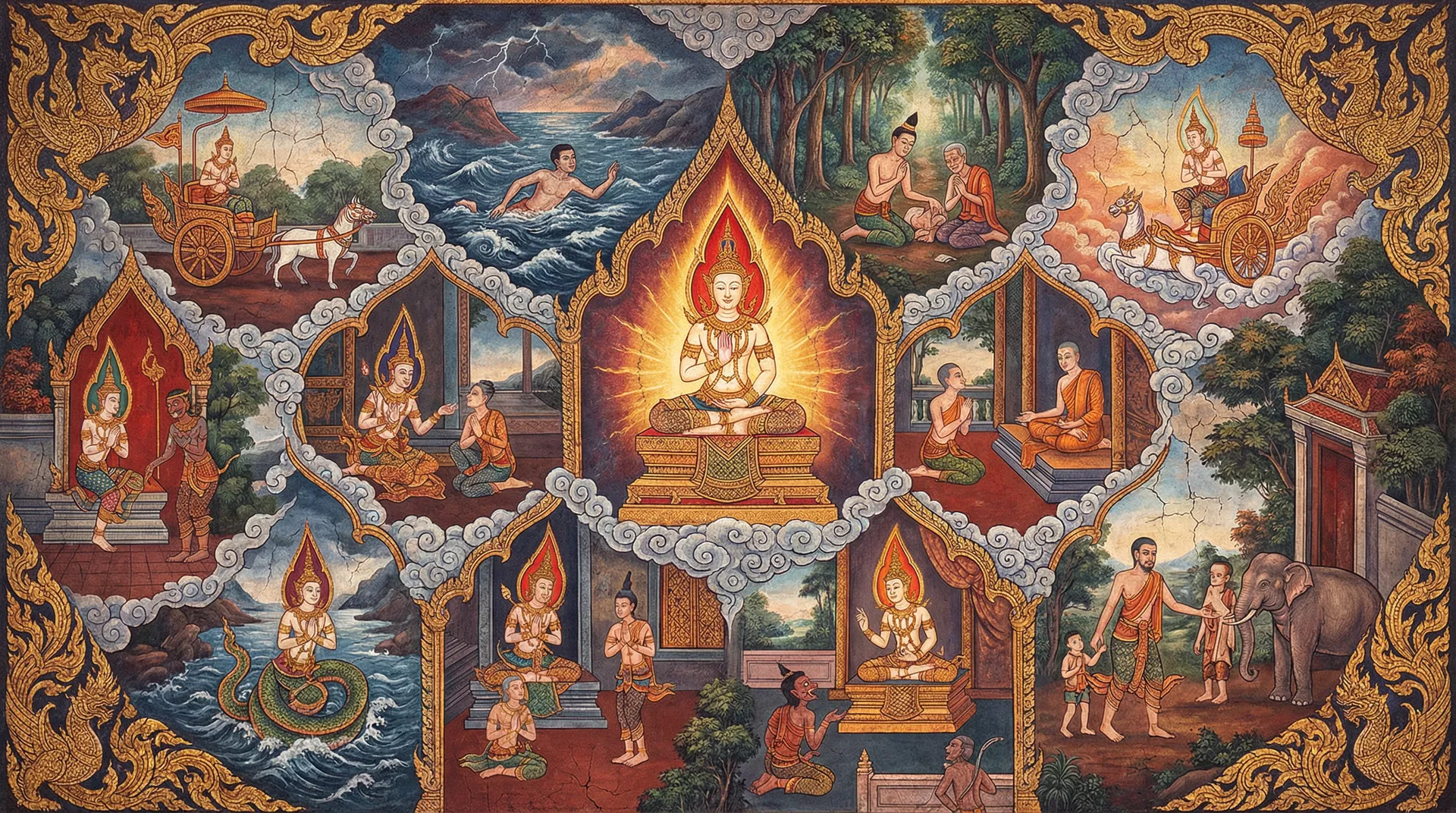
One day, a celestial sage, Matali, who served as the charioteer of the gods, descended to the mortal realm. He observed King Nimi with great admiration. Matali recognized in Nimi a soul ripe for understanding the deepest truths of existence. He approached the king and spoke of the celestial realms, of the joys and sorrows that befell beings according to their karma, and of the impermanence of all worldly pleasures.
“O King,” Matali said, his voice resonating with divine wisdom, “your adherence to Dharma has earned you great merit. I have come to offer you a unique opportunity: to journey with me to the celestial abode of Indra, the king of the gods. There, you will witness firsthand the fruits of virtuous deeds and the consequences of unwholesome actions.”
King Nimi, ever eager to deepen his understanding of Dharma and its workings, readily accepted. He mounted Matali’s magnificent celestial chariot, its wheels humming with divine energy, and ascended into the heavens. As they journeyed, Matali explained the intricate workings of karma, how every thought, word, and deed created ripples that shaped one’s destiny.
They arrived in the celestial realm, a place of breathtaking beauty and unimaginable splendor. The palaces were crafted from starlight, the gardens bloomed with flowers of pure light, and the air thrummed with celestial music. King Nimi witnessed beings of immense power and radiance, enjoying pleasures beyond human comprehension. He saw gods and goddesses, celestial nymphs, and beings of pure bliss.
Yet, as they continued their tour, Matali showed Nimi the other side of the celestial coin. He revealed the realms of suffering, where beings experienced the bitter fruits of their negative karma. He showed King Nimi beings trapped in cycles of pain, torment, and despair, their suffering a direct consequence of their past misdeeds. He witnessed heavens that were glorious but fleeting, and hells that were agonizing and seemingly eternal.
Matali then guided King Nimi to a special garden, where beings who had performed exceptionally virtuous deeds resided. Here, the king saw beings who had practiced immense generosity, compassion, and selflessness. Their faces radiated peace and contentment, their existence a testament to the power of positive karma.
During their journey, King Nimi had the opportunity to meet with various celestial beings and even with the great god Indra himself. He asked them questions, seeking to understand the true nature of happiness and suffering, the path to liberation, and the ultimate purpose of life.
One of the most profound experiences for King Nimi was to witness the constant cycle of birth, death, and rebirth that governed all beings, even the gods. He saw that even in the highest heavens, existence was temporary, and that true, lasting peace could only be found by transcending the cycle of samsara.
After spending a period in the celestial realms, absorbing the profound lessons, Matali brought King Nimi back to Mithila. The king returned with a transformed perspective. His earthly reign, which was already just, now became even more imbued with a deep understanding of the universal laws of cause and effect.
He shared his celestial experiences with his people, not to boast, but to guide them. He spoke of the impermanence of even the most divine pleasures and the inevitable suffering that follows from attachment. He emphasized the importance of living a life guided by Dharma, of cultivating virtues like generosity, compassion, and wisdom, and of striving for liberation from the cycle of birth and death.
King Nimi’s teachings, now enriched by his celestial journey, inspired his kingdom to reach new heights of spiritual understanding. His reign became a golden age, not just of material prosperity, but of profound spiritual awakening, a testament to the wisdom gained from walking the path of Dharma and witnessing the grand tapestry of karma.
— In-Article Ad —
💡Moral of the Story
All worldly pleasures, even those in celestial realms, are impermanent and subject to the law of karma. True liberation comes from understanding and transcending the cycle of birth and death through virtuous living.
Perfection: Generosity (Dāna), Virtue (Sīla), Renunciation (Nekkhamma), Wisdom (Paññā), Energy (Viriya), Patience (Khanti), Truthfulness (Sacca), Resolution (Adhiṭṭhāna), Loving-kindness (Mettā), Equanimity (Upekkhā)
— Ad Space (728x90) —
More Jataka Tales You May Enjoy
 396Sattakanipāta
Kacchapa Jataka
Kacchapa JatakaIn the heart of ancient India, where the Ganges River meandered like a silver serpent...
💡 True renewal and the overcoming of desolation come not just from external resources, but from the cultivation and embodiment of virtues like patience, perseverance, and unwavering commitment.
 540Mahānipāta
Sama Jataka
The Tale of Prince Sama and the Mother's Love In the ancient kingdom of Kuruksetra, there lived a pi...
💡 Unwavering filial piety and selfless devotion are virtues of the highest order, capable of inspiring compassion and even divine intervention. True love transcends personal sacrifice.
 283Tikanipāta
Sādhina Jātaka
Sādhina JātakaIn the sun-drenched kingdom of Kalinga, ruled a king named Sādhina, whose reign was ma...
💡 True wealth is not measured by material possessions, but by the well-being of one's people and the purity of one's heart. Greed leads to suffering and the decline of prosperity.
300TikanipātaSutasoma Jataka
The Sutasoma Jataka: The Prince Who Befriended a Demon In the ancient kingdom of Pancala, there live...
💡 Unwavering loving-kindness and compassion have the power to transform even the most hardened hearts, proving that true strength lies in understanding and empathy, not in violence or hatred.
 306Catukkanipāta
Mahā-Ummagga Jātaka
The Great Tunneling TaleLong ago, in the ancient city of Mithila, ruled a wise and just king named J...
💡 True wisdom lies not just in knowledge, but in the ability to apply it with perseverance and compassion to overcome adversity. Even the most daunting challenges can be surmounted with a clear vision, unwavering determination, and the unity of a community.
295TikanipātaSattigumba Jātaka
The Tale of the Seven Skilled HuntersIn the prosperous kingdom of Uttara, nestled amidst rolling hil...
💡 True skill is best demonstrated when applied for the benefit of others, transforming personal prowess into acts of compassion and service. Purposeful action, guided by wisdom, leads to true renown.
— Multiplex Ad —