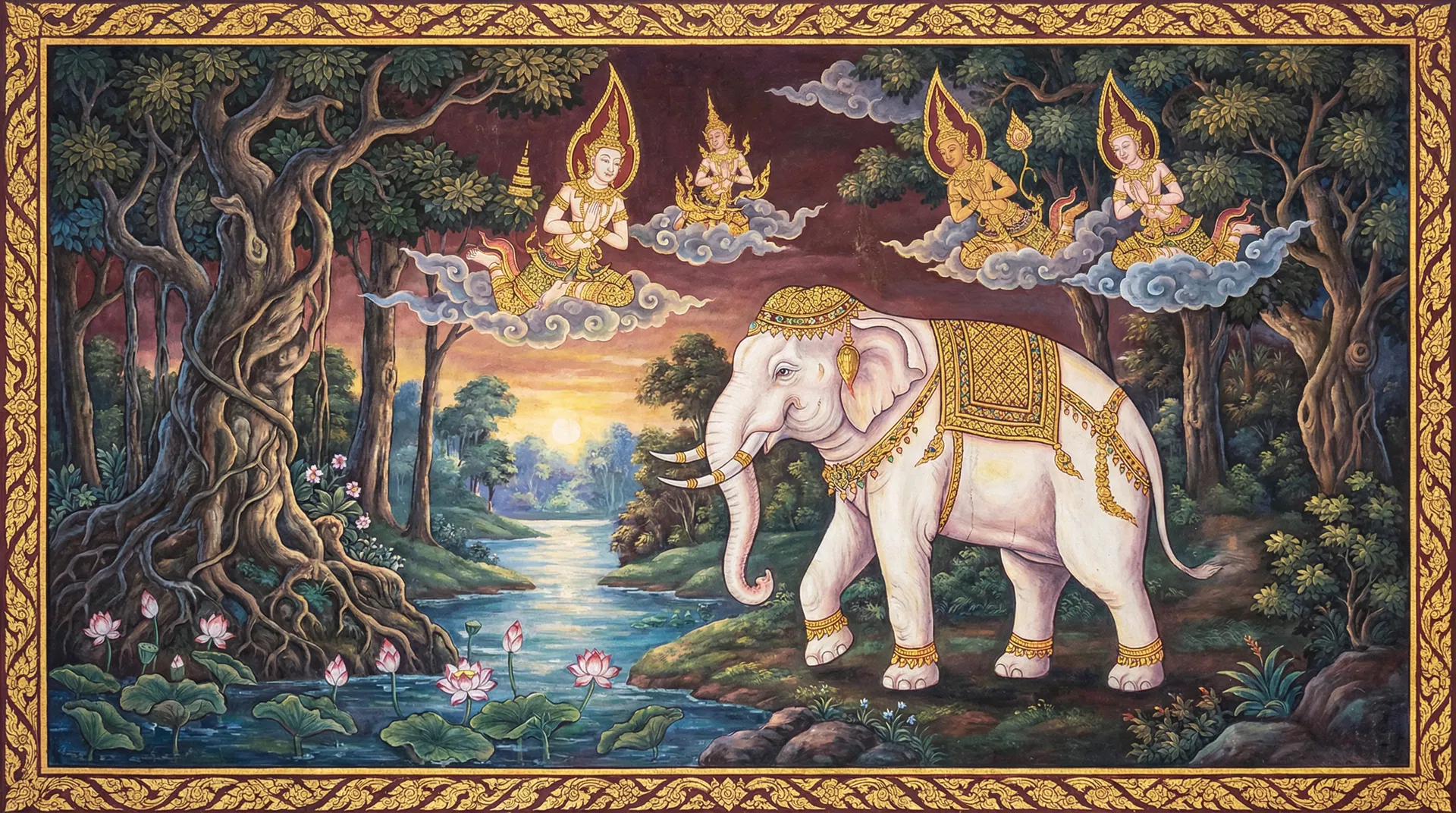
Mahā-Ummagga Jātaka
The Great Tunneling Tale
Long ago, in the ancient city of Mithila, ruled a wise and just king named Janaka. His reign was marked by prosperity and peace, but even the most fortunate kingdoms can face unforeseen challenges. One day, a terrible famine struck the land. The rivers ran dry, the crops withered, and the people grew desperate. King Janaka, though he shared his own dwindling stores, knew it was not enough. He pondered deeply, his brow furrowed with concern, "How can I save my people from this relentless thirst?"
Meanwhile, in a humble dwelling on the outskirts of the city, lived a young man named Mahosadha. He was not a prince, nor a wealthy merchant, but possessed a mind sharper than any sword and a heart filled with compassion. Even as a child, his intelligence shone brightly. He could solve riddles that baffled the elders and devise plans that seemed impossible. His reputation for wisdom spread throughout the land, reaching even the ears of King Janaka.
One sweltering afternoon, as the sun beat down mercilessly, King Janaka summoned Mahosadha. The king, his voice parched with thirst, looked at the young man with hope in his eyes. "Mahosadha," he said, "our kingdom is dying. We need water, and we need it desperately. Can your famed wisdom find a way?"
Mahosadha bowed respectfully. "Your Majesty," he replied, his voice calm and steady, "despair is the enemy of progress. I believe I have a solution, but it will require great effort and unwavering faith." He then proposed a daring plan: to dig a massive tunnel from the city to a distant, hidden spring known only to a few. This spring, he explained, was said to be deep within the earth, fed by underground rivers that even the drought could not touch. The journey to reach it, however, was treacherous, filled with rocks and hidden caverns.
The king, though astonished by the audacity of the plan, was moved by Mahosadha's conviction. "A tunnel? To an underground spring?" he mused. "It sounds like a dream, but I have faith in you, Mahosadha. Let us begin."
And so, the great undertaking commenced. Mahosadha, with his keen intellect, directed the digging. He mapped out the course of the tunnel, anticipating every obstacle. He divided the work among thousands of laborers, ensuring that each was assigned a task suited to their strength and skill. He himself worked tirelessly, not just with his mind, but with his hands, setting an example of dedication.
The digging was arduous. Days turned into weeks, and weeks into months. The earth was unyielding, and the workers grew weary. Doubts began to creep in. Some whispered that Mahosadha's plan was madness, a futile waste of precious resources. "How can we dig so deep?" they grumbled. "The earth will swallow us whole!"
One day, a group of disgruntled workers, led by a man named Kālaka, known for his negativity, approached Mahosadha. "Mahosadha!" Kālaka shouted, his face contorted with anger. "This tunnel is a fool's errand! We are digging ourselves into oblivion. We should abandon this project and conserve our strength for finding water on the surface."
Mahosadha, though tired, met Kālaka's gaze with a serene smile. "Kālaka," he said gently, "true strength lies not in giving up, but in perseverance. This tunnel is not just about digging; it is about hope. It is about the future of our kingdom. Imagine the day when clean, cool water flows into our city, quenching the thirst of every soul. That is the vision that fuels our efforts." He then explained in detail the geological formations they were encountering, reassuring them that their progress was steady and that they were nearing the source.
His words, though encouraging, did not sway everyone. Kālaka, fueled by his own fears and the anxieties of others, decided to sabotage the project. He secretly spread rumors that the tunnel was cursed and that anyone who continued digging would face the wrath of the earth spirits. He also began to pilfer supplies, hoping to slow down the work.
Mahosadha, ever vigilant, soon detected Kālaka's treachery. Instead of confronting him directly and causing further division, he devised a clever plan. He announced to the workers that he had discovered a way to appease the earth spirits and ensure their safety. He instructed them to place small offerings of food and drink at the entrance of the tunnel each morning. These offerings, he explained, were a sign of respect and gratitude to the spirits who were allowing them passage.
The workers, eager to ensure their safety and believing Mahosadha's words, readily complied. Kālaka, seeing his sabotage attempts being turned into a ritual that actually boosted morale and unity, was frustrated. He tried to poison the offerings, but Mahosadha, foreseeing this, had already ensured that the offerings were prepared by a trusted few and were not easily accessible to Kālaka.
Finally, after months of relentless labor, a cheer erupted from the depths of the earth. Water! A gush of clear, cool water streamed forth, filling the tunnel and flowing towards the city. The people rejoiced! They had water! King Janaka, tears of gratitude streaming down his face, embraced Mahosadha. "You have saved us all, Mahosadha! Your wisdom is a gift to this kingdom."
The tunnel became a lifeline for Mithila, ensuring a constant supply of water even in the driest of times. Mahosadha's foresight and determination had turned a seemingly impossible dream into a life-saving reality. Kālaka, ashamed of his actions, confessed his treachery and was forgiven by the king, tasked with the important role of managing the water distribution, a responsibility he carried out with newfound diligence.
— In-Article Ad —
💡Moral of the Story
True wisdom lies not just in knowledge, but in the ability to apply it with perseverance and compassion to overcome adversity. Even the most daunting challenges can be surmounted with a clear vision, unwavering determination, and the unity of a community.
Perfection: Wisdom (Paññā)
— Ad Space (728x90) —
More Jataka Tales You May Enjoy
 283Tikanipāta
Sādhina Jātaka
Sādhina JātakaIn the sun-drenched kingdom of Kalinga, ruled a king named Sādhina, whose reign was ma...
💡 True wealth is not measured by material possessions, but by the well-being of one's people and the purity of one's heart. Greed leads to suffering and the decline of prosperity.
 152Dukanipāta
Sālaka Jātaka
Sālaka JātakaLong ago, in the bustling city of Benares, lived a wise and benevolent king. His kingdo...
💡 True wealth lies not in hoarding, but in sharing. Contentment and moderation lead to a harmonious and prosperous life.
193DukanipātaSarbhangajataka
Sarbhangajataka In the venerable city of Varanasi, where the Ganges flowed like a silken ribbon and ...
💡 Truth and virtue, when deeply rooted, cannot be destroyed by falsehood or malice. Those who spread lies and sow discord ultimately reveal their own corrupt nature.
 4Ekanipāta
The Tale of the Excellent Archer
The Tale of the Excellent Archer In the ancient kingdom of Mithila, a land blessed with fertile pla...
💡 Accusing others without reason and having impure intentions inevitably lead to one's own suffering. Forgiveness and genuinely good deeds are the path to peace and happiness.
189DukanipātaSujana Jataka
The Tale of the Kindhearted KingIn the opulent kingdom of Mithila, a land blessed with fertile plain...
💡 True leadership and genuine kindness are demonstrated through selfless generosity and a profound commitment to the welfare of others, even at great personal cost.
 532Mahānipāta
Sasa Jātaka
Sasa JātakaIn a time long past, when the world was a wilder and more wondrous place, there lived a m...
💡 The highest form of generosity is the willingness to sacrifice oneself for the sake of others. True compassion lies in understanding the suffering of others and acting to alleviate it, even at great personal cost.
— Multiplex Ad —