
Vessantara Jātaka
Vessantara Jātaka
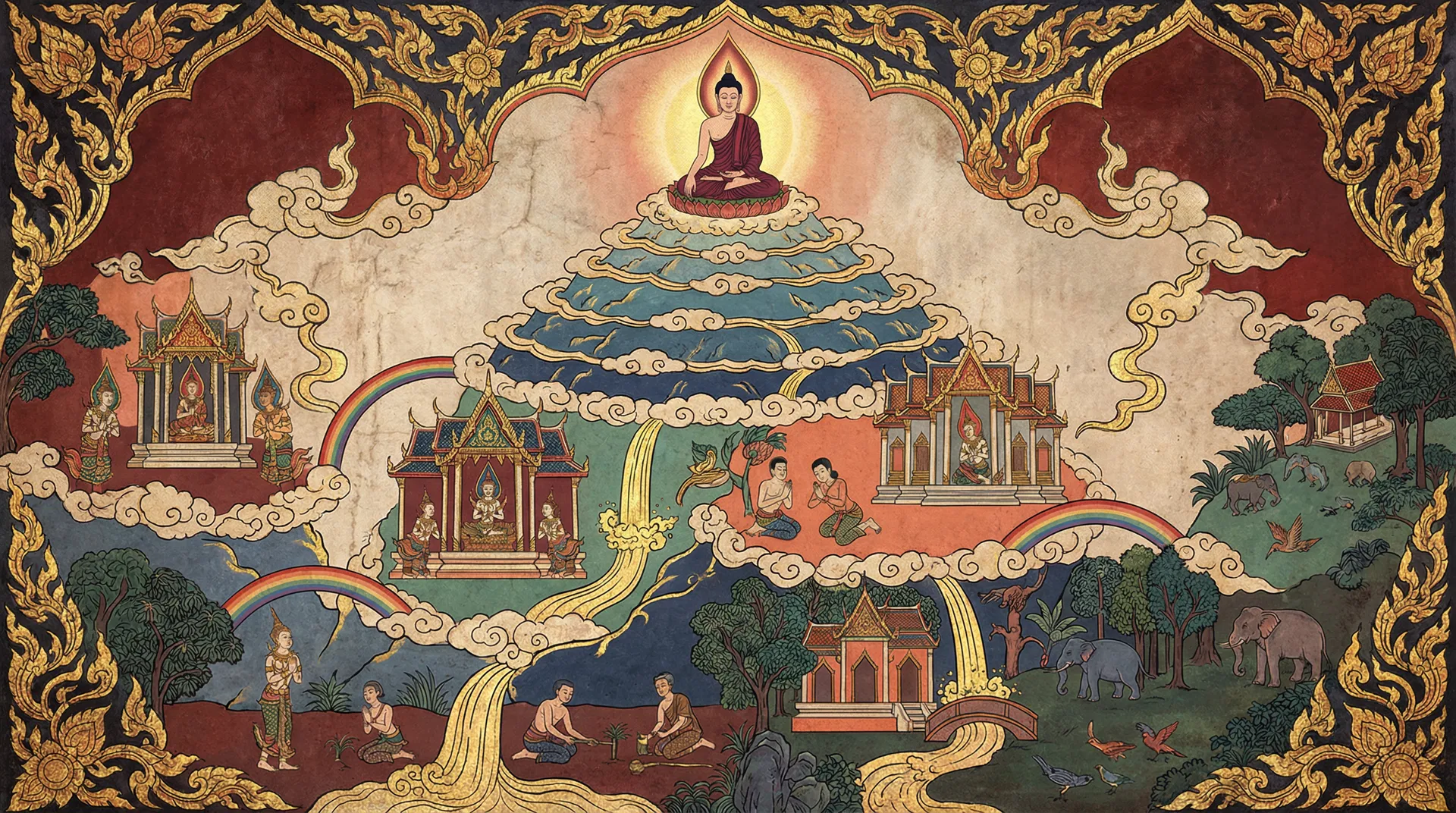
In the magnificent kingdom of SiBī, ruled the noble King Sanjaya and his virtuous queen Maddī. Their son, Prince Vessantara, was renowned throughout the land for his unparalleled generosity. From a young age, he possessed a heart overflowing with compassion, always eager to give away his possessions, be it wealth, jewels, or even his own belongings, to those in need.
One day, a wise and ascetic Brahmin named Jujaka visited the kingdom. He had heard tales of Prince Vessantara's boundless charity and decided to test the prince's resolve. Jujaka approached the palace and, seeing Vessantara in the royal gardens, boldly requested the prince's prized white elephant, a magnificent creature believed to bring rain to the kingdom.
Prince Vessantara, true to his nature, could not refuse a plea for charity. He gifted the elephant to Jujaka, much to the dismay of his father, King Sanjaya, and the people of SiBī. The king, fearing drought, had to forbid Vessantara from giving away any more royal possessions.
Later, two children of a neighboring kingdom, Kalaṅga, whose land was suffering from a severe drought, came to the palace seeking aid. They were the children of Jujaka, whom he had sent to Vessantara after he himself had been banished for his greed. Seeing their suffering, Prince Vessantara's compassionate heart ached. Despite his father's prohibition, he could not bear to see them suffer. He welcomed them into the palace and, in an act of supreme charity, offered them as servants to his aunt, Queen consort of Kalaṅga.
This act, however, was seen as a grave mistake by the elders of SiBī. They felt that Vessantara had brought shame upon the kingdom and endangered its future by giving away both the rain-bringing elephant and the prince and princess who represented the royal lineage. Under pressure from his advisors, King Sanjaya, with a heavy heart, banished his beloved son Vessantara from the kingdom.
Heartbroken but resolute, Vessantara, along with his devoted wife Queen Maddī and their two children, left the kingdom. They sought refuge in the forest, living a life of austerity and simplicity. Queen Maddī, despite her royal upbringing, bore the hardships of forest life with grace and devotion, supporting her husband in his path of extreme generosity.
One fateful day, while Vessantara and Maddī were away gathering fruits, the greedy Brahmin Jujaka returned. He had heard that Vessantara had taken his children with him. Jujaka, driven by malice and greed, found the children playing near their hermitage and, without mercy, claimed them as his own, intending to sell them.
When Vessantara and Maddī returned and found their children missing, their grief was unimaginable. Maddī fainted from shock and sorrow. As Vessantara mourned, the deity Sakka, king of the gods, appeared disguised as a Brahmin. He saw Vessantara's profound suffering and his unwavering commitment to the Bodhisatta path, even after such immense loss.
To alleviate Vessantara's pain and test his ultimate resolve, Sakka offered Vessantara a boon. Vessantara, his heart still aching for his children, wished only for their safe return. Sakka, in his divine form, revealed himself and, with his divine power, reunited Vessantara with his children. Furthermore, Sakka bestowed upon Vessantara immense spiritual merit and assured him that his act of charity, despite its earthly consequences, was recognized and honored in the celestial realms.
The story of Prince Vessantara's extreme generosity, his suffering, and his unwavering commitment to the path of giving, even when faced with the loss of his own children, became a legendary tale. It spread throughout the land and beyond, inspiring countless beings to cultivate compassion and practice the art of selfless giving. King Sanjaya, realizing the depth of his son's virtue, eventually brought Vessantara and his family back to SiBī, where Vessantara continued to rule with wisdom and boundless charity, forever embodying the perfection of giving.
— In-Article Ad —
💡Moral of the Story
True generosity comes from the heart and requires immense courage and sacrifice. The practice of giving, even when it leads to personal suffering, leads to profound spiritual merit and liberation.
Perfection: Generosity (Dāna) and Patience (Khanti)
— Ad Space (728x90) —
More Jataka Tales You May Enjoy
 487Pakiṇṇakanipāta
Sutasoma Jātaka
Sutasoma JātakaIn the heart of the ancient kingdom of Kampilya, a kingdom famed for its magnificent ...
💡 True strength lies not in violence or the taking of life, but in unwavering compassion, understanding, and the courage to break cycles of suffering through acts of profound kindness and non-violence.
 192Dukanipāta
Mugapakkajataka
Mugapakkajataka In the ancient and verdant land of Savatthi, a king named Supparaka ruled with a ben...
💡 True leadership is not about external displays of power, but about inner peace, wisdom, and selfless service. The most impactful actions often come from a place of quiet strength and genuine compassion.
28EkanipātaThe Bodhisatta as a King of Bears
The Bodhisatta as a King of BearsIn the vast, snow-laden wilderness of the far north, where towering...
💡 Wise leadership, determination, and inspiring trust can guide a community through perilous challenges to safety.
87EkanipātaJataka Tale No. 87: The Tale of the Wise Elephant
Jataka Tale No. 87: The Tale of the Wise Elephant In the annals of ancient wisdom, there are ta...
47EkanipātaThe Bodhisatta as the King of the Monkeys
The Bodhisatta as the King of the MonkeysIn a verdant forest so vast that its trees seemed to scrape...
💡 Wisdom, courage, and self-sacrifice are the most effective defenses against malice and greed.
36EkanipātaThe Tale of the Horse-Breeder
In a past aeon, in the flourishing city of Varanasi, the Bodhisatta was born as a young Brahmin, end...
💡 The highest form of virtue is selfless compassion, willing to sacrifice for the well-being of others.
— Multiplex Ad —