
The Bodhisatta's Compassion for His Foes
547 Jataka Tales
67

The Bodhisatta's Compassion for His Foes

Buddha24Ekanipāta
Listen
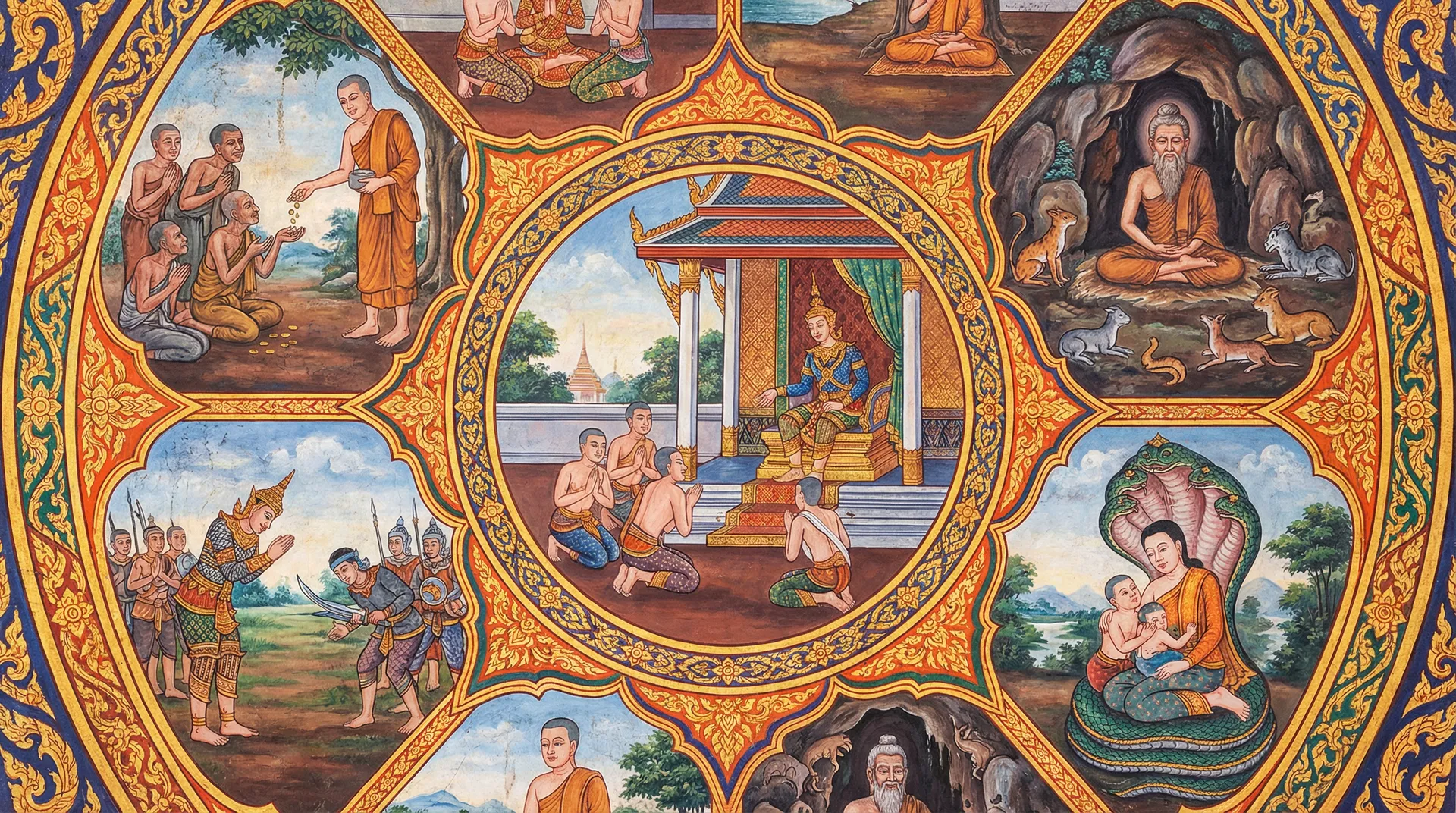
In the glorious city of Rājagaha, the capital of Magadha, in an age when kingdoms were often rife with discord, there reigned a righteous king named Mahādhammapāla. His rule was characterized by unwavering justice and boundless compassion, earning him the deep respect of his people. One fateful day, a ruthless king from a foreign land, King Ratthapāla, arrived at the city's gates with a formidable army. Driven by insatiable ambition, King Ratthapāla declared his intention to conquer Mahādhammapāla's prosperous kingdom. "We shall seize this city!" he proclaimed, his voice echoing with arrogance. "We will not allow Mahādhammapāla to rule any longer!" King Mahādhammapāla, upon hearing of the impending invasion, did not retaliate with fury or prepare for a bloody conflict. Instead, his heart overflowed with profound pity for King Ratthapāla and his men, recognizing their actions as born from ignorance and attachment to worldly power. He understood that true victory lay not in bloodshed, but in overcoming the very roots of suffering and conflict. With a serene and determined spirit, King Mahādhammapāla rode out to meet the invading army, not with weapons, but with an offering of peace. He approached King Ratthapāla, who was poised for battle, and spoke with a voice imbued with wisdom and kindness. "O King Ratthapāla," he began, "why do you seek to inflict suffering upon yourself and others? This kingdom is not a prize to be won through violence, but a realm to be nurtured with compassion." King Ratthapāla, accustomed to fear and subjugation, was taken aback by Mahādhammapāla's gentle demeanor and lack of resistance. He expected defiance, not understanding. Mahādhammapāla continued, explaining the transient nature of power and the profound suffering that arises from greed and hatred. He spoke of the interconnectedness of all beings and the futility of seeking happiness through conquest. As Mahādhammapāla spoke, the soldiers on both sides, who had been bracing for a brutal clash, found themselves captivated by his words. The seeds of doubt and introspection were sown in their hearts. King Ratthapāla, though initially defiant, began to feel a stirring of shame and remorse. The unwavering compassion emanating from Mahādhammapāla chipped away at his hardened resolve. Instead of engaging in warfare, King Mahādhammapāla offered King Ratthapāla hospitality and sustenance for his army. He invited King Ratthapāla to observe the prosperity and contentment of his kingdom, a testament to his just rule. He showed him the flourishing fields, the happy citizens, and the harmonious society that was built on principles of kindness and understanding. Witnessing this firsthand, King Ratthapāla's perspective began to shift. He saw that true strength lay not in military might, but in the cultivation of inner peace and the well-being of one's subjects. The teachings of Mahādhammapāla resonated deeply within him, awakening a sense of spiritual longing. He realized the emptiness of his ambition and the suffering it had caused. Ultimately, King Ratthapāla, humbled and transformed by King Mahādhammapāla's extraordinary compassion, abandoned his plans of invasion. He returned to his own kingdom, not as a conqueror, but as a changed man, inspired by the Bodhisatta's example to rule with greater wisdom and kindness. The people of Magadha rejoiced, their kingdom preserved not by the edge of a sword, but by the immeasurable power of a benevolent heart.

— In-Article Ad —

💡Moral of the Story

True strength is a combination of physical power, wisdom, and restraint. It is important to protect oneself and one's domain, but to do so without unnecessary violence.

Perfection: Strength (Bala Paramita)

— Ad Space (728x90) —

More Jataka Tales You May Enjoy
Sama Jataka
353Pañcakanipāta

Sama Jataka

Sama Jataka In the verdant foothills of the Himalayas, nestled beside a crystal-clear river, lived a...

💡 Selfless devotion, compassion, and understanding the consequences of one's actions are paramount.

The Bodhisatta as a Compassionate King
32Ekanipāta

The Bodhisatta as a Compassionate King

The Bodhisatta as a Compassionate KingIn the prosperous kingdom of Avanti, renowned for its fertile ...

💡 True leadership is defined by profound compassion, and tending to suffering with kindness can overcome calamities.

The Bodhisattva and the Golden Deer
3Ekanipāta

The Bodhisattva and the Golden Deer

The Bodhisattva and the Golden Deer In the ancient kingdom of Mithila, nestled amidst emerald fores...

💡 Selfishness and the failure to help others lead to suffering. When we help others, we receive good in return.

The King Unattached to Glory
34Ekanipāta

The King Unattached to Glory

The King Unattached to Glory In the ancient land of Benares, where the sun cast a golden hue upon s...

💡 Honesty and integrity are the noblest virtues. Even small matters should not be overlooked. Deceiving others will lead to severe consequences.

The Bodhisatta and the Self-Sacrificing Monk
63Ekanipāta

The Bodhisatta and the Self-Sacrificing Monk

The Bodhisatta and the Self-Sacrificing Monk In the verdant kingdom of Mithila, where palaces of po...

💡 Sharing and helping others brings true happiness. Greed and stinginess are the source of suffering.

The Bodhisatta as a King
24Ekanipāta

The Bodhisatta as a King

The Bodhisatta as a KingIn the heart of a prosperous and fertile kingdom, known for its bountiful ha...

💡 True leadership inspires generosity, and collective compassion can overcome dire hardships.

— Multiplex Ad —

This website uses cookies to improve your experience, analyze traffic, and display relevant advertisements. Privacy Policy