
The Jataka of Dighavu, the Wrathful Prince
547 Jataka Tales
56

The Jataka of Dighavu, the Wrathful Prince

Buddha24Ekanipāta
Listen
In the magnificent city of Savatthi, in days long past, there reigned a king named Koravya. He possessed a son of exquisite beauty named Dighavu, who was the apple of his father's eye. Alas, Dighavu was of a wicked disposition, consumed by anger and accustomed to resolving all matters through violence. One day, as Prince Dighavu was surveying the forest bordering the royal palace, he encountered an old man laboriously climbing a tree to gather fruit. The elder, struggling with his ascent, lost his footing and tumbled to the ground, sustaining minor injuries. Upon witnessing this, Prince Dighavu, his heart instantly inflamed with rage, strode towards the fallen elder. "You clumsy fool!" the prince bellowed, his voice echoing through the trees. "To fall like that shows your utter incompetence!" Without a moment's hesitation, Dighavu drew his sword and struck the old man a grievous blow. The elder, barely able to comprehend the prince's savage attack, cried out in pain and fear. The prince, unyielding in his fury, continued to inflict further wounds. News of the prince's brutal act soon reached the ears of the king. King Koravya, though deeply distressed by his son's cruelty, understood that Dighavu's wrath was a deeply ingrained flaw. He summoned the prince and, seeing the unrepentant fire still burning in his eyes, he knew a simple reprimand would be insufficient. The king, seeking to instill a profound lesson, devised a plan. He ordered his royal physicians to tend to the old man's wounds with the utmost care, ensuring his recovery. Then, the king summoned Dighavu once more. "My son," King Koravya began, his voice grave, "you have shown a terrible lack of compassion. Your anger blinds you to the suffering of others. To teach you the consequence of such a disposition, you will now undertake a sacred duty." The king then commanded that a great pyre be constructed within the palace grounds. To this pyre, the king brought the now-healed old man. Dighavu watched in stunned silence as his father declared, "Dighavu, if you truly believe your anger is justified, then you must prove it. You will now take this man, whom you have wounded, and you will cast him into this fire. If your wrath is righteous, it will protect him. If it is born of folly, it will consume him." Prince Dighavu, confronted with the horrific reality of his actions and the potential for utter devastation, was overcome with a crushing wave of remorse. He saw the fear in the old man's eyes, the stark consequence of his unchecked rage. The prince's fierce anger, so potent moments before, began to dissipate, replaced by a profound and chilling understanding of its destructive power. He dropped his sword, his hands trembling. "Father," he choked out, tears welling in his eyes, "I cannot. I have been a fool. My anger is not righteous; it is a poison that nearly destroyed this innocent man and would have destroyed me. I beg your forgiveness." King Koravya, seeing the genuine contrition in his son's heart, embraced him. "This, my son, is the first step towards wisdom. True strength lies not in the power to inflict pain, but in the restraint and compassion to prevent it. Let this experience be a constant reminder of the venom of anger." From that day forward, Prince Dighavu underwent a profound transformation. He dedicated himself to cultivating patience, understanding, and kindness. He learned to control his temper, recognizing that a single spark of wrath could ignite a conflagration of suffering. He ruled his kingdom with wisdom and compassion, never forgetting the lesson learned at the burning pyre. Moral Lesson: Uncontrolled anger is a destructive poison that harms both the perpetrator and the innocent. True strength lies in self-control, compassion, and the wisdom to overcome one's destructive impulses.

— In-Article Ad —

💡Moral of the Story

Beware of those who speak with honeyed words but harbor venom in their hearts. True wisdom lies not in seeking external remedies but in cultivating inner truth and understanding.

Perfection: Wisdom (Paññā)

— Ad Space (728x90) —

More Jataka Tales You May Enjoy

Mahakappina Jataka
537Mahānipāta

Mahakappina Jataka

The Tale of King Mahakappina and the Joy of Renunciation Long ago, in the prosperous city of Savatth...

💡 True happiness and fulfillment are found not in the accumulation of worldly possessions or power, but in the practice of detachment and renunciation. Letting go of attachments leads to inner freedom and lasting peace.

The Serpent King's Generosity (Phala Jātaka)
289Tikanipāta

The Serpent King's Generosity (Phala Jātaka)

The Serpent King's Generosity (Phala Jātaka) In a realm where the boundary between the mortal world ...

💡 True wealth lies in selfless generosity and the willingness to share one's blessings, for compassion nourishes not only others but also the giver and the world around them.

Nimi Jataka
399Sattakanipāta

Nimi Jataka

Nimi JatakaIn the ancient and glorious city of Mithila, capital of the Videha kingdom, ruled King Ni...

💡 True spiritual attainment and lasting happiness are not found in temporary heavenly pleasures, but in the continuous cultivation of virtue, compassion, and righteousness within one's own heart.
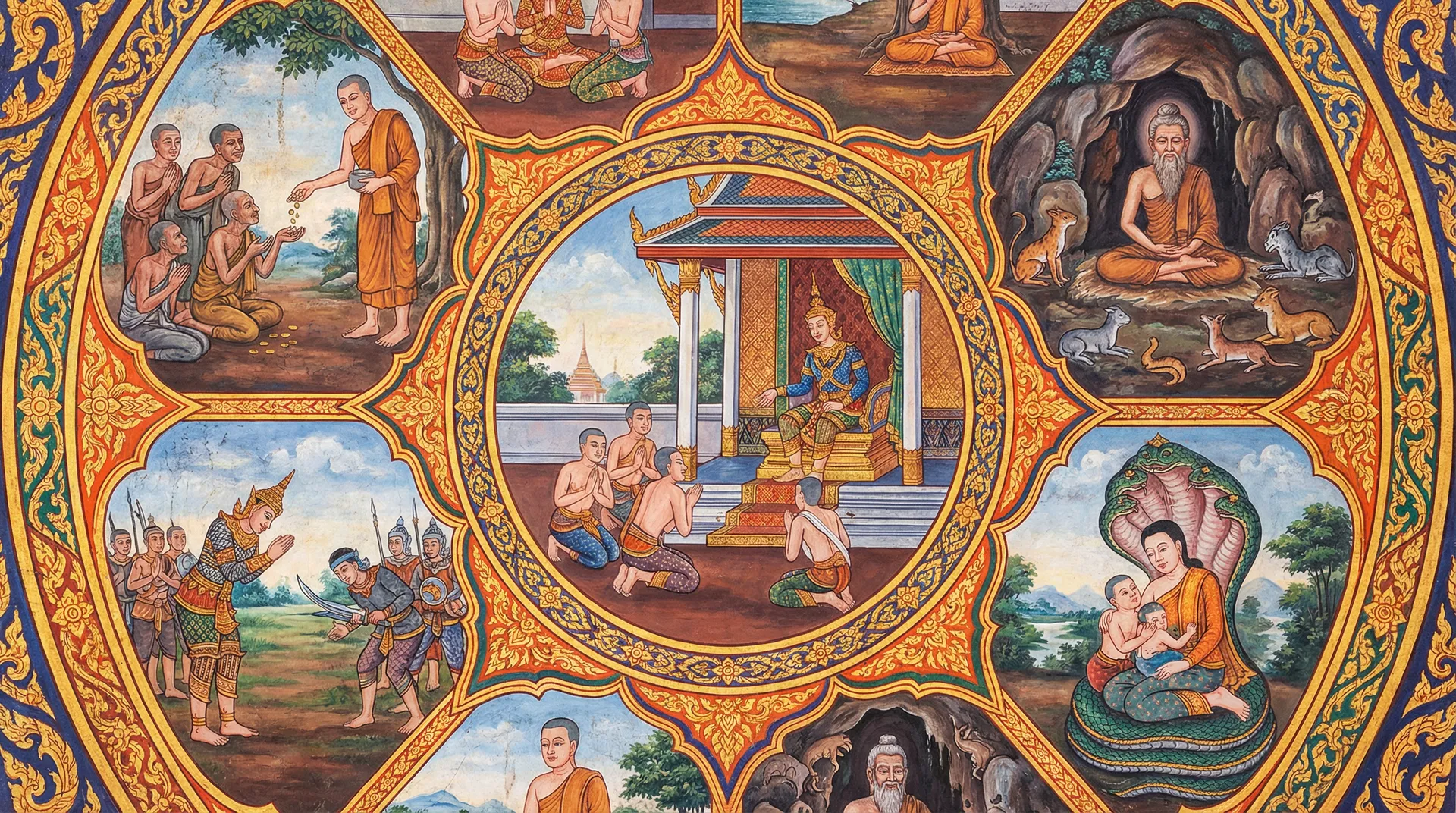
Sattubhatta Jataka
357Pañcakanipāta

Sattubhatta Jataka

Sattubhatta Jataka Long ago, in a time when gods and humans walked more closely, the great Bodhisatt...

💡 True wealth is not measured by possessions, but by generosity and the well-being of others. Greed leads to emptiness, while sharing brings true satisfaction and prosperity.

Virochana Jātaka
373Pañcakanipāta

Virochana Jātaka

Virochana JātakaIn the magnificent city of Mithila, ruled a king named Vidhura, a monarch whose reig...

💡 True power resides not in external possessions or magical artifacts, but in inner wisdom, self-control, and freedom from attachment.

Mulaka Jataka
359Pañcakanipāta

Mulaka Jataka

Mulaka Jataka In the bustling city of Savatthi, renowned for its vibrant markets and learned scholar...

💡 Integrity and honest hard work are virtues that ultimately bring true reward and respect, even when initially met with injustice. True perfection lies in dedication and honesty, not in pleasing the whims of the corrupt.

— Multiplex Ad —

This website uses cookies to improve your experience, analyze traffic, and display relevant advertisements. Privacy Policy