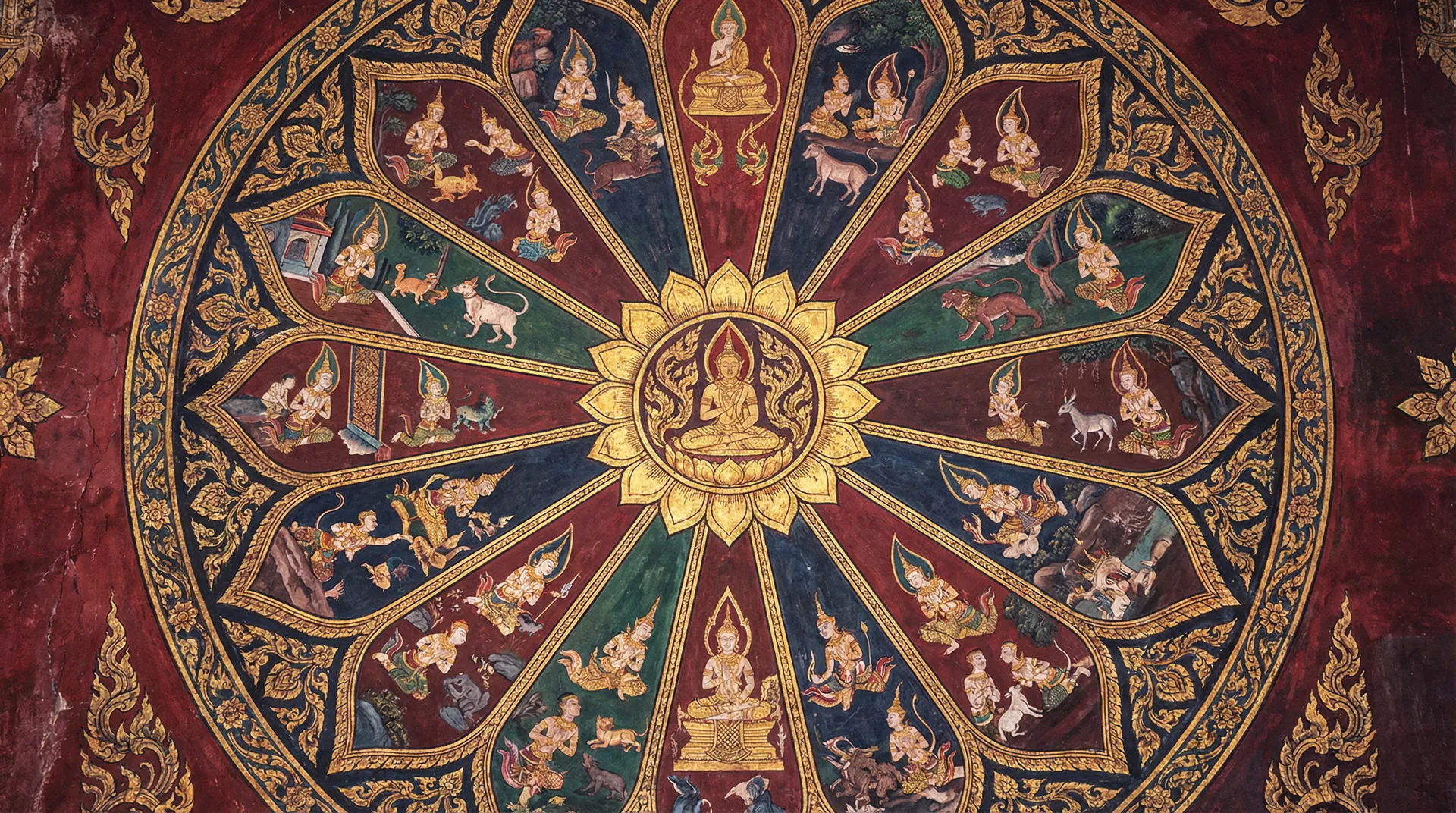
Vessantara Jātaka
Vessantara Jātaka
In the prosperous kingdom of Siwi, ruled the benevolent King Sanjaya. His queen, Phusati, was as virtuous as he, and together they reigned with wisdom and compassion. Their son, Prince Vessantara, was renowned throughout the land for his extraordinary generosity. He believed that giving was the greatest virtue, and his heart overflowed with compassion for all beings.
One day, a delegation of Brahmins arrived at the palace, their faces etched with hardship. They pleaded with the king for rain, as their lands were parched and their crops withered. King Sanjaya, though sympathetic, explained that he had no control over the weather. However, Prince Vessantara, overhearing their plight, felt his heart ache. He approached the Brahmins and, without a second thought, offered them his magnificent white elephant, a symbol of his kingdom's prosperity and a creature believed to possess the power to bring rain.
The Brahmins rejoiced, believing their prayers were answered. However, when the king learned of his son's gift, he was dismayed. The white elephant was not just a symbol; it was a vital asset that ensured the kingdom's well-being and its ability to attract rain. He reprimanded Vessantara, reminding him of his responsibilities as a prince.
Undeterred, Vessantara continued his practice of boundless giving. He gave away chariots, horses, jewels, and even his own possessions. His wife, Princess Maddi, though initially concerned, supported her husband's compassionate nature, understanding his deep-seated desire to alleviate suffering.
The climax of Vessantara's generosity came during a drought that struck the kingdom of Kalinga, which was suffering immensely. A poor Brahmin named Jujaka, desperate for a servant, approached Prince Vessantara, who was residing in a forest hermitage after being exiled from his kingdom due to his excessive giving, which was deemed a threat by some officials. Jujaka, hearing of Vessantara's famed generosity, begged for two of his children, Jali and Kanhā Jinā, to be his servants.
Prince Vessantara, despite his deep love for his children and the pleas of Princess Maddi, felt compelled by his vow of generosity. He believed that giving away his children, the dearest possessions he had, would be the ultimate act of charity and would bring immense merit. He handed over his beloved son and daughter to the cruel Jujaka.
Princess Maddi, heartbroken and distraught, searched for her children. She encountered the god Sakka, disguised as a hunter, who, moved by her sorrow, returned her children to her. Later, King Sanjaya, the prince's father, learned of his son's extreme sacrifice. Overcome with pride and remorse for having exiled his son, he journeyed to the forest hermitage to bring Vessantara and his family back to the kingdom.
Upon their return, Prince Vessantara was hailed as a hero, his immense generosity finally understood and celebrated. He continued to live a life dedicated to giving, inspiring his people to cultivate compassion and generosity in their own lives. The story of Vessantara became a powerful lesson, illustrating the profound spiritual merit and ultimate liberation that can be attained through the practice of perfect generosity, even when it involves the most difficult sacrifices.
— In-Article Ad —
💡Moral of the Story
Perfect generosity, even when it involves the most difficult sacrifices, leads to the highest spiritual merit and liberation.
Perfection: Generosity (Dāna)
— Ad Space (728x90) —
More Jataka Tales You May Enjoy
 391Chakkanipāta
Nimi Jataka
Nimi JatakaLong ago, in a kingdom of ancient India, lived King Nimi, a ruler renowned for his righte...
💡 True happiness is found in inner peace and wisdom, not fleeting pleasures. The ultimate goal is liberation from suffering.
 421Aṭṭhakanipāta
Mūgapakkha Jātaka
Mūgapakkha JātakaIn the heart of the Kosala kingdom, where golden fields stretched to the horizon an...
💡 True strength lies not in the ability to speak or exert force, but in the power of selfless compassion and unwavering sacrifice. Actions, especially those born of immense kindness, speak louder than words.
 410Sattakanipāta
Cattari Puttajataka
Cattari Puttajataka In the prosperous kingdom of Kasi, ruled a wise and benevolent king named Brahma...
💡 True and lasting happiness is not found in the endless pursuit of material possessions, intellectual achievements, or even in the heavy burden of constant good deeds, but in the cultivation of inner contentment, appreciating the present moment, and finding joy in life's simple blessings.
 370Pañcakanipāta
MUGA-PAKKA JATAKA
MUGA-PAKKA JATAKAIn the heart of a vast jungle, where ancient trees stood like silent sentinels and ...
💡 True strength lies not in aggression or domination, but in courage, justice, and the protection of the vulnerable. Compassion and wisdom are more powerful than brute force, and even enemies can be overcome through righteousness.
 320Catukkanipāta
Saddanta Jataka
Saddanta JatakaIn the magnificent Himalayan forests, where snow-capped peaks kissed the azure sky an...
💡 True virtue and compassion are unshakeable, even in the face of extreme suffering and betrayal. The pursuit of selfish desires through violent means leads only to further suffering and is ultimately futile.
399SattakanipātaNimi Jataka
Nimi JatakaIn the ancient and glorious city of Mithila, capital of the Videha kingdom, ruled King Ni...
💡 True spiritual attainment and lasting happiness are not found in temporary heavenly pleasures, but in the continuous cultivation of virtue, compassion, and righteousness within one's own heart.
— Multiplex Ad —