Virochana Jātaka
Virochana Jātaka
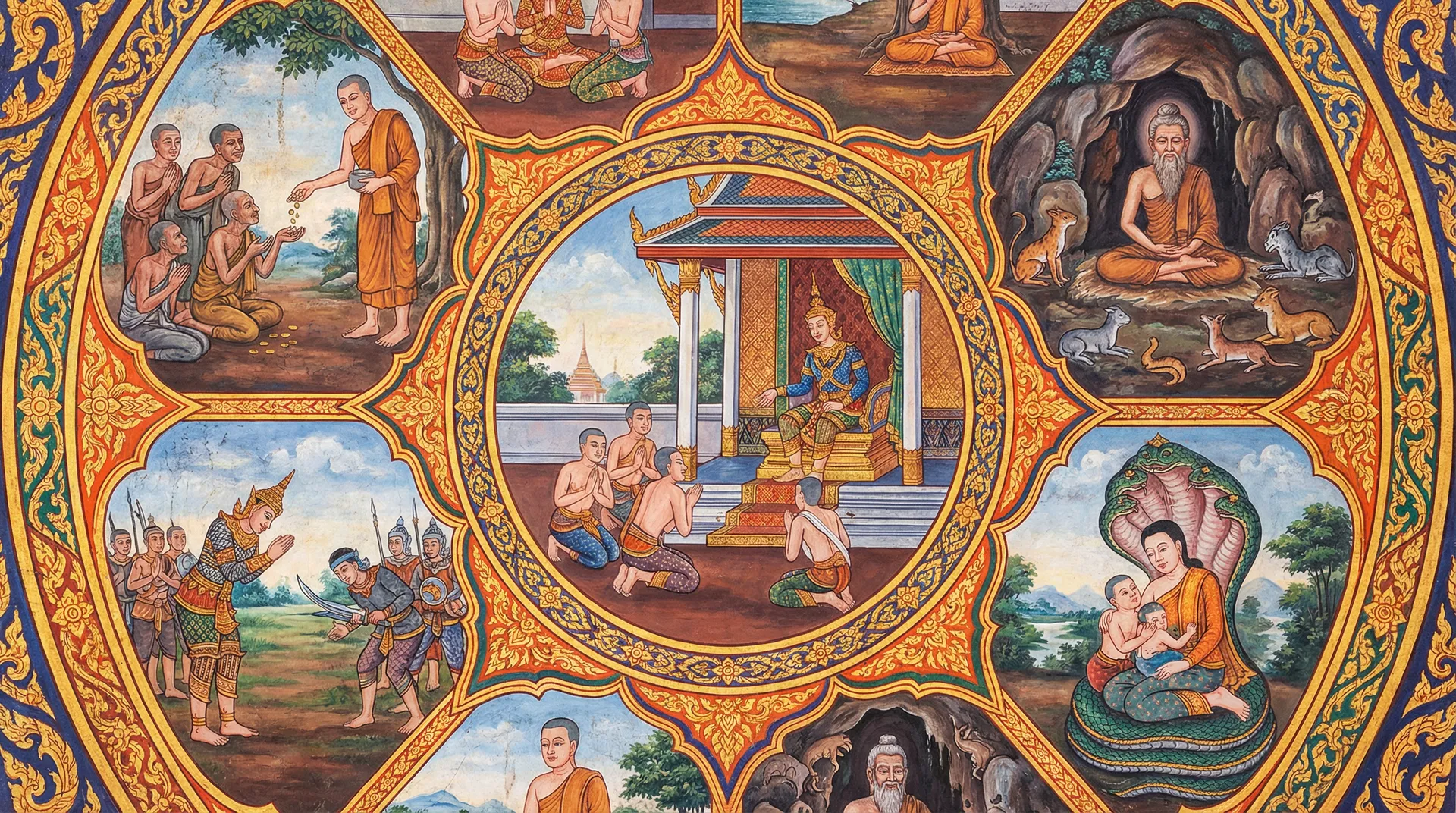
In the magnificent city of Mithila, ruled a king named Vidhura, a monarch whose reign was marked by profound peace and prosperity. His wisdom was legendary, and his compassion extended to all beings. However, even in such a blessed kingdom, the seeds of discord could be sown by those who sought personal gain through deception. A proud and arrogant Yaksha, named Virochana, who dwelled in the celestial realms, harbored a deep resentment towards the king. Virochana, with his immense power and a heart clouded by ego, believed himself superior to any mortal ruler.
One day, Virochana descended to the mortal realm, disguised as a humble ascetic. He approached King Vidhura, his demeanor one of profound humility, yet his eyes held a glint of arrogance. "Great King," he said, his voice resonating with a false sense of piety, "I have traveled from afar, drawn by tales of your virtuous reign. I come to offer you a boon, a gift of unparalleled power. I possess a magical gem, the 'Virochana Jewel', which, when worn, grants the wearer the ability to command the elements and understand the language of all creatures. This gift, I offer to you, my King, as a token of my admiration."
King Vidhura, a man of deep insight, sensed that there was more to this ascetic than met the eye. He perceived the subtle arrogance in Virochana's words and the possessiveness with which he spoke of the gem. Yet, out of respect for the guise of a holy man, he did not immediately dismiss him. "Your offer is generous, holy one," the king replied, his voice calm and measured. "But I have no need for such worldly power. My strength lies in the Dharma, and my counsel comes from wisdom, not from enchanted objects." Virochana, however, was insistent. He pressed the gem into the king's hand, proclaiming, "Wear it, my King, even for a moment. Let its power flow through you, and you will understand its worth." The king, to placate the persistent ascetic, agreed to hold the gem, but refused to wear it.
The Bodhisatta, who was then the king's chief minister, a man of unparalleled wisdom and foresight, observed this exchange with great concern. He recognized Virochana for what he truly was – a powerful Yaksha blinded by pride. The Bodhisatta knew that the 'Virochana Jewel' was not a gift but a trap. Its true purpose was to enslave the wearer to the Yaksha's will, to make them dependent and ultimately subservient. The Bodhisatta also understood that Virochana's true motive was to sow discord and exert his influence over the kingdom.
The Bodhisatta, seeing the king's gentle refusal and Virochana's insistence, approached Virochana. "O ascetic," he said, his voice carrying the weight of authority, "you offer a gem of great power, yet true power lies not in external objects, but within the heart. This king, though he holds your gem, is not swayed by its allure. He understands that true mastery comes from self-control and virtuous living, not from the command of elements. Your gem, while potent, binds the wearer to the desires of the giver. Our king seeks freedom, not servitude."
Virochana, his pride wounded by the minister's discerning words, grew enraged. He revealed his true form, a fearsome Yaksha with fiery eyes and a menacing aura. "You dare to question my gift? You dare to belittle my power?" he roared. The Bodhisatta, unfazed, stood his ground. "Your power is great, O Virochana, but it is a power fueled by ego and attachment. True strength lies in detachment and compassion, qualities that your gem cannot bestow, nor your pride comprehend."
The king, witnessing this confrontation, remained calm. He gently returned the gem to the enraged Yaksha. "Your gift is indeed powerful," King Vidhura said, his voice unwavering, "but it is not suited for one who seeks liberation. I thank you for your demonstration of its power, but I choose the path of wisdom and freedom." Virochana, defeated not by force but by the king's profound understanding and the minister's sharp wisdom, realized the futility of his attempt. His pride was humbled, and with a frustrated roar, he vanished back to his celestial abode.
The king, having navigated the treacherous offer with grace, was filled with gratitude for his wise minister. He understood that true power comes from within, cultivated through wisdom, self-discipline, and compassion, not from external enchantments that bind and control. The kingdom of Mithila continued to flourish, its peace undisturbed by the arrogance of celestial beings.
— In-Article Ad —
💡Moral of the Story
True power resides not in external possessions or magical artifacts, but in inner wisdom, self-control, and freedom from attachment.
Perfection: Wisdom (Prajna)
— Ad Space (728x90) —
More Jataka Tales You May Enjoy
360PañcakanipātaSutasoma Jataka
Sutasoma Jataka In the ancient kingdom of Kampilya, known for its chivalrous knights and its strong ...
💡 Unwavering truth, courage, and compassion possess a power that can overcome even the greatest evil and transform the hearts of those who inflict suffering. True strength lies in moral conviction, not brute force.
 542Mahānipāta
Sasa Jātaka
The Hare Who Sacrificed HimselfIn a time long past, when the forests teemed with life and the stars ...
💡 Selfless compassion and the willingness to sacrifice for the well-being of others are the highest virtues.
 337Catukkanipāta
Titthira Jataka
Titthira Jataka In the ancient forests of India, where colossal trees reached towards the heavens an...
💡 Vigilance, foresight, and cooperation are essential for overcoming dangers. Even the smallest creatures can achieve great things when they unite and act with wisdom. It is better to prepare for potential threats than to be caught unaware.
 129Ekanipāta
Mora Jataka
Mora JatakaIn the heart of a dense and ancient forest, where sunlight struggled to pierce the thick ...
💡 True power lies not in physical strength or material possessions, but in the purity of virtue, the wisdom of compassion, and the ability to inspire transformation through truth.
 271Tikanipāta
Nimi Jataka
Nimi JatakaLong ago, in the ancient city of Mithila, ruled a wise and just king named Nimi. His reig...
💡 True fulfillment is found not in escaping worldly duties for heavenly pleasures, but in embracing one's responsibilities with virtue and compassion, thereby continuing spiritual growth amidst life's challenges.
 177Dukanipāta
Kuṅku Jātaka
Kuṅku JātakaIn the verdant plains of Kosala, where emerald rice paddies stretched as far as the eye ...
💡 True strength and peace originate from within. External objects, however comforting, cannot replace inner resilience, wisdom, and the courage to face adversity with integrity. Letting go of attachments, even cherished ones, can be an act of liberation.
— Multiplex Ad —