Mugapakkha Jātaka
Mugapakkha Jātaka
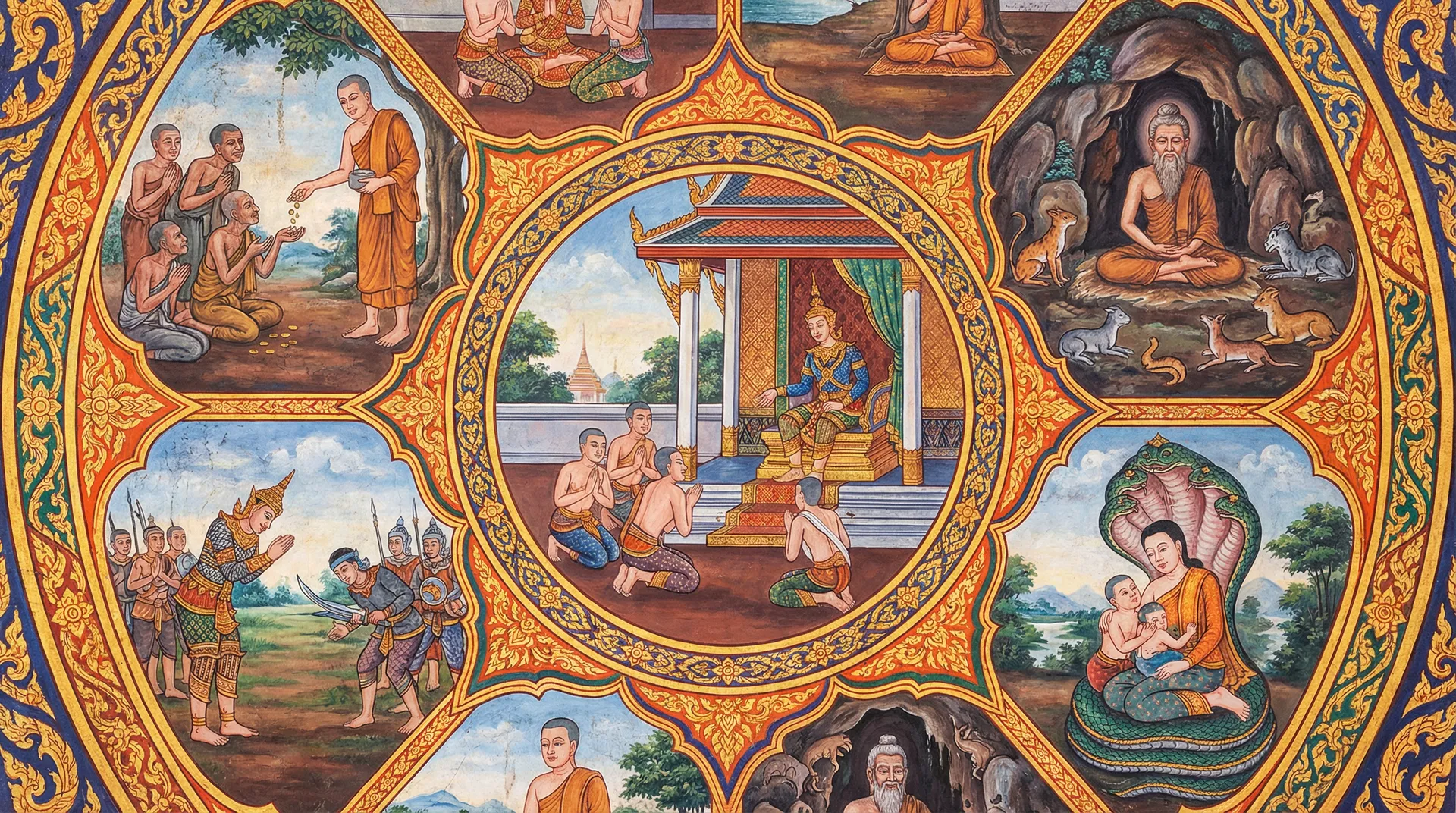
In the ancient kingdom of Varanasi, nestled beside the serene Ganges River, lived a king renowned for his wisdom and justice. But even the most enlightened rulers face trials, and King Bena was no exception. One day, a wicked Brahmin, consumed by envy and greed, devised a cunning plan to usurp the throne. This Brahmin, known for his silver tongue and deceptive ways, approached the king with a seemingly innocent request. He claimed to have discovered a secret ritual, a sacred offering that would bring unparalleled prosperity and peace to the kingdom. However, the true intention behind this ritual was to poison the king and seize power.
The Brahmin, with feigned piety, described the ritual in great detail. It required a specific herb, a rare bloom that grew only in the treacherous peaks of the Himalayas. He insisted that only he, with his profound knowledge of ancient rites, could procure this herb and perform the ceremony. King Bena, trusting in the Brahmin's apparent sincerity, readily agreed. He dispatched a royal envoy, accompanied by the Brahmin, to the distant mountains.
The journey was arduous. They traversed dense forests, crossed raging rivers, and climbed perilous cliffs. The Brahmin, meanwhile, subtly steered the envoy towards the most dangerous paths, hoping they would perish along the way. He relished the thought of the king being left vulnerable. However, the Bodhisatta, who was then a wise hermit living in a cave high in the Himalayas, observed the Brahmin's deceitful nature. The Bodhisatta, with his divine insight, saw the dark intentions lurking beneath the Brahmin's pious facade.
One evening, as they camped near the Bodhisatta's cave, the Brahmin, seeing an opportunity, tried to lead the envoy astray. He pointed to a barely visible trail, claiming it was the quickest route to the herb's supposed location. But the Bodhisatta, appearing before them, stopped them in their tracks. His presence was radiant, his eyes held an ancient wisdom that commanded respect. "Hold, travelers!" his voice boomed, echoing through the mountain pass. "This path leads not to the herb you seek, but to ruin. The Brahmin before you speaks with a forked tongue. His heart is as dark as the deepest chasm."
The envoy was stunned. They looked from the Bodhisatta to the Brahmin, whose face had turned ashen. The Brahmin, caught in his deceit, stammered, trying to deny the accusation. But the Bodhisatta, with unwavering calm, recounted the Brahmin's treacherous plans, revealing how he intended to poison the king and seize the throne. He explained that the ritual was a fabrication, a ploy to gain the king's trust and access to the royal court.
The envoy, now fully aware of the danger, apprehended the Brahmin. They returned to Varanasi, not with the mythical herb, but with the treacherous Brahmin in chains. King Bena, upon hearing the Bodhisatta's tale and witnessing the Brahmin's confession, was filled with gratitude. He banished the wicked Brahmin from his kingdom and honored the Bodhisatta with immense praise. The Bodhisatta, having fulfilled his duty to protect the innocent, returned to his hermitage, his heart filled with the quiet satisfaction of upholding truth and justice.
The king, deeply moved by this experience, understood the importance of discernment. He resolved to be more cautious in the future, to look beyond superficial appearances and seek the truth within. He ruled his kingdom with renewed wisdom, ensuring that justice prevailed and that his people lived in peace and prosperity, forever mindful of the vigilance required to protect against hidden malice.
— In-Article Ad —
💡Moral of the Story
Beware of those who speak with honeyed words but harbor deceit in their hearts. True wisdom lies in discerning the hidden intentions behind actions.
Perfection: Wisdom (Prajna)
— Ad Space (728x90) —
More Jataka Tales You May Enjoy
 489Pakiṇṇakanipāta
Sama Jātaka
Sama JātakaIn the dense, verdant forests that bordered the kingdom of Kosala, lived a sage named Sam...
💡 Compassion, forgiveness, and non-violence are virtues that not only protect oneself but also extend their blessings to others, bringing salvation and restoring balance even in times of great hardship.
 120Ekanipāta
Sibi Jataka
Sibi Jataka In the ancient kingdom of Sibi, nestled amidst fertile plains and blessed with bountiful...
💡 The highest form of compassion and truthfulness involves selfless sacrifice for the well-being of others. True virtue transcends natural laws and personal comfort, earning immeasurable merit and inspiring all.
 157Dukanipāta
Sasa Jataka
Sasa JatakaLong, long ago, in a time when the stars seemed closer and the moon cast a gentler glow, ...
💡 True virtue lies not in what one possesses, but in the willingness to give selflessly for the benefit of others.
5EkanipātaThe Monkey King's Sacrifice
The Monkey King's SacrificeIn the dense, emerald heart of the Vindhya Mountains, where ancient trees...
💡 True leadership is defined by selfless sacrifice for the well-being of others.
58EkanipātaThe Great Ocean Jataka
In a land of bountiful shores, where the vast sea met fertile lands, there lay a small fishing villa...
💡 True wealth is found in generosity and compassion, not in material possessions. Greed blinds the mind and leads to self-destruction.
153DukanipātaDaddabha Jātaka
Daddabha JātakaIn the verdant land of Mithila, ruled a king known for his love of music. His palace ...
💡 True mastery and profound communication stem from sincerity and heartfelt emotion, not just technical skill.
— Multiplex Ad —