
Daddabha Jātaka
Daddabha Jātaka
In the verdant land of Mithila, ruled a king known for his love of music. His palace was a symphony of sounds, with musicians constantly performing, filling the air with melodies that soothed the soul and delighted the senses. The king himself was a gifted musician, playing several instruments with exceptional skill. His passion for music was so profound that he believed it held the key to understanding the universe and the hearts of all beings.
One day, a wandering hermit arrived at the palace gates. He was an old man, his face etched with wisdom, and his eyes held a deep, serene calm. He carried no possessions, only a simple wooden flute, worn smooth with age and use. The king, hearing of the hermit's arrival and his unique instrument, invited him into the court.
The king, eager to share his own musical talents, played a complex and intricate melody on his royal lute. The music was technically brilliant, full of runs and trills, showcasing his mastery. He looked expectantly at the hermit, hoping for a display of equal or even greater skill.
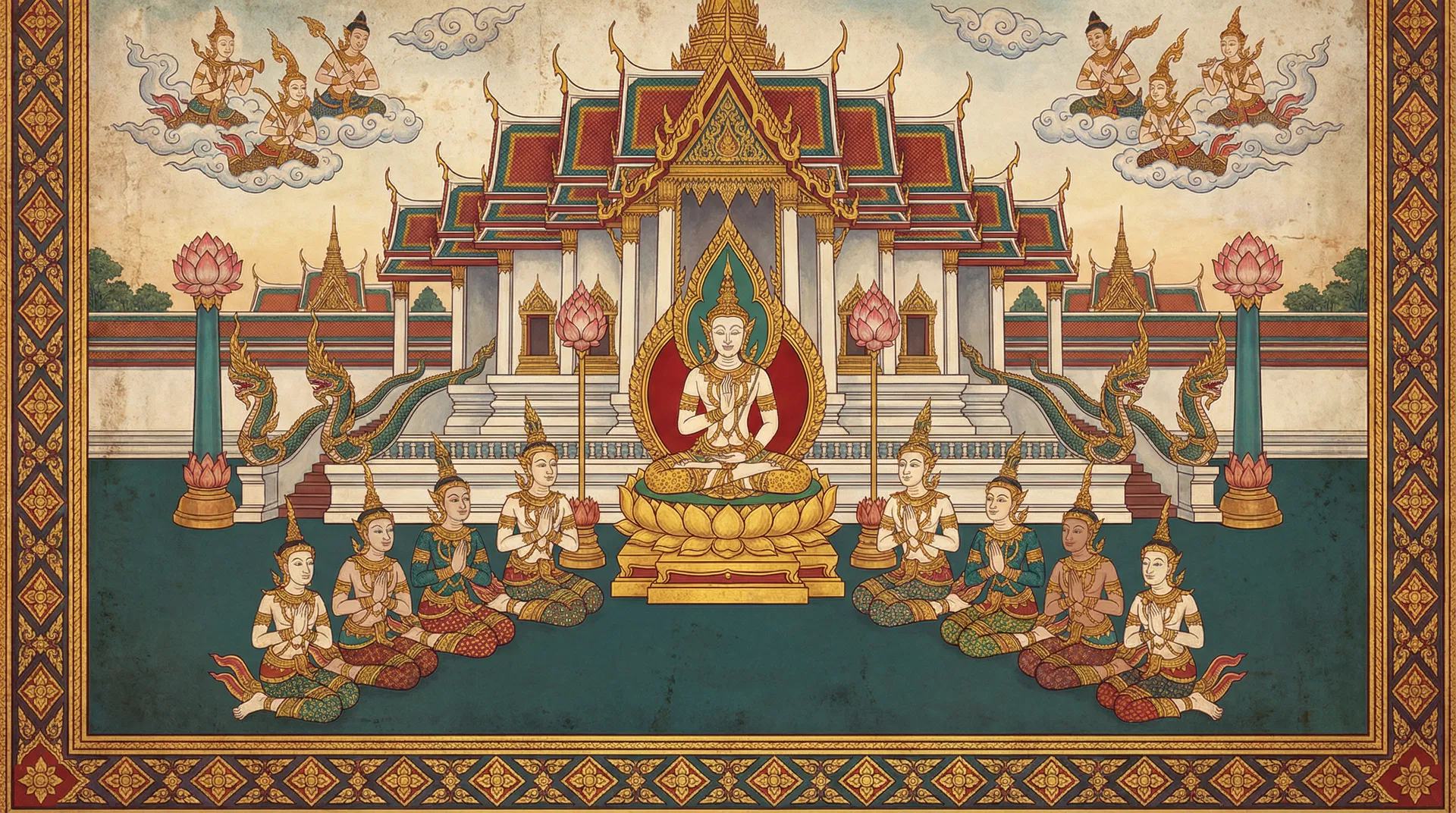
The hermit, with a gentle smile, took his simple flute. He brought it to his lips, and as he began to play, a hush fell over the court. It was not a complex melody, nor was it filled with dazzling technicality. Instead, it was a single, pure, sustained note. It was a note so clear, so resonant, and so full of emotion that it seemed to vibrate not just in the air, but within the very souls of those who heard it. The note held within it the essence of sorrow, the joy of existence, the quiet peace of nature, and the profound yearning of a seeking heart. It was a note that spoke directly to the listener, bypassing the intellect and touching the deepest parts of their being.
The king was utterly captivated. His own intricate music suddenly felt hollow and superficial in comparison. He realized that true music was not about the complexity of notes or the skill of the player, but about the depth of feeling and the message conveyed. He had been so focused on technique that he had forgotten the heart of music.
The Bodhisatta, in this lifetime, was the hermit. He understood that the hermit's single, pure note, played with profound intention and emotion, possessed a power far greater than any technically perfect but soulless performance. He saw that the king, though skilled, was lost in the superficialities of his art, mistaking complexity for depth. The hermit’s music was a gentle, yet powerful, lesson.
The king, humbled and enlightened, bowed deeply to the hermit. "Master," he said, his voice filled with awe, "I have spent my life mastering the art of music, yet you, with a single note, have taught me its true essence. You have shown me that the most profound expression comes not from outward display, but from inner truth and heartfelt sincerity."
From that day on, the king's approach to music changed. He still practiced his instruments, but his focus shifted. He sought to imbue his music with genuine emotion, with sincerity, and with a message that resonated with the heart. He began to understand that all arts, and indeed all aspects of life, are most meaningful when they spring from a place of genuine feeling and purpose, rather than mere technical proficiency.
The Daddabha Jātaka became a cherished tale, passed down through generations. It served as a reminder that true mastery and profound communication lie not in outward complexity or showy displays, but in simplicity, sincerity, and the ability to touch the hearts of others with genuine emotion. It taught that the simplest expression, when imbued with truth, can be the most powerful.
— In-Article Ad —
💡Moral of the Story
True mastery and profound communication stem from sincerity and heartfelt emotion, not just technical skill.
Perfection: Wisdom
— Ad Space (728x90) —
More Jataka Tales You May Enjoy
159DukanipātaNimi Jataka
Nimi JatakaIn the ancient land of Videha, there ruled a king named Nimi. King Nimi was a paragon of ...
💡 Understanding the law of karma and the consequences of one's actions is essential for cultivating virtue and progressing towards liberation.
180DukanipātaKacchapa Jātaka
Kacchapa JātakaIn a time long past, when the Himalayas stood as young giants and the rivers flowed w...
💡 Great efforts and noble intentions are essential, but they must be accompanied by discipline and the adherence to instructions. A single lapse in concentration or a breach of trust can undo immense progress and lead to tragic consequences.
 143Ekanipāta
Sasa Jataka
The Tale of the Hare Who Gave Himself to the Gods In a time long past, when the Bodhisattva was born...
💡 Selfless sacrifice and compassion for all beings are the highest virtues.
 427Navakanipāta
Sakuna Jataka
The Tale of the Virtuous Bird In the heart of a dense forest, where ancient trees reached for the sk...
💡 Compassion, selflessness, and the accumulation of spiritual merit have the power to overcome great adversity and benefit all beings. In times of crisis, unity and shared good deeds are far more powerful than anger and division.
103EkanipātaMora Jātaka
The Golden Peacock's Plea In the heart of a vast and ancient forest, where emerald canopies kissed t...
💡 True beauty and value are best appreciated in their natural state. Possessing something or someone against their will diminishes its essence and leads to suffering, both for the captive and the captor. Freedom and dignity are paramount.
1EkanipātaThe Tale of the Great Lotus
The Tale of the Great Lotus In a time long past, when the world was a canvas of verdant forests and...
💡 Impatience is like a fire that burns everything, but wisdom and concentration are the tools that allow us to control situations and achieve goals with stability.
— Multiplex Ad —