Sasa Jataka
Sasa Jataka
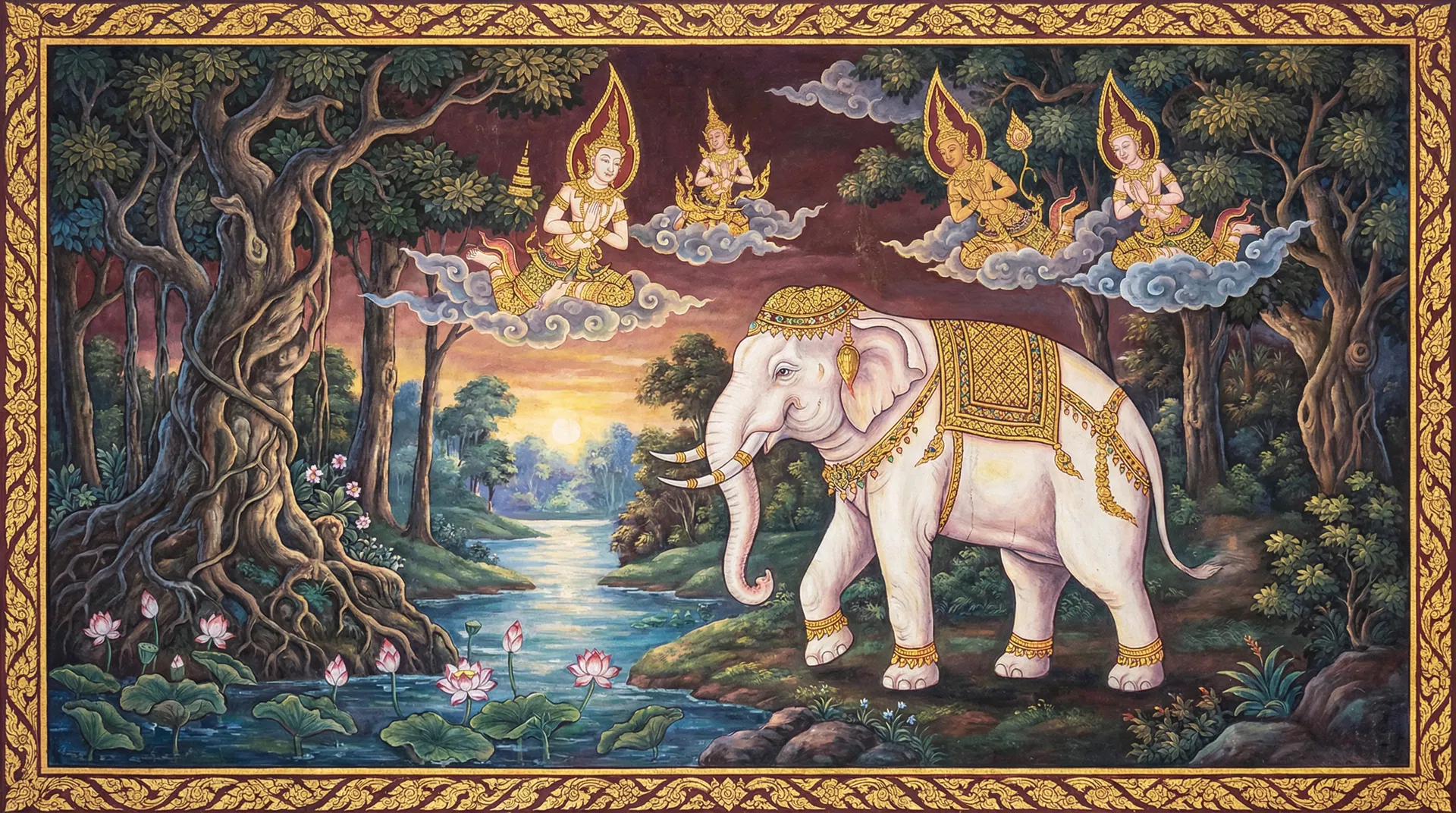
In the long-forgotten past, when the Bodhisattva was born as a noble white hare, there lay a vast and magnificent forest stretching as far as the eye could see. This forest was abundant with fruits, roots, and cool streams, a veritable paradise for all creatures. The Bodhisattva hare lived a life of simple purity, adhering strictly to the five precepts: abstaining from killing, stealing, sexual misconduct, false speech, and intoxicants. His days were spent in quiet contemplation, nibbling on grass, and basking in the gentle sunlight that dappled through the leaves.
One fateful day, the great god Sakka, ruler of the Tavatimsa heaven, decided to test the virtue of the beings on Earth. He wished to see if any truly embodied the spirit of selfless generosity and compassion. To this end, he descended from his celestial abode, taking the form of a starving, emaciated Brahmin. His disguise was so convincing that he appeared on the verge of death from hunger and thirst.
He wandered through the forest, his body weak, his voice faint. "Alas," he moaned, his words barely audible, "I am starving. Is there no one, no creature, who can offer me even a morsel of food? My life is ebbing away."
Many animals heard his pleas. Monkeys, who were busy gathering fruits, glanced at him but continued their work, unwilling to share their bounty. A jackal, with a full belly from a recent meal, trotted past, paying no heed. A wolf, preoccupied with its own survival, ignored the Brahmin's plight.
The Bodhisattva hare, however, heard the piteous cries. Though he himself had only managed to gather a small amount of grass for his own sustenance, his heart immediately went out to the suffering Brahmin. He approached the disguised god, his white fur gleaming in the sunlight, and asked with genuine concern, "Venerable sir, I hear your suffering. I may not have much, but I will gladly offer you whatever food I have."
The Brahmin, his eyes hollow and filled with feigned despair, looked at the hare. "Kind creature," he rasped, "I am starving. I need food to survive. What can you possibly offer me?"
The hare looked at his meager pile of grass. It would barely sustain him. But then he thought, "What is the use of this grass to me if I cannot use it to help another who is in dire need? My life is transient, but the act of selfless giving can bring lasting merit." He then said to the Brahmin, "Venerable sir, grass is not suitable for a human. I do not have any fruits or roots. However, I have my own body. If you are truly starving, you can eat me."
The Brahmin was stunned. He had expected the hare to offer him its small store of food, or perhaps to guide him to a place where he could find sustenance. He had not anticipated such a radical offer of self-sacrifice. He looked at the Bodhisattva hare, whose eyes radiated purity and unwavering resolve. He knew then that this was no ordinary hare.
The Brahmin revealed his true form as Sakka, the king of the gods. The heavens seemed to brighten, and a divine radiance enveloped the clearing. "Noble hare," Sakka proclaimed, his voice now resonant with divine power, "your compassion and generosity are unparalleled. You have shown true understanding of the highest virtue. You are willing to give your very life for another, without any expectation of reward."
Sakka then took a large rock and heated it in a fire, intending to cook the hare. But the Bodhisattva hare remained calm, unafraid of the fiery ordeal. He lay down willingly, ready to be sacrificed. Sakka, however, seeing the hare's profound purity and the depth of his intention, decided not to proceed with the gruesome act. Instead, he used his divine powers to imprint the image of the hare onto the full moon.
"Let this image serve as a perpetual reminder to all beings," Sakka declared, "of the immense virtue of selfless giving and compassion. Whenever they look upon the moon, they will remember the noble hare and be inspired to practice generosity and kindness in their own lives."
Sakka then ascended back to his heavenly abode, leaving the Bodhisattva hare unharmed. The hare continued to live his virtuous life, his deed becoming a legend whispered through the ages. The image of the hare on the moon became a beloved symbol in many cultures, a testament to the power of selfless love and the ultimate sacrifice made for the sake of others.
The story of the hare on the moon taught generations that true generosity lies not in giving what is easily spared, but in offering one's all for the well-being of others. It reinforced the idea that the most precious gifts are those born from a heart free of selfishness and filled with boundless compassion.
— In-Article Ad —
💡Moral of the Story
True generosity is selfless and boundless, willing to sacrifice even one's own life for the sake of others. Compassion and virtue are the highest treasures, inspiring all beings when remembered.
Perfection: Generosity (Dana)
— Ad Space (728x90) —
More Jataka Tales You May Enjoy
 66Ekanipāta
The Great Crane Jataka
Long ago, in an age when the Buddha had not yet appeared, in a time immeasurably distant, the Bodhis...
💡 True wealth is measured not by the abundance of possessions, but by the happiness and prosperity of one's people. Greed leads to suffering, while generosity and compassion bring true prosperity.
25EkanipātaThe Bodhisatta as a Swan
The Bodhisatta as a SwanIn the shimmering expanse of a celestial lake, where the water was as clear ...
💡 True compassion knows no bounds, and celestial beings are called to act when suffering is present, bringing salvation.
15EkanipātaThe Bodhisatta as a Scholar
The Bodhisatta as a ScholarIn the hallowed halls of an ancient monastery, nestled amidst serene, rol...
💡 True wisdom is demonstrated through the compassionate application of knowledge for the well-being of others.
 441Dasakanipāta
Mugapakkha Jataka
Mugapakkha JatakaIn the ancient land of Mithila, ruled a king named Janaka, a monarch known for his ...
💡 True wealth lies not in personal gain, but in the collective well-being fostered by righteousness and compassion.
322CatukkanipātaMahamora Jataka
Mahamora JatakaIn a lush and verdant forest, teeming with life and vibrant with the songs of countle...
💡 True wealth and lasting happiness are not found in material possessions or the satisfaction of greed, but in wisdom, contentment, compassion, and a life lived virtuously. Wisdom and compassion have the power to transform even the most hardened hearts.
 294Tikanipāta
Sambhava Jātaka
The Tale of the Bodhisatta's ReturnIn the verdant kingdom of Sāketā, a wise and just king named Mahā...
💡 True renunciation is not about escaping one's responsibilities, but about fulfilling them with detachment and using one's position to benefit others. The legacy of a virtuous life is seen in the actions of those who follow.
— Multiplex Ad —