
Sutasoma Jataka
Sutasoma Jataka
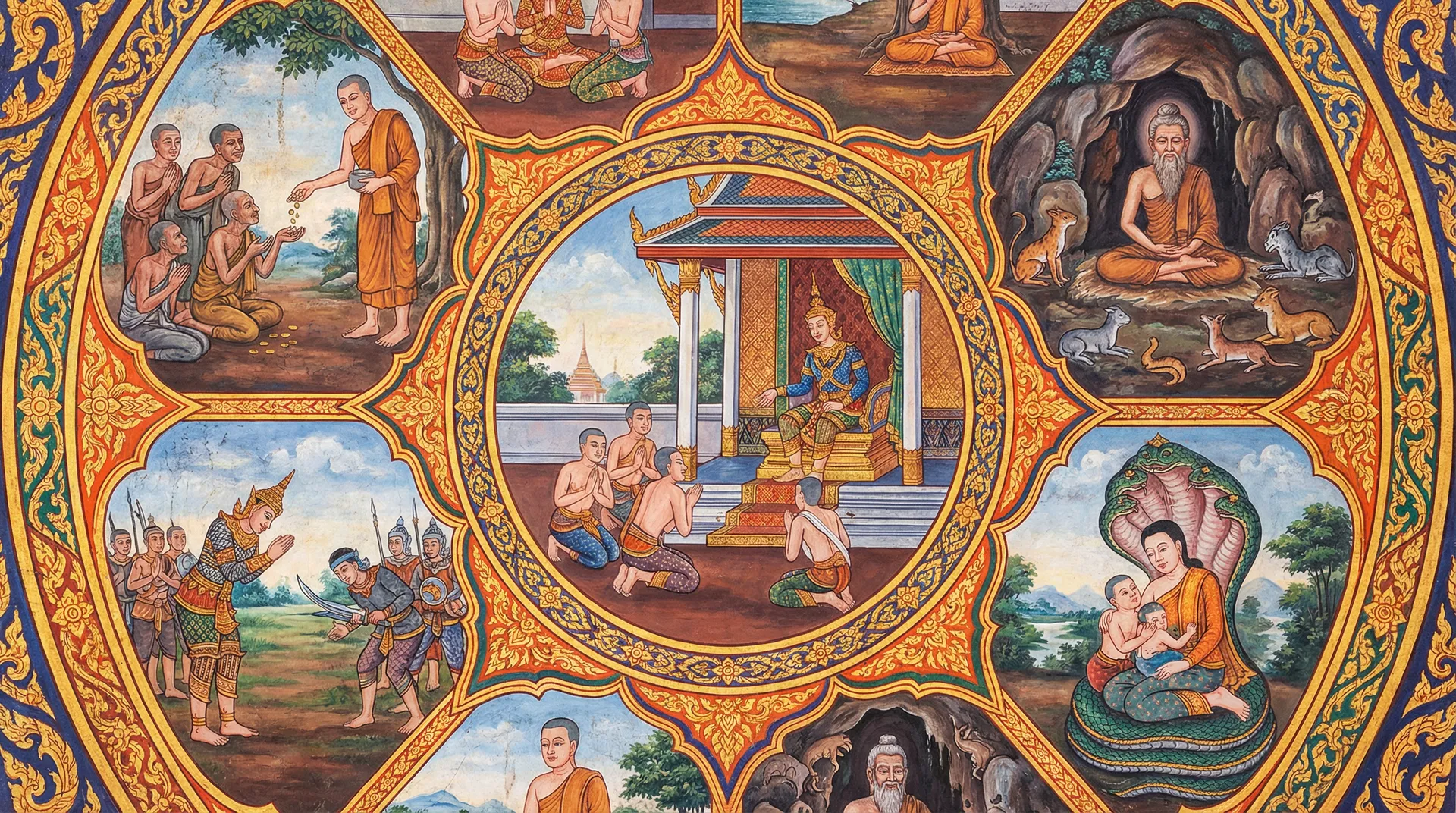
In the ancient kingdom of Gandhara, nestled amidst rolling hills and verdant valleys, reigned King Sutasoma, a monarch renowned for his righteousness and profound wisdom. His reign was a beacon of justice, and his people prospered under his benevolent rule. Yet, despite his worldly success, King Sutasoma harbored a deep yearning for spiritual enlightenment, a desire that often led him to spend long hours in contemplation and quiet study.
One day, a profound and unsettling dream troubled his sleep. He saw himself in a vast, desolate forest, surrounded by a pack of ferocious, starving wolves. They snarled and bared their fangs, their eyes burning with an insatiable hunger. In his dream, the wolves spoke, their voices a chilling chorus, "We are the embodiment of insatiable craving, the beasts that dwell within the hearts of all beings. Unless a great sacrifice is made, we will consume all that is good and pure in this world." The dream left the king deeply disturbed, the image of the ravenous wolves etched into his mind.
Seeking solace and understanding, King Sutasoma consulted the wisest sages and hermits in his kingdom. They listened intently to his tale and, after much deliberation, revealed a prophecy that had been passed down through generations. "O King," they declared, "your dream foretells a great danger. The world is indeed threatened by the insatiable appetite of greed and desire. To appease these primal forces and to secure lasting peace, a great act of renunciation is required. A life must be offered, not in violence, but in selfless surrender, to satiate the hunger of the world."
The king, though a man of peace, understood the gravity of the prophecy. He knew that his life, the life of a king, held immense value, not just to himself but to his people. He pondered this revelation for many days, the weight of the world's suffering pressing upon him. He realized that true liberation from suffering came not from clinging to life, but from detachment and sacrifice.
He made a solemn vow: he would offer himself as a sacrifice to quell the world's insatiable craving. He announced his decision to his court, his voice steady and unwavering, though his heart ached at the thought of leaving his beloved kingdom. His ministers and advisors pleaded with him, tears streaming down their faces. "Your Majesty, this is madness!" they cried. "Your life is precious. Your people need you. Do not throw it away!" But King Sutasoma, with his profound understanding of the cycle of suffering, remained resolute.
He instructed his royal chariot to be prepared, not for a royal procession, but for a journey of ultimate sacrifice. He donned simple robes and, with a heart full of compassion, rode out of the city gates, alone. He traveled deep into the wilderness, to a clearing where he had seen the wolves in his dream. He sat beneath a great banyan tree, his body radiating a calm and peaceful aura, and waited.
As the sun began to set, casting long shadows across the clearing, the wolves appeared. They were exactly as he had dreamed them – gaunt, fierce, with eyes that gleamed with primal hunger. They circled him, their growls filling the air. King Sutasoma, the Bodhisattva, felt no fear. He saw in them not monsters, but the manifestations of suffering, the raw hunger that drove beings to despair.
He addressed the leading wolf, his voice gentle and filled with boundless love. "I am here," he said. "I have come to offer myself. Take what you need. Let my flesh nourish you and satisfy your hunger. Let this be the end of your torment and the beginning of peace for all."
The wolves, initially hesitant, were drawn by the king's serene presence and his unconditional offering. They approached him, their movements still predatory, but their ferocity seemed to be tempered by an unseen force. One by one, they began to partake of his flesh, their hunger slowly subsiding. The king endured the pain with extraordinary equanimity, his mind focused on the liberation of all beings from the chains of craving.
As the wolves ate, their forms began to change. The ferocity in their eyes softened, replaced by a dawning understanding. Their snarling ceased, and they looked upon the king with a mixture of awe and gratitude. The leader of the wolves, now a gentler creature, bowed its head. "Great King," it spoke, its voice no longer a growl but a resonant murmur, "you have shown us the true meaning of sacrifice. You have quenched the thirst of our existence. We are no longer beasts driven by blind hunger, but beings who have glimpsed the path to enlightenment."
The act of sacrifice was complete. The king's physical body was gone, but his spirit, his immense compassion, and his wisdom permeated the clearing. The wolves, transformed, no longer roamed the forests as predators. They had become guardians of the peace, spreading the message of detachment and selflessness they had learned from the Bodhisattva.
Word of King Sutasoma's ultimate sacrifice spread throughout the land and beyond. His act of supreme renunciation became a legend, inspiring countless beings to overcome their own cravings and to seek the path of compassion. The kingdom of Gandhara, though it mourned the loss of its king, was forever changed. It became a land where peace reigned, where greed was held in check, and where the teachings of selflessness and enlightenment flourished, a testament to the Bodhisattva's profound sacrifice.
— In-Article Ad —
💡Moral of the Story
True liberation from suffering comes through selfless sacrifice and detachment from worldly attachments, particularly the craving for existence.
Perfection: Renunciation Perfection (Nekkhamma Paramita)
— Ad Space (728x90) —
More Jataka Tales You May Enjoy
 356Pañcakanipāta
Kosiya Jataka
Kosiya Jataka In the ancient city of Varanasi, nestled beside the sacred river Ganges, lived a wealt...
💡 True wisdom lies not just in intellectual knowledge, but in a contented mind, compassionate actions, and the generosity of spirit. Pride blinds us to deeper truths, while humility opens the door to genuine understanding.
 2Ekanipāta
The Bodhisatta's Golden Chariot
The Bodhisatta's Golden Chariot In a time long past, when the kingdom of Mithila flourished under t...
💡 When facing great challenges, wisdom, knowledge, and cooperation from all parties are the path to sustainable solutions.
138EkanipātaSudasa Jataka
The Tale of the Loyal DogIn the bustling city of Savatthi, a wealthy merchant named Anathapindika wa...
💡 True loyalty, courage, and intelligence can be found in unexpected beings, and devotion to one's master or friends can lead to extraordinary acts of bravery and wisdom.
109EkanipātaSutasoma Jataka
The Tale of the Compassionate Prince and the Hungry Ogress In the grand kingdom of Gandhara, renowne...
💡 True compassion understands and alleviates suffering, even in the face of fear. Selfless kindness can transform even the most hardened hearts.
 179Dukanipāta
Mahāpuṇṇa Jātaka
Mahāpuṇṇa JātakaIn the heart of the kingdom of Kasi, a land blessed with fertile soil and a prospero...
💡 By consciously pausing and reflecting when anger arises, one can gain control over impulsive reactions, leading to wiser decisions, improved relationships, and inner peace. Cultivating patience and understanding is a path to great merit.
171DukanipātaMahīsosaka Jātaka
Mahīsosaka JātakaIn the ancient kingdom of Mithila, nestled amongst rolling hills and verdant forest...
💡 True loyalty and affection cannot be bought or coerced. The worth of a creature, or a person, is not determined by external forces but by their inner spirit and their bonds with those who truly care for them.
— Multiplex Ad —