
Kosiya Jataka
Kosiya Jataka
In the ancient city of Varanasi, nestled beside the sacred River Ganges, there lived a merchant named Kosiya. He was not just any merchant; he was renowned throughout the land for his immense wealth, his shrewd business acumen, and his unparalleled generosity. His warehouses overflowed with silks from distant lands, spices that perfumed the air, and precious gems that glittered like captured stars. Yet, despite his riches, Kosiya was not content. He yearned for something more, a deeper understanding of the world and his place within it. He spent his days poring over ancient texts, engaging in philosophical debates with learned Brahmins, and observing the lives of those around him with a keen, discerning eye.
One day, a messenger arrived at Kosiya’s opulent mansion, bearing news of a grand assembly of merchants from across the subcontinent. This gathering, to be held in the bustling city of Ujjain, promised to be a confluence of trade, knowledge, and opportunity. Kosiya, ever eager to expand his horizons, decided to attend. He meticulously prepared his finest wares, selected his most trusted attendants, and set off on a magnificent caravan, the likes of which had never been seen before.
The journey to Ujjain was long and arduous, traversing sun-baked plains and dense forests. Along the way, Kosiya witnessed the struggles of ordinary people – farmers toiling under the relentless sun, artisans crafting their wares with weary hands, and beggars pleading for a single coin. He saw the stark contrast between his own lavish life and the humble existence of many others. This journey, more than any book or debate, began to stir a profound sense of empathy within him.
Upon arriving in Ujjain, Kosiya was awestruck by the vibrant energy of the city. Merchants from every corner of the known world had converged, their stalls a riot of colors and scents. The air buzzed with the exchange of goods and gossip, the clinking of coins, and the lively haggling of prices. Kosiya, in his element, soon engaged in profitable transactions, his reputation preceding him. He met wise scholars, curious travelers, and fellow merchants, each encounter adding a new layer to his understanding of the world.
However, amidst the grandeur and the commerce, Kosiya’s mind was often drawn to the less fortunate. He observed a particular beggar, an old man with a face etched with hardship, who sat by the city gates day after day, his bowl perpetually empty. The man’s resilience in the face of such destitution moved Kosiya deeply. He noticed that even when offered meager alms, the beggar would share his little with other, even poorer souls who passed by.
One evening, as the sun dipped below the horizon, casting a warm, golden glow over Ujjain, Kosiya approached the old beggar. "Venerable sir," Kosiya began, his voice respectful, "I have observed you for many days. Your patience and your compassion, even in your own need, are truly remarkable."
The beggar looked up, his eyes, though clouded with age, held a gentle spark. "Young merchant," he replied, his voice raspy but kind, "true wealth is not measured in gold or jewels, but in the kindness we extend to others. Even the smallest act of generosity can illuminate the darkest path."
Kosiya was struck by the profound simplicity of these words. He had always believed that his wealth was a testament to his own efforts and intelligence. But the beggar’s words, and his example, suggested a different truth. He spent the rest of the evening in conversation with the old man, listening to his stories of a life lived with purpose and humility.
The next morning, Kosiya made a decision. He gathered his most valuable possessions – not the silks or the gems, but a collection of rare medicinal herbs, potent remedies he had acquired from distant lands. He then sought out the most impoverished neighborhoods of Ujjain, places where illness and suffering were rampant. He established free clinics, dispensing his precious herbs to those who could not afford any medical care. He personally tended to the sick, offering comfort and solace, his wealth now a tool for alleviating suffering.
Word of Kosiya’s selfless acts spread like wildfire. People who had once seen him as a distant, wealthy figure now hailed him as a savior. His generosity was no longer about grand gestures to impress, but about genuine compassion for his fellow beings. He realized that the true joy of wealth lay not in its accumulation, but in its distribution for the benefit of others.
As the assembly in Ujjain drew to a close, Kosiya returned to Varanasi, no longer the same man. He continued his charitable endeavors, establishing schools for the poor, building wells in drought-stricken villages, and ensuring that no one in his community went hungry. His wealth, once a source of personal satisfaction, had become a conduit for boundless good.
The Bodhisatta, in this life, was Kosiya. He understood that true prosperity is a shared abundance, a flourishing of the spirit that comes from selfless giving. His journey to Ujjain, and his encounter with the humble beggar, had awakened him to the profound truth that the greatest riches are not those we hoard, but those we share.
— In-Article Ad —
💡Moral of the Story
True wealth is not measured by possessions, but by the generosity and compassion shown to others. The greatest joy comes from alleviating suffering and contributing to the well-being of the community.
Perfection: Generosity (Dana Paramita)
— Ad Space (728x90) —
More Jataka Tales You May Enjoy
 296Tikanipāta
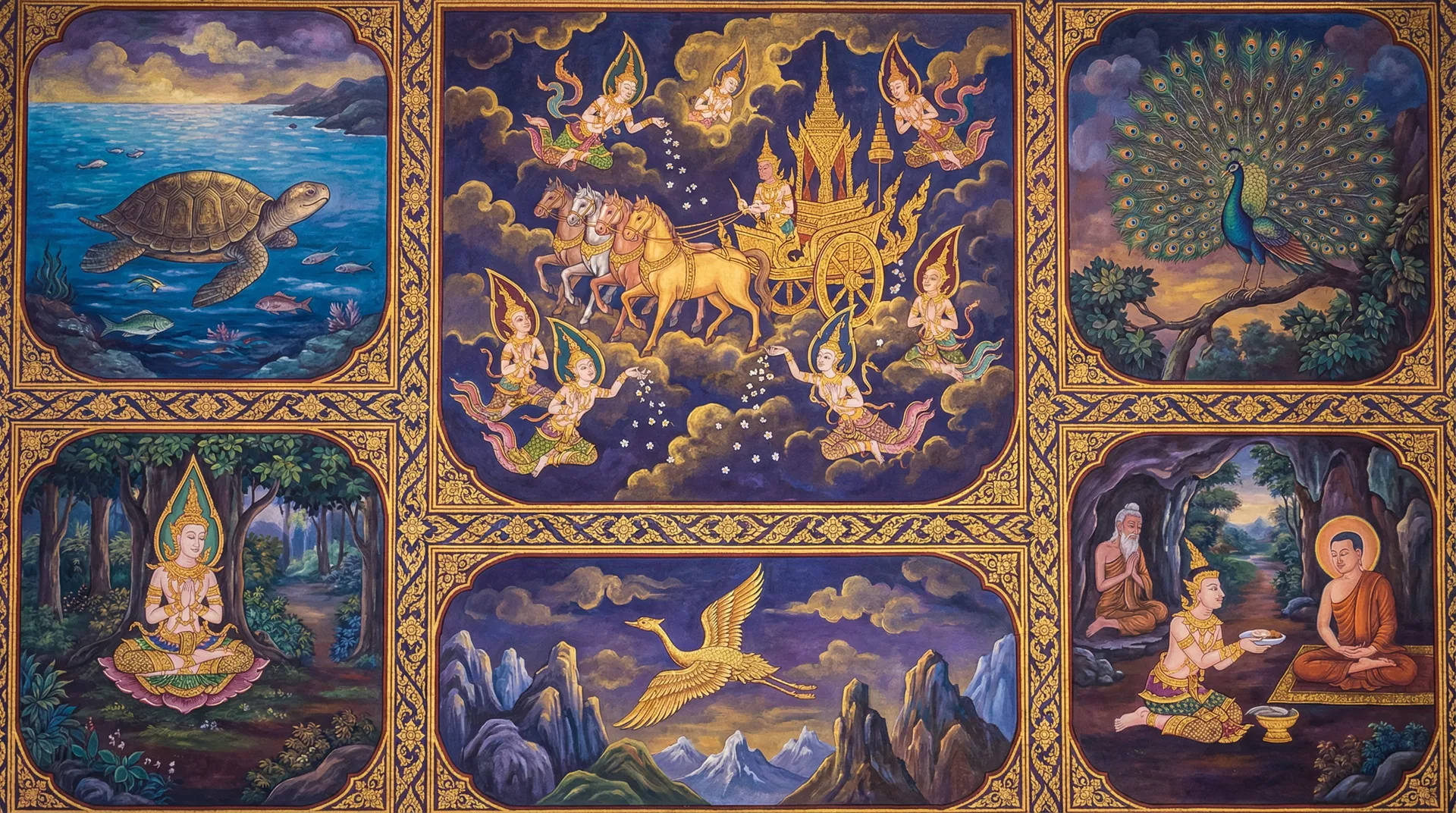
Kacchapa Jataka
The Kacchapa Jataka: The Steadfast Tortoise In the ancient land of Mithila, ruled by a wise and just...
💡 True strength lies not in avoiding hardship, but in enduring it with steadfastness, patience, and unwavering hope. Compassion and perseverance can inspire even the most pragmatic to choose a more humane path.
 410Sattakanipāta
Cattari Puttajataka
Cattari Puttajataka In the prosperous kingdom of Kasi, ruled a wise and benevolent king named Brahma...
💡 True and lasting happiness is not found in the endless pursuit of material possessions, intellectual achievements, or even in the heavy burden of constant good deeds, but in the cultivation of inner contentment, appreciating the present moment, and finding joy in life's simple blessings.
 455Ekādasanipāta
Sutasoma Jātaka
The Sutasoma Jātaka In the ancient city of Indapatta, ruled a wise and virtuous king named Sutasoma....
💡 Compassion and selfless sacrifice can transform even the most wicked beings. True strength lies not in power or dominance, but in understanding, kindness, and the courage to offer oneself for the well-being of others.
 527Mahānipāta
Mahā-susukajātaka
The Tale of the Contented Monkey In a lush, verdant forest teeming with life, where ancient trees sc...
💡 True happiness and contentment are found not in the abundance of external possessions, but in appreciating what one already has and choosing to find joy in the present moment.
449DasakanipātaKacchapa Jataka
Kacchapa Jataka In the ancient city of Savatthi, nestled beside a great river, lived a community of ...
💡 Respect for nature and ecological balance is paramount for survival and prosperity. Our actions have consequences, and neglecting our responsibility towards the environment will inevitably lead to suffering.
 351Pañcakanipāta
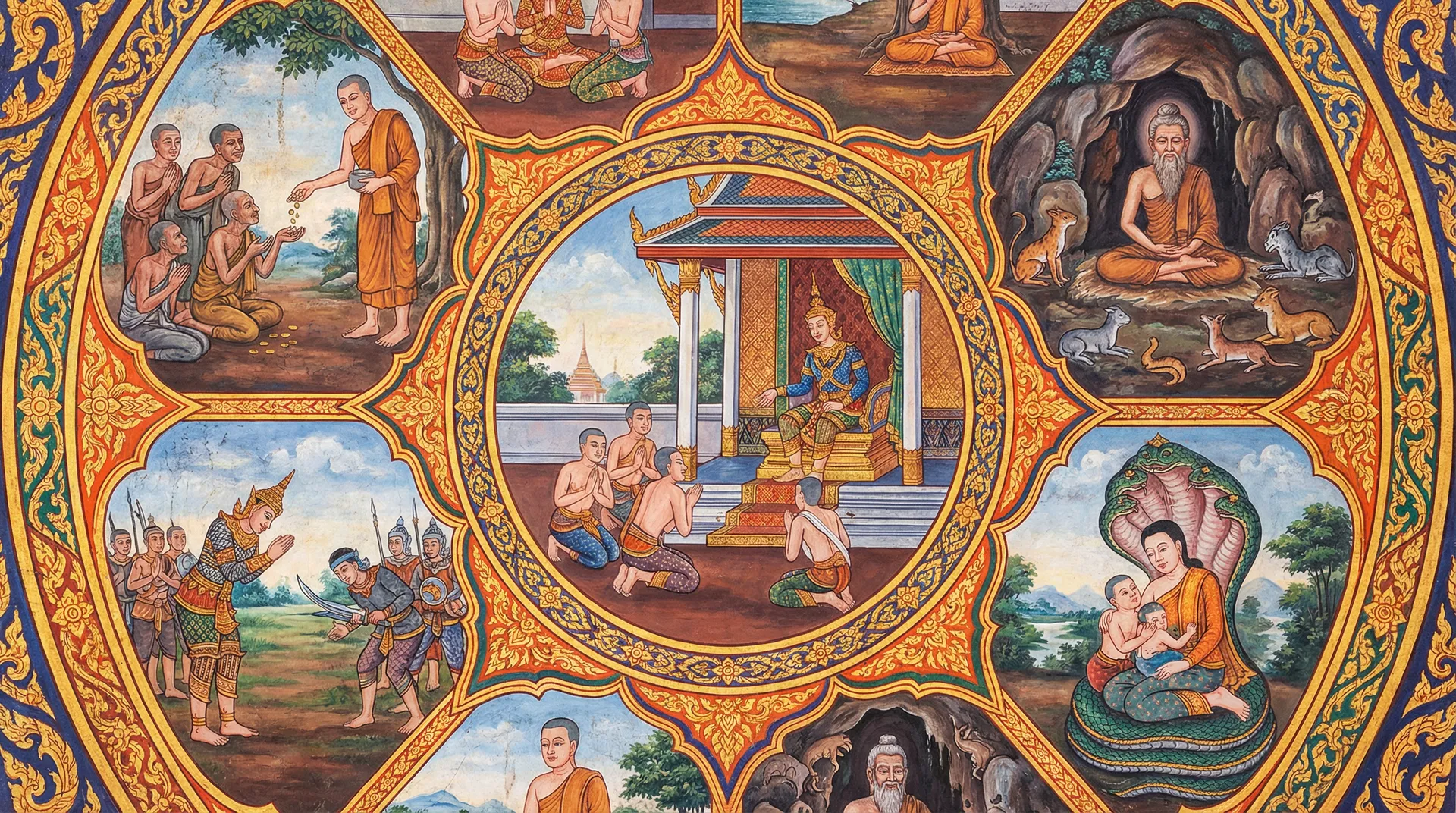
Nimi Jataka
Nimi Jataka In the heart of a thriving kingdom, ruled a just and wise monarch named King Nimi. His r...
💡 True happiness lies not in external pleasures or worldly possessions, but in the cultivation of inner virtues and selfless service.
— Multiplex Ad —