
Sālaka Jātaka
Sālaka Jātaka
Long ago, in the bustling city of Benares, lived a wise and benevolent king. His kingdom was prosperous, his people content, and his reign marked by justice and peace. Yet, the king harbored a deep-seated concern: the well-being and moral development of his subjects. He believed that a truly flourishing society was built not just on material wealth, but on the cultivation of virtue and compassion.
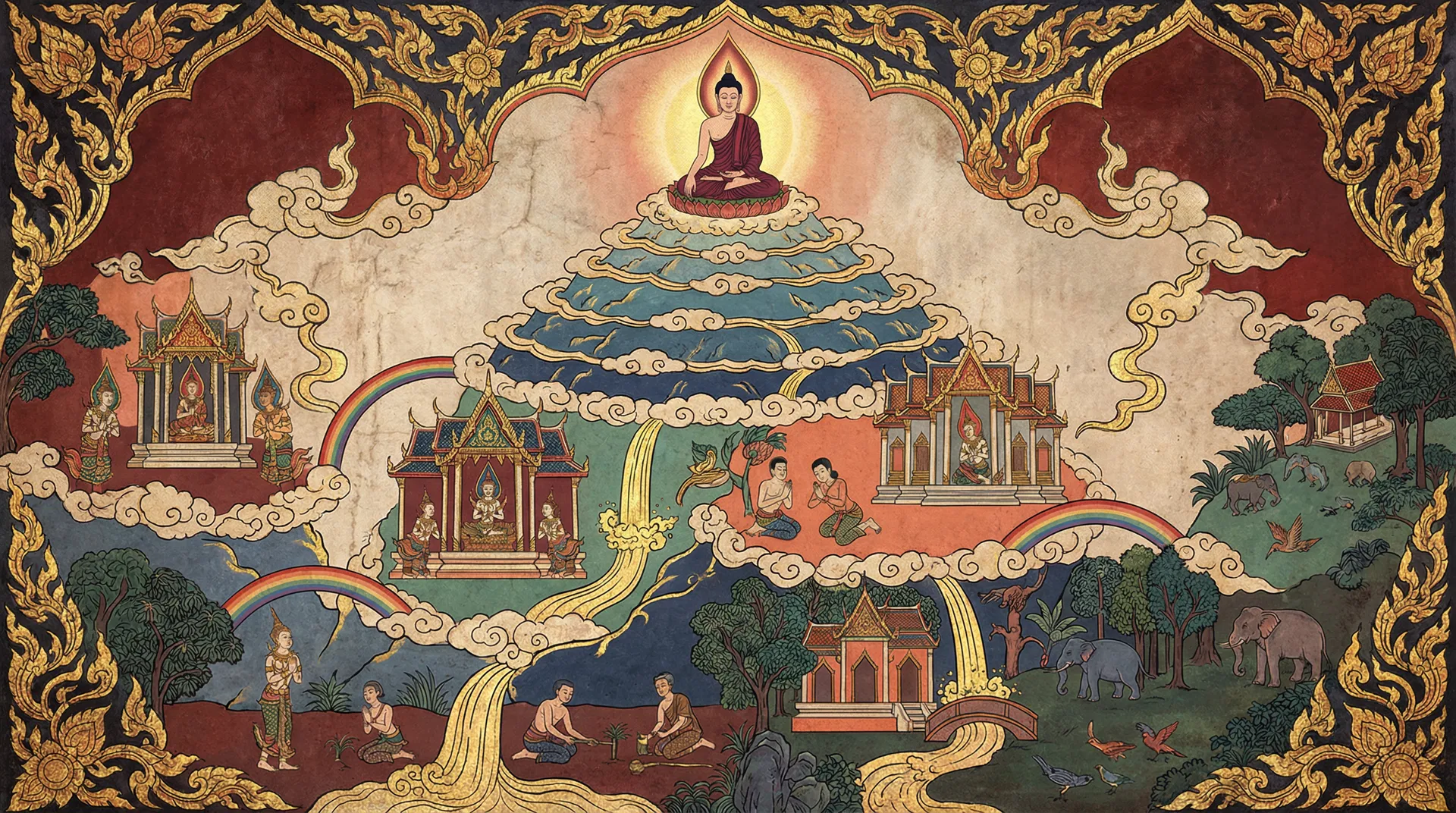
One morning, while meditating upon the welfare of his kingdom, the king had a vision. He saw a magnificent mango tree, laden with the most succulent and fragrant fruits he had ever beheld. But what caught his attention were the birds, thousands of them, flocking to this tree. These were not ordinary birds; they were brightly colored, with feathers that shimmered like jewels, and their songs were sweeter than any melody known to man. As they feasted on the mangoes, they did so with remarkable restraint. Each bird took only what it needed, never greedily plucking more than its fill, and always leaving plenty for others. They shared the bounty, their chirps and calls filled with a sense of harmony and mutual respect.
The king was deeply moved by this vision. He saw in the birds a perfect example of how his people should live – sharing resources, practicing moderation, and living in peace. He felt compelled to bring this vision to life in his own kingdom. He summoned his wisest advisors and described the vision in vivid detail, emphasizing the birds' selfless behavior and their harmonious existence.
The advisors, though impressed by the king's insight, were perplexed. "Your Majesty," one of them ventured, "how can we, mere humans, replicate the behavior of birds? Their lives are simple, driven by instinct. Ours are complex, filled with desires and ambitions."
The king, who in this life was the Bodhisatta, listened patiently. He knew that his vision was not merely about birds and mangoes; it was a profound allegory for the principles of generosity, contentment, and non-attachment. He decided to embody these principles himself and teach them through his actions.
The king then ordered a magnificent mango grove to be planted within the royal grounds. He instructed his gardeners to cultivate the trees with the utmost care, ensuring that the mangoes were of the finest quality, sweet and abundant. He also decreed that no one was to hoard the fruits. When the mangoes ripened, they were to be offered freely to all who came to the grove, with the specific instruction that each person should take only what they needed for themselves and their families, and that no one should be turned away.
As the mangoes began to ripen, the news spread throughout Benares. People from all walks of life – nobles, merchants, farmers, and the poor – flocked to the royal grove. The king himself would often sit at the edge of the grove, observing with a gentle smile. He saw merchants sharing their portions with laborers, and wealthy families leaving fruits for the less fortunate. There were no quarrels, no greed, only a quiet gratitude and a shared joy. The birds in the grove, as if sensing the benevolent atmosphere, also seemed to sing more sweetly, their presence adding to the enchanting ambiance.
The king's initiative was a resounding success. The people of Benares, inspired by their king's example and the abundance of the grove, began to practice greater moderation and generosity in their own lives. They learned to appreciate what they had, to share with their neighbors, and to find contentment in simplicity. The kingdom flourished, not just in wealth, but in spirit. The king’s reign became legendary for its peace and harmony, a direct result of the lessons learned from the vision of the mango tree and the birds.
The story of the Sālaka Jātaka became a timeless parable, reminding future generations that true prosperity lies not in accumulation, but in sharing; not in greed, but in contentment. It taught that by practicing moderation and generosity, even a complex human society can emulate the beautiful harmony of nature.
— In-Article Ad —
💡Moral of the Story
True wealth lies not in hoarding, but in sharing. Contentment and moderation lead to a harmonious and prosperous life.
Perfection: Generosity
— Ad Space (728x90) —
More Jataka Tales You May Enjoy
 486Pakiṇṇakanipāta
Mūkapacca Jātaka
Mūkapacca JātakaIn the ancient city of Varanasi, nestled beside the sacred River Ganges, lived a kin...
💡 The deceptive noise of ambition and lies can lead a kingdom to ruin, while the quiet strength of truth and wisdom, though sometimes overlooked, ultimately prevails and brings lasting peace and prosperity.
190DukanipātaMora Jataka
The Tale of the Wise PeacockHigh in the Himalayan mountains, where snow-capped peaks kissed the azur...
💡 True wisdom and the power of truth can transform hearts, overcome greed, and bring about positive change, even for those who seek to harm.
182DukanipātaBhisa Jātaka
The Tale of the Water Lily SeedLong ago, in the vibrant kingdom of Kashi, there reigned a just and c...
💡 Sustainable prosperity and success are achieved through patience, meticulous care, and understanding the specific needs of a situation, much like nurturing a delicate plant. Hasty actions and neglect of fundamental conditions lead to failure.
 1Ekanipāta
The Tale of the Great Lotus
The Tale of the Great Lotus In a time long past, when the world was a canvas of verdant forests and...
💡 Impatience is like a fire that burns everything, but wisdom and concentration are the tools that allow us to control situations and achieve goals with stability.
71EkanipātaThe Jataka of the Clenched Fist
In a time long past, in the prosperous city of Varanasi, the Bodhisatta was born as a young Brahmin ...
💡 True leadership lies in protecting the vulnerable, even at great personal risk.
172DukanipātaKacchapa Jātaka
Kacchapa JātakaIn the heart of a lush jungle, where ancient trees whispered secrets to the wind and ...
💡 Deception and trickery may offer temporary amusement, but they ultimately lead to suffering. True wisdom lies in honesty, integrity, and using one's abilities for the good of all.
— Multiplex Ad —