
Vessantara Jataka
Vessantara Jataka
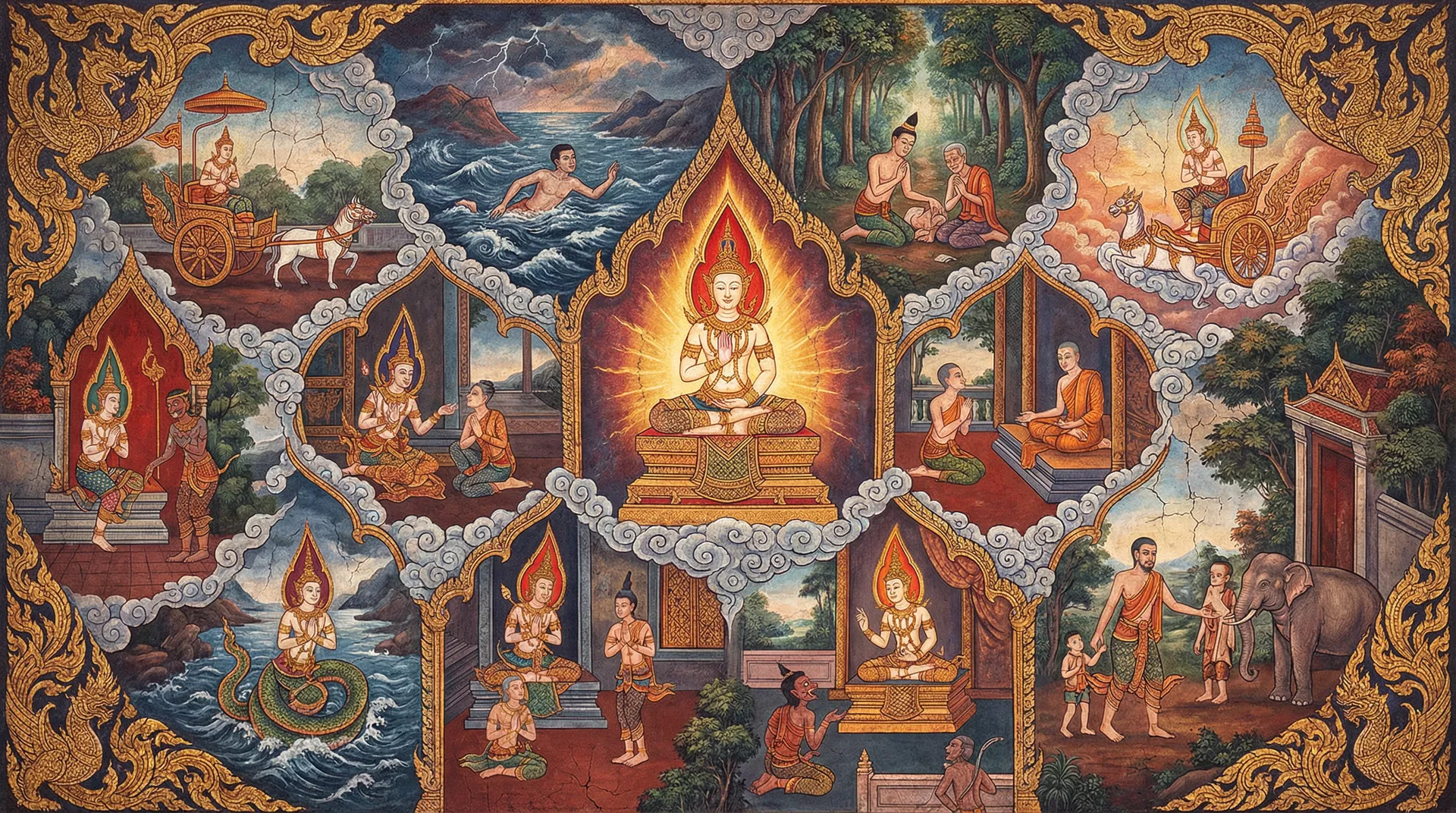
In the ancient kingdom of Suppavaha, ruled the virtuous King Sanjaya and Queen Phusati. Their son, Prince Vessantara, was known throughout the land for his boundless generosity, a trait that often exceeded the practicalities of royal life. One sweltering summer, a drought gripped the kingdom, turning fertile fields into parched earth and wilting the spirits of the people. The reservoirs were low, and despair began to set in.
Seeing the suffering of his people, Prince Vessantara decided to perform a great act of charity to appease the gods and bring rain. He ordered his magnificent white elephant, an auspicious symbol of prosperity, to be paraded through the city. This elephant was not just any animal; it was believed to possess the power to bring rain. He then stood at the city gates, offering the elephant to anyone who would ask for it, believing that such a selfless act would break the drought.
A mendicant from the neighboring kingdom of Kalinga, whose land was also suffering, heard of the prince's generosity. He traveled to Suppavaha with his seven children, hoping to receive the royal elephant. Upon seeing the prince, the mendicant humbly requested the elephant. Prince Vessantara, true to his nature, immediately gifted the magnificent creature to the mendicant. The mendicant, overjoyed, led the elephant away, intending to use its power for his own kingdom.
News of the prince's act reached King Sanjaya. While proud of his son's generosity, he also understood the implications of giving away the kingdom's most prized possession. He summoned Vessantara and explained that while his charity was noble, it had to be balanced with the welfare of his own people. The king, however, could not bring himself to punish his son. Instead, he decreed that Vessantara should be exiled to the remote Mount Vankagiri, along with his wife, Princess Maddi, and their two children, Jali and Kanhajina.
The exile was meant to be a period of reflection and a way to remove the prince from a position where his extreme generosity could disrupt the kingdom's stability. Princess Maddi, devoted and courageous, willingly followed her husband into exile, taking their children with her. Their journey was arduous, filled with hardships and the constant struggle for survival in the wilderness.
Life on Mount Vankagiri was harsh. They lived in a simple hut, foraging for food and facing the dangers of the forest. Yet, even in their destitution, Vessantara's charitable spirit remained undimmed. One day, an old Brahman arrived at their dwelling, his face etched with weariness. He begged for Vessantara's children, saying he had no one to help him with his chores. Despite Maddi's desperate pleas and Vessantara's own heartbreak, the prince, bound by his vow of charity, gave away his son Jali and daughter Kanhajina to the Brahman. This act was perhaps the most painful of all, as it involved the separation from his own flesh and blood.
The Brahman, however, was not an ordinary man. He was Indra, the king of the gods, in disguise. He had come to test the depth of Vessantara's compassion. Upon receiving the children, Indra revealed himself, returned Jali and Kanhajina to Vessantara and Maddi, and blessed them, promising that their suffering would soon end. Indra then returned the white elephant to Suppavaha, and as if by divine intervention, the rains finally began to fall, nourishing the parched land and restoring life to the kingdom.
Meanwhile, the news of Vessantara giving away his children reached Suppavaha. King Sanjaya, realizing the extreme suffering his son had endured and the divine intervention that had occurred, sent his ministers to bring Vessantara and his family back to the kingdom. Upon their return, Vessantara was hailed as a hero, his generosity now seen not as recklessness but as a profound spiritual achievement. He continued to rule with wisdom and compassion, never forgetting the lessons learned in exile.
— In-Article Ad —
💡කතාවේ ආදර්ශය
True generosity lies not just in giving material possessions, but in sacrificing even one's dearest to alleviate the suffering of others. True strength lies in enduring hardship with unwavering virtue. Compassion, even in its most extreme form, can lead to divine blessings and the ultimate well-being of a community.
පාරමිතා: Generosity (Dana Paramita), Patience (Khanti Paramita), Forbearance (Adhitthana Paramita)
— Ad Space (728x90) —
ඔබට ප්රිය ජාතක කතා
 547Mahānipāta
Sutasoma Jataka
Sutasoma JatakaLong ago, in the city of Baranasi, there lived a wise and virtuous king named Suppara...
💡 A person's true character and values are revealed by what they cherish most and what they fear most. Truth and integrity are the greatest treasures, and a person who values them above all else is unlikely to commit acts of deceit or dishonesty. True wisdom lies in understanding the hearts of people.
139Ekanipātaමහා පදුම ජාතකය (Maha Paduma Jataka)
මහා පදුම ජාතකය ඉතා ඈත අතීතයේ, රජවරුන්ගේ පාලනය යටතේ පැවති එක් මහා රාජධානියක් විය. එ් රාජධානියේ ...
💡 ආශාවන් සහ ලෞකික බැඳීම්, පසුතැවිල්ලට හේතු විය හැකි අතර, පැවිදි ජීවිතයේ ශාන්තිය සහ නිවනට බාධාවක් විය හැකිය. එසේම, පවුල් බැඳීම් ශක්තිමත් කිරීම වැදගත්ය.
134EkanipātaKutivihāra Jātaka
Kutivihāra JātakaIn a verdant forest nestled beside a sparkling river, lived a community of monks. A...
💡 Diligence and responsibility are essential components of spiritual practice. Neglecting one's duties leads to suffering, while dedicated effort brings true peace and fulfillment.
122Ekanipātaමාළුවාගේ කෘතගුණ සැලකීම
මාළුවාගේ කෘතගුණ සැලකීමබොහෝ කලකට පෙර, ඉන්දියාවේ එක් ගම්මානයක, ධනවත් වෙළෙන්දෙකුගේ පුතෙකු ලෙස උපන් බෝධි...
💡 අප කරන යහපත් ක්රියාවන් වෙනුවෙන් අපට යම් දිනෙක ඵල ලැබේ.
 238Dukanipāta
අන්දරගිරි ජාතකය
අන්දරගිරි ජාතකයඈත අතීතයේ, ඝන වනාන්තරයකින් වට වූ මනරම් ප්රදේශයක, අතිශයින් ධනවත්, නමුත් කෲර හා ලෝභ සහ...
💡 ලෝභකම නිසා අප සතුටින් ඈත් වන අතර, අන් අයට උපකාර කිරීමෙන් සැබෑ සතුට ලැබේ.
17Ekanipātaබලෙන් ගත් ධනය
බලෙන් ගත් ධනය පුරාණයේ, ඉසිපතන මුවදිට්ටුවෙහි, ඝන වනයකින් වට වූ සුන්දර ස්ථානයක, ඍෂිවරයෙකුගේ ආශ්රමයක...
💡 බලහත්කාරයෙන් හෝ කෑදරකමින් උපයා ගන්නා ධනය කිසිදා සතුටක් නොදෙන අතර, ධර්මිෂ්ඨකමින් උපයා ගන්නා ධනය සතුට ගෙන දේ.
— Multiplex Ad —