
Nimiduttaka Jātaka
Nimiduttaka Jātaka
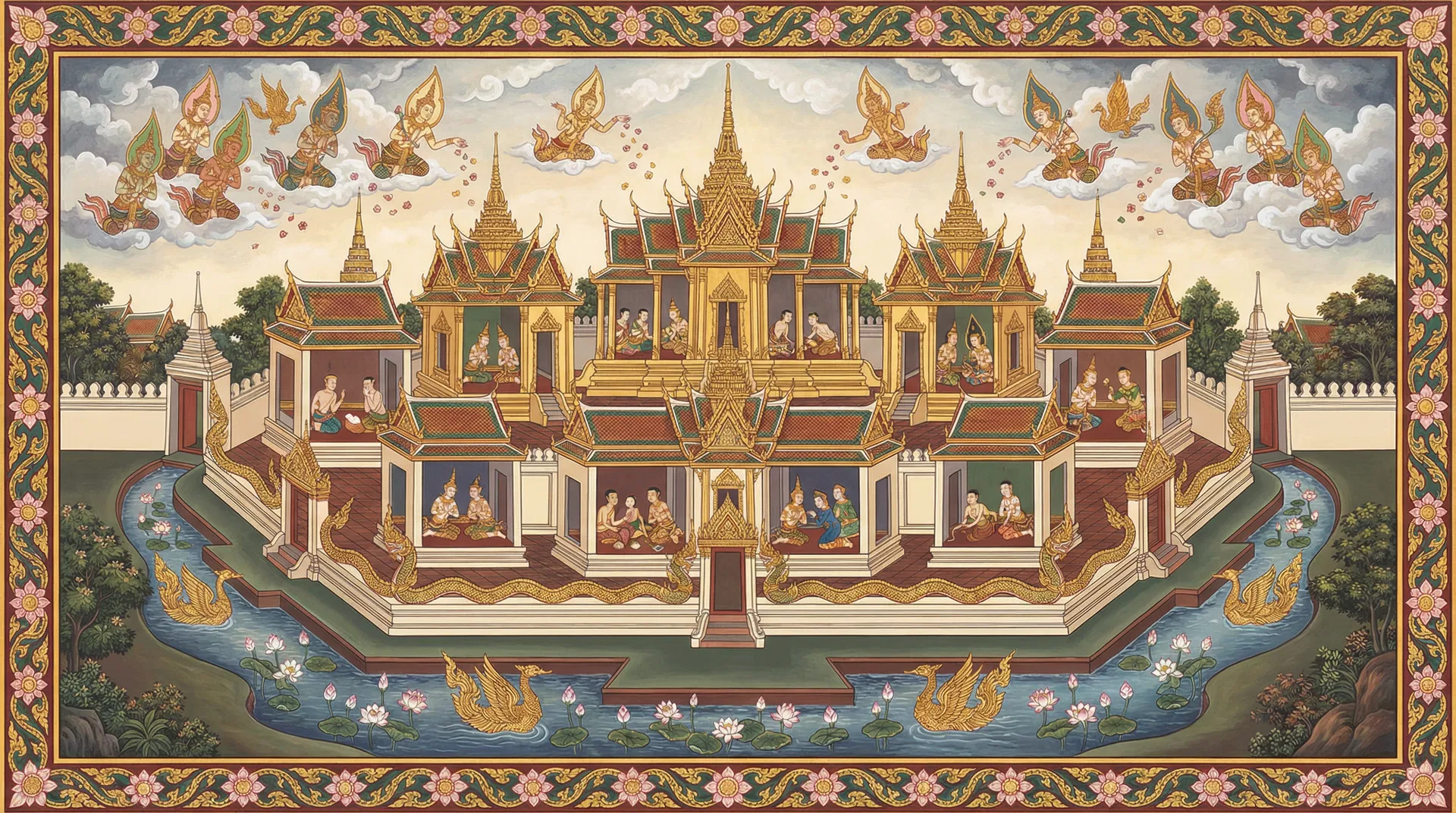
In the ancient and prosperous kingdom of Mithila, ruled a king named Nimi. King Nimi was a monarch of great virtue, deeply devoted to the practice of righteousness and the welfare of his subjects. His reign was a golden age, marked by peace, prosperity, and a profound sense of spiritual well-being among his people. He was known for his unwavering commitment to the principles of dharma, and his court was a center of learning and philosophical discourse.
One day, a renowned ascetic, known for his ascetic practices and profound spiritual insights, visited King Nimi's court. This ascetic, upon observing the king's pious life and the general virtuous conduct of his people, was deeply impressed. He saw in King Nimi a reflection of the highest ideals of kingship, a ruler who truly embodied the principles of righteous governance.
The ascetic, wishing to impart a special teaching, addressed the king. "Your Majesty," he said, his voice resonating with spiritual authority, "you have lived a life of exemplary virtue. You have cultivated the qualities of compassion, generosity, and truthfulness. However, there is one aspect of spiritual cultivation that, when perfected, can illuminate the path to ultimate liberation: the perfection of renunciation, or Nekkhamma. True renunciation is not merely the act of giving up worldly possessions, but the detachment of the mind from all desires and attachments, the understanding that all phenomena are impermanent and illusory."
King Nimi, ever eager to deepen his spiritual understanding, listened with rapt attention. He understood that while he had practiced generosity and adherence to dharma, the true essence of detachment was a subtle and profound attainment.
The ascetic, seeing the king's earnestness, offered a unique challenge. "For seven days, Your Majesty, I wish for you to engage in a practice of profound renunciation. During this period, you are to abstain from all worldly pleasures and distractions. You are to meditate on the impermanence of all things, and cultivate a state of mind free from desire. At the end of these seven days, I will return to assess your progress." With these words, the ascetic departed.
King Nimi, embracing the challenge with full conviction, began his seven-day practice. He retreated from his royal duties, handing over the affairs of state to his trusted ministers. He spent his days in deep meditation, contemplating the transient nature of life, the fleetingness of power, and the ultimate emptiness of material possessions. He observed the rising and falling of his thoughts, striving to achieve a state of equanimity, unperturbed by worldly concerns.
The first few days were challenging. The king, accustomed to the active engagement of his duties and the comforts of his palace, found his mind wandering. He felt the pull of worldly affairs and the subtle whispers of desire. However, with unwavering determination, he persisted in his meditation, gently redirecting his focus whenever his mind strayed.
As the days progressed, a profound sense of peace began to settle upon him. He experienced a growing detachment from the external world, a quiet joy that arose from within. The illusion of self and possession began to dissolve, replaced by a deep understanding of interconnectedness and impermanence. He realized that true freedom lay not in acquiring or holding onto things, but in letting go.
On the seventh day, the ascetic returned. He found King Nimi seated in quiet contemplation, his face radiating a serene and luminous peace. The ascetic, observing the profound transformation, smiled. "Your Majesty," he declared, "you have indeed embraced the essence of Nekkhamma. You have demonstrated that true renunciation lies not in the outward act, but in the inner state of detachment. You have cultivated a mind that is free from the chains of desire, and this is the path to true liberation."
King Nimi, humbled by the ascetic's words, felt a deep sense of fulfillment. He understood that the practice of renunciation, when undertaken with sincere effort and profound wisdom, could lead to an unparalleled state of inner peace and spiritual freedom. He returned to his duties with renewed vigor, but with a fundamentally altered perspective, his reign continuing to be a beacon of righteousness, now illuminated by the profound wisdom of detachment.
— In-Article Ad —
💡කතාවේ ආදර්ශය
True liberation comes not from accumulating worldly possessions or power, but from the inner detachment from desires and the understanding of impermanence.
පාරමිතා: Renunciation
— Ad Space (728x90) —
ඔබට ප්රිය ජාතක කතා
 460Ekādasanipāta
සංඛ ජාතකය
සංඛ ජාතකය සංඛ ජාතකයෙහි, බෝධිසත්වයන් වහන්සේ අතිශයින් ඤාණවන්ත, ධර්මිෂ්ඨ, සහ ත්යාගශීලී සංඛ නම් රජු ලෙස...
💡 ධර්මය, ඤාණය, සහ ත්යාගශීලී බව සැබෑ සතුටට මග පාදයි. ධනයට වඩා ධර්මයෙහි වැදගත්කම අවධාරණය කළ යුතුය.
 4Ekanipāta
සුතසෝම ජාතකය
සුතසෝම ජාතකයබෝසතාණන් වහන්සේ, එක්තරා කලෙක, සුතසෝම නම් වූ රජෙකුගේ ස්වරූපයෙන්, ධර්මිෂ්ඨ, යහපත්, ප්රඥාව...
💡 ධර්මය, සත්යය, හා කරුණාව යනු සැබෑ බලයයි. අනුන්ට උපකාර කිරීමෙන් අපගේ ජීවිතය ද යහපත් වේ. තමන්ගේ ශරීරය අනුන්ට දීමට සූදානම් වීම යනු උපරිම ත්යාගශීලීත්වයයි.
 277Tikanipāta
සෙට්ඨ ජාතකය
සෙට්ඨ ජාතකයඅතීතයේ, බරණැස් පුරයෙහි, ධර්මිෂ්ඨ රජෙක් රජකම් කළේය. ඔහුගේ රාජධානිය සදාචාර සම්පන්නව, සාමකාම...
💡 සැබෑ සතුට ධනයෙහි නොව, ධර්මයෙහි තිබෙනවා. දයාව, කරුණාව, ධර්මය, සහ සත්යය අපට සැබෑ සතුට සහ සාමය ගෙන දෙයි.
238Dukanipātaඅන්දරගිරි ජාතකය
අන්දරගිරි ජාතකයඈත අතීතයේ, ඝන වනාන්තරයකින් වට වූ මනරම් ප්රදේශයක, අතිශයින් ධනවත්, නමුත් කෲර හා ලෝභ සහ...
💡 ලෝභකම නිසා අප සතුටින් ඈත් වන අතර, අන් අයට උපකාර කිරීමෙන් සැබෑ සතුට ලැබේ.
227Dukanipātaමහා රුක්ඛ ජාතකය
මහා රුක්ඛ ජාතකය අතීත වර්තමාන භවයෙහි බරණැස්පුර රජ්ජුරුවන්ගේ රාජධානියේ, මහත් වූ ධනයෙන්, බලයෙන්, ...
💡 ලෝකයේ සියල්ල අස්ථිර බවත්, සියල්ල වෙනස් වන බවත් අවබෝධ කර ගත යුතුය. ධර්මය අනුව ජීවත් වීමෙන් සැබෑ සාමය හා සැනසීම ලැබේ.
170Dukanipātaකණඩ්වාල ජාතකය
කණඩ්වාල ජාතකය පුරාණ ගණන් හතළිස් හතක් ඈත අතීතයේ, බරණැස් නුවර රජකම් කළ බරණැස් රජුගේ රාජධානියේ,...
💡 ලෞකික ධනය, බලය, රාජධානිය අස්ථිර බවත්, ධර්මය, සත්යය, කරුණාව සදාකාලික බවත්.
— Multiplex Ad —