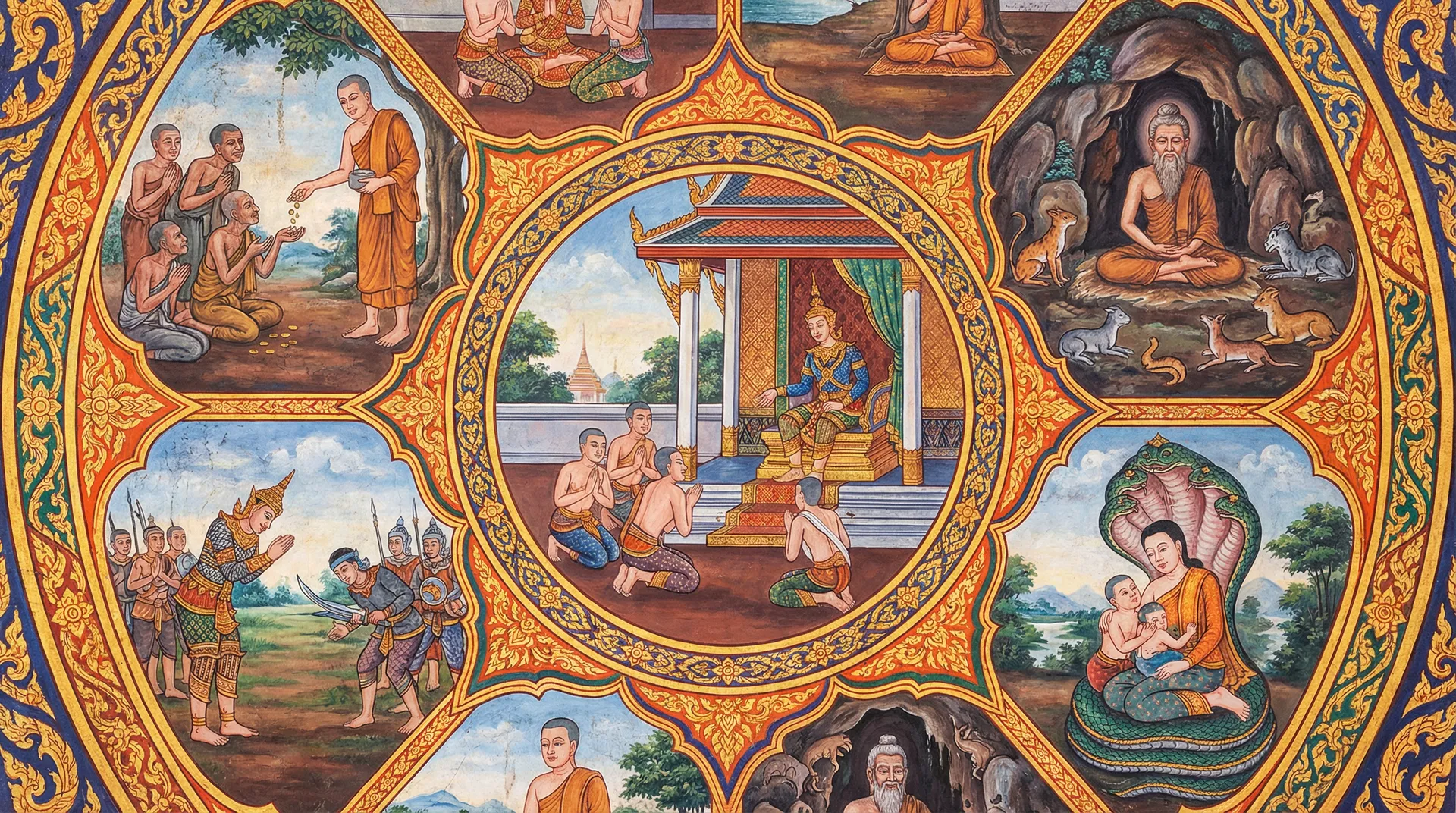
Sankha Jātaka
Sankha Jātaka
In the vibrant city of Indapatta, there reigned a king named Sankha. He was a ruler of great renown, known for his immense wealth and his unparalleled generosity. His treasury overflowed, and his benevolence extended to all, regardless of their status or origin. However, despite his vast riches and the adoration of his subjects, King Sankha harbored a secret sorrow. He was deeply attached to his wealth, and the thought of losing even a fraction of it filled him with anxiety. This possessiveness, though hidden beneath a veneer of generosity, was a source of internal conflict. One day, a wise ascetic, who had renounced worldly possessions and lived a life of austerity, visited the king's court. The ascetic, known for his profound spiritual insight, observed the king's outward show of generosity but sensed the underlying attachment. He approached the king and spoke with gentle wisdom. 'Your Majesty,' the ascetic began, 'your generosity is commendable, and your wealth is vast. Yet, I perceive a shadow of worry that clouds your mind. True generosity, Sire, is not merely the giving away of possessions, but the liberation of the mind from the very concept of ownership.' The king, though initially taken aback, recognized the truth in the ascetic's words. He confessed his inner turmoil, his fear of losing his wealth and the anxiety it caused him. The ascetic then proposed a unique challenge. He asked the king to give him his most prized possession, not a material object, but something that represented his deepest attachment. After much contemplation, the king, understanding the ascetic's intention, decided to offer his own life. He reasoned that if he could detach himself from the thought of his own life, he could surely detach himself from material wealth. The ascetic accepted the king's offer, but with a condition: the king would have to live as an ascetic for a period, truly experiencing detachment, before the ultimate offering could be made. The king agreed and, shedding his royal robes and ornaments, embarked on a journey of renunciation. He lived in forests, ate simple food, and meditated on the impermanence of all things. He practiced detachment, observing the rise and fall of his thoughts and emotions without clinging to them. He learned to find contentment in simplicity and to understand that true wealth lay not in possessions but in inner peace. During this time, the kingdom experienced a period of unrest. With the king absent and the ascetic having taken charge of the royal treasury under the pretext of safekeeping, some opportunistic individuals began to spread rumors and cause disturbances, hoping to exploit the situation. However, the ascetic, guided by the king's principles of justice and compassion, managed the kingdom wisely, ensuring peace and order were maintained. When the king finally returned, having undergone a profound transformation, he was no longer the man who clung to his wealth. He had experienced true freedom from attachment. He saw his kingdom not as something to possess, but as a responsibility to serve. He reunited with his people, who rejoiced at his return and were impressed by his profound change. The king, now free from anxiety and possessiveness, ruled with even greater wisdom and compassion. His generosity became truly liberating, as it was no longer tinged with attachment or the fear of loss. He understood that by letting go of the idea of ownership, he had gained true freedom and inner richness. The kingdom prospered under his enlightened rule, and his story became a legend of the power of detachment and true generosity.
The Sankha Jātaka teaches that true wealth is not in material possessions but in freedom from attachment and possessiveness. It highlights that genuine generosity comes from a liberated mind, not from giving away what one fears to lose. The story emphasizes the importance of inner peace and contentment, which can only be achieved by understanding the impermanence of all things and letting go of clinging.
— In-Article Ad —
💡ၶေႃႈသွၼ်
True wealth lies in freedom from attachment; genuine generosity liberates the mind.
ပႃႇရမီႇ: Generosity (Dāna)
— Ad Space (728x90) —
ၸႃႇတၵဢၼ်ၼႃႈသူၼ်ၸႂ်
 140Ekanipāta
ၐၯၘၬၛၐၥၗၒၐၬၛၐၥၗၒၐၬၛၐၥၗၒ
ၐၯၘၬၛၐၥၗၒၐၬၛၐၥၗၒၐၬၛၐၥၗၒၐၬၛၐၥၗၒၐၬၛၐၥၗၒၐၬၛၐၥၗၒၐၬၛၐၥၗၒၐၬၛၐၥၗၒၐၬၛၐၥၗၒၐၬၛၐၥၗၒၐၬၛၐၥၗၒၐၬၛၐၥၗၒၐၬၛၐၥၗၒၐၬၛၐၥၗၒ...
💡 การไม่ยอมรับผิดเมื่อตนเองกระทำผิด และการเชื่อคำพูดของคนพาล ย่อมนำมาซึ่งความเดือดร้อน และการสร้างความเสียหายแก่ผู้อื่น. การยอมรับผิด และการไตร่ตรองให้รอบคอบ เป็นคุณธรรมที่สำคัญ.
 203Dukanipāta
Kacchapa Jataka
Kacchapa Jataka In the heart of a lush jungle, where ancient trees formed a canopy of emerald and th...
💡 သစ္စာတရားနဲ့ စွန့်လွှတ်စွန့်စားမှုဟာ ြမတ်တဲ့ဂုဏ်တရား ြဖစ်တယ်။
 394Chakkanipāta
ၵေႃးၸ်ႂႇၵႄႈၵႄႈ
ၵေႃးၸ်ႂႇၵႄႈၵႄႈ ၼႂ်းၵႄႈၸ်ႂႇၶႃး ပဵၼ်ၸႄႈၵႄႈ ၵႂၢၼ်း ဢၼ်ပဵၼ် ၵႄႈ ၵႂၢၼ်း ၸဝ်ႈ ဢၼ် ၵႂၢၼ်း ၸိူဝ်း ဢၼ် ၵႂၢၼ်...
💡 လူၵ်ႈႁၵ်ႉၵေႃႈ ႁႂ်ႂ်တေပဵၼ်ၽူၵ်းတႅၼ်း ဢၼ်တေပႃးႁႂ်ႂ်တေႁႃး ၵူၼ်းဢၼ်ႁႅင်း ဢၼ်တေပႃးႁႂ်ႂ်တေႁႃး
16Ekanipātaသီရိဇာတ်(သိရိဇာတ်)
သျှိခေတ်ရှေးအခါက ဝေသာလီနဂိုရ်မင်းနန်းတွင် ဘုရားလောင်းသည် သိရိအမည်ရှိသော ပုဏ္ဏားတစ်ဦး ဖြစ်တော်မူ၏။ ကိ...
💡 အလှူအတန်း ပေးကမ်း စွန့်ကြဲခြင်းသည် ကောင်းမြတ်သော အကျိုးတရားကို ပေးစွမ်း၏။ မည်သူ့ကိုမျှ မခွဲခြားဘဲ ပေးကမ်း စွန့်ကြဲရာတွင် စိတ်ရင်းမှန်ဖြင့် ပေးကမ်းရမည်။
74Ekanipātaဢႅສິສະຊາດກ
ဢႅສິສະຊາດກ ႄပတႄဢႄၵႄၵႄႄႄႄႄႄႄႄႄႄႄႄႄႄႄႄႄႄႄႄႄႄႄႄႄႄႄႄႄႄႄႄႄႄ...
💡 ความเมตตากรุณาและการเสียสละเป็นคุณธรรมที่ประเสริฐ การช่วยเหลือผู้อื่นด้วยความจริงใจ ย่อมนำมาซึ่งความผาสุกและความเจริญรุ่งเรืองแก่ทุกฝ่าย
214Dukanipātaၵုမ႐ႃႭ ၸ႓ႊၵ
ႄၵႭ႑ႊ ၼ ႊ ႄၵႭ႑ႊ ၼ ႊ ႄၵႭ႑ႊ ၼ ႊ ႄၵႭ႑ႊ ၼ ႊ ႄၵႭ႑ႊ ၼ ႊ ႄၵႭ႑ႊ ၼ ႊ ႄၵႭ႑ႊ ၼ ႊ ႄၵႭ႑ႊ ၼ ႊ ႄၵႭ႑ႊ ၼ ႊ ႄၵႭ႑ႊ ၼ ႊ ...
💡 ปัญญาเป็นอาวุธที่ประเสริฐที่สุด สามารถแก้ไขปัญหาที่ยากลำบากได้โดยไม่ต้องใช้กำลัง
— Multiplex Ad —