
The Golden Swan Jataka
547 Jataka Tales
69

The Golden Swan Jataka

Buddha24Ekanipāta
Listen
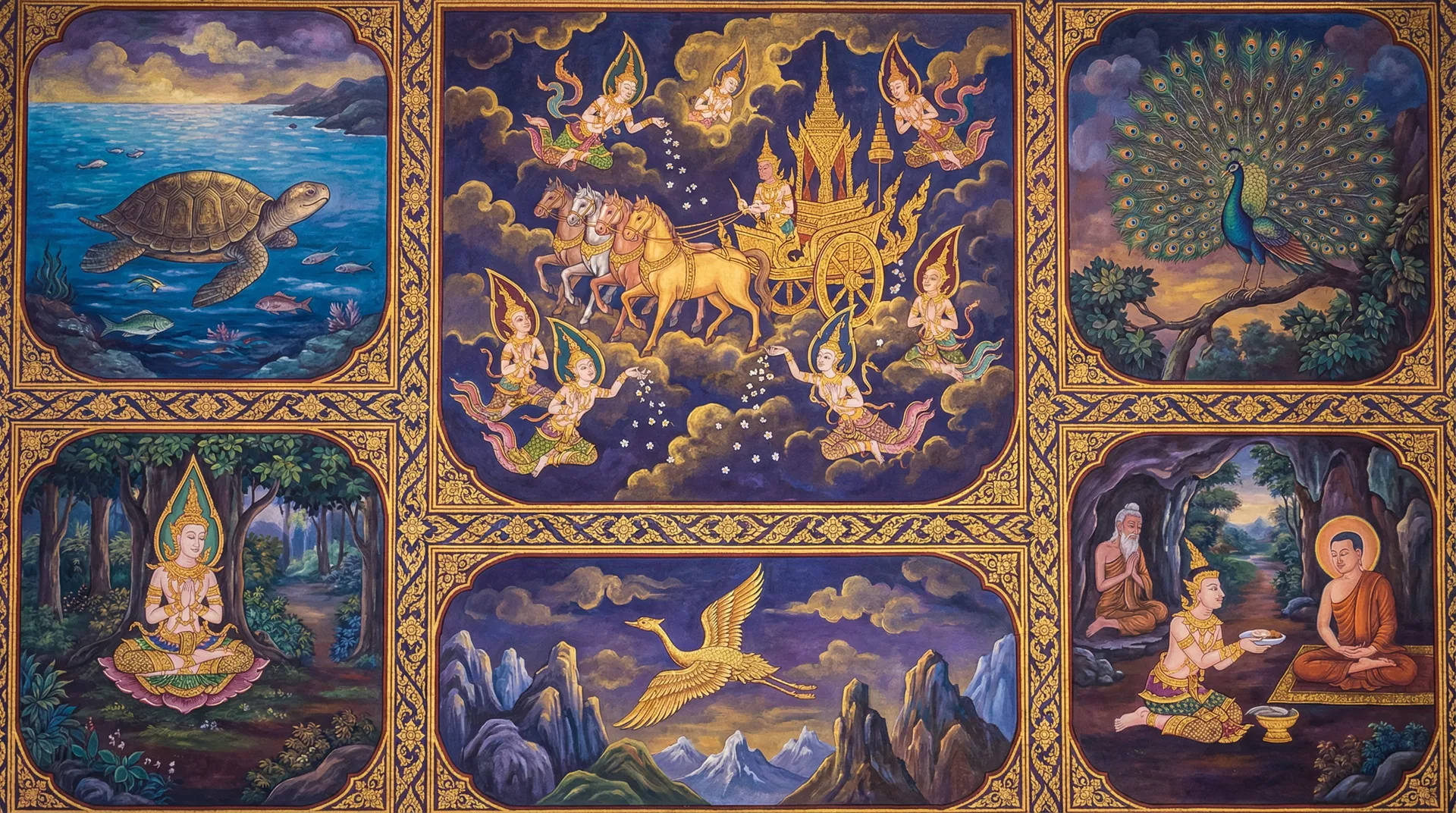
In a verdant forest, cradled by majestic mountains, resided a multitude of birds. The morning air was thick with the scent of damp earth and diverse blossoms, while gentle sunlight, filtering through the dense canopy, dappled the forest floor with gem-like sparkles. Amongst the varied flora stood a magnificent Erythrina tree, its colossal trunk and sprawling branches casting a wide shadow. Upon its sturdy limbs, numerous large nests were arranged, serving as the dwelling place for a flock of beautiful golden swans. One of these swans, known for its exceptional radiance and virtue, was the Bodhisatta in a former existence. This golden swan possessed a voice of unparalleled beauty, capable of enchanting all who heard it. It lived harmoniously with its brethren, sharing the bountiful fruits of the forest and living a life of peace and contentment. One day, a king named Dhatarattha, who ruled over a prosperous kingdom, was on a hunting expedition. As he ventured deeper into the forest, he chanced upon the clearing where the golden swans resided. The sight of the magnificent birds, their plumage shimmering like molten gold, captivated the king. But it was the melodious song of the Bodhisatta swan that truly enthralled him. The king, struck by the swan's divine voice and exquisite form, felt an overwhelming desire to possess it. He ordered his hunters to capture the swan, but the birds, sensing danger, took flight. The king, determined, pursued them. The Bodhisatta swan, seeing the king's relentless chase and the fear in the eyes of its kin, made a courageous decision. It landed before the king, its golden feathers radiating an ethereal glow, and spoke in a voice that resonated with wisdom and compassion. "O King," it said, "why do you seek to capture me? I am but a humble creature of the forest. My song is a gift, not a possession. If you desire beauty and harmony, look within your own heart, for true treasures lie not in capture, but in understanding." The king was astonished by the swan's eloquence and its profound words. He had never encountered such a creature. He realized the futility of his pursuit and the arrogance of his desire. He lowered his bow and, with deep respect, asked the swan to share its wisdom. The Bodhisatta swan then recounted the principles of righteous kingship, the importance of compassion for all beings, and the ephemeral nature of worldly possessions. It spoke of the interconnectedness of all life and the profound joy that comes from living in harmony with nature and with one's own conscience. King Dhatarattha listened intently, his heart stirred by the swan's teachings. He understood that true power lay not in domination but in benevolent leadership. He vowed to rule his kingdom with justice and compassion, inspired by the golden swan's wisdom. From that day forward, the king fostered a deep respect for the natural world and its inhabitants. He often returned to the forest, not to hunt, but to listen to the songs of the birds and to contemplate the teachings of the golden swan. The tale of the golden swan and the wise king spread throughout the land, becoming a legend that inspired generations to live with kindness, wisdom, and respect for all life. Moral lesson: True wealth and happiness are found not in possessing external things, but in cultivating inner virtues such as wisdom, compassion, and respect for all beings.

— In-Article Ad —

💡Moral of the Story

True peace and contentment are found not in external achievements or possessions, but in the mastery of one's own mind, through detachment, mindfulness, and self-awareness.

Perfection: Wisdom (Prajna Paramita)

— Ad Space (728x90) —

More Jataka Tales You May Enjoy
Mugapakkha Jataka
407Sattakanipāta

Mugapakkha Jataka

Mugapakkha Jataka In the ancient city of Supparaka, a bustling port town where ships from distant la...

💡 Truth, when supported by a consistent life of virtue and good deeds, will ultimately prevail over falsehood and slander. Patience and silence in the face of unjust accusations can be a powerful form of defense, allowing one's true character to shine through and expose the deceit of others.

The Tale of the Horse-Breeder
36Ekanipāta

The Tale of the Horse-Breeder

In a past aeon, in the flourishing city of Varanasi, the Bodhisatta was born as a young Brahmin, end...

💡 The highest form of virtue is selfless compassion, willing to sacrifice for the well-being of others.

The Bodhisatta as the Elephant King
44Ekanipāta

The Bodhisatta as the Elephant King

The Bodhisatta as the Elephant KingIn the heart of a magnificent, ancient forest, where trees touche...

💡 True leadership is demonstrated through selfless sacrifice and unwavering dedication to the welfare of others.

Mugapakkha Jataka
141Ekanipāta

Mugapakkha Jataka

The Tale of the Mute Prince In the ancient kingdom of Mithila, ruled a just king named Dhanañjaya. H...

💡 True leadership is demonstrated through actions, courage, and compassion, not merely through eloquent speech.

Mora Jataka
110Ekanipāta

Mora Jataka

The Tale of the King, the Queen, and the Golden Peacock In the prosperous kingdom of Varanasi, nestl...

💡 True beauty lies not in outward appearance but in inner virtues like wisdom, compassion, and kindness. Superficial fascination can blind us to the enduring value of character.

Mugapakkha Jataka
131Ekanipāta

Mugapakkha Jataka

The Tale of the Mute Prince In the ancient kingdom of Varanasi, nestled beside the sacred Ganges, li...

💡 True wisdom often lies not in speaking, but in knowing when and how to speak, especially when words are needed to uphold truth and compassion.

— Multiplex Ad —

This website uses cookies to improve your experience, analyze traffic, and display relevant advertisements. Privacy Policy