Mugapakkha Jataka
Mugapakkha Jataka
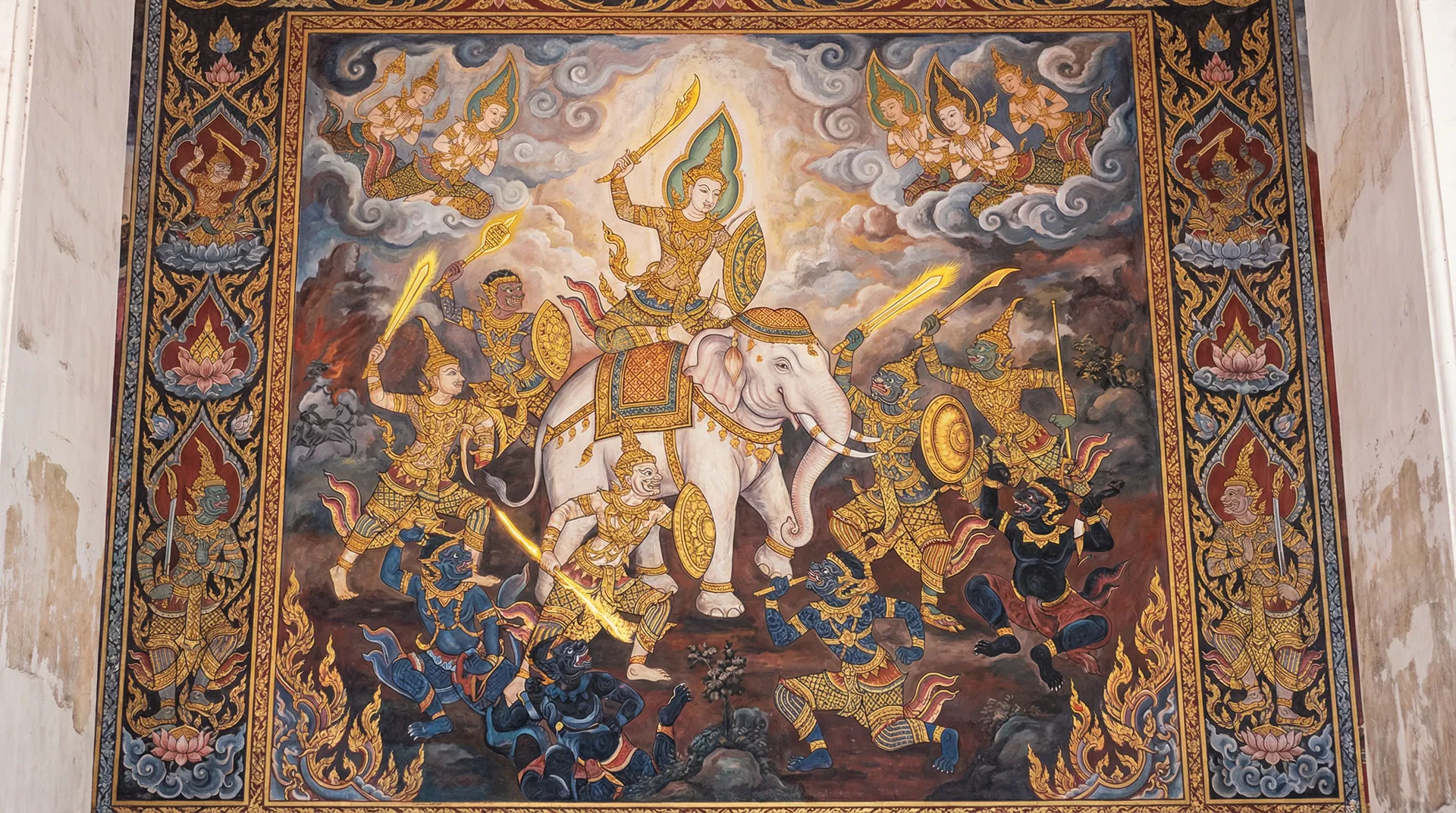
In the ancient kingdom of Mithila, nestled beside the roaring Gandaki River, lived a king renowned for his wisdom and unwavering justice. But even the wisest of rulers are not immune to the whispers of misfortune. This king, whose name is now lost to the mists of time, found himself in a predicament that tested the very core of his character. It began with a seemingly insignificant incident: a royal elephant, a creature of immense strength and pride, fell ill. Despite the best efforts of the royal physicians, the majestic beast weakened day by day, its once-gleaming hide dulling, its mighty trumpeting reduced to a faint wheeze.
The king, deeply fond of his royal companion, was consumed by worry. He consulted oracles, performed ancient rituals, and even offered precious jewels to the gods, but the elephant’s condition did not improve. One evening, as the moon cast an ethereal glow over the palace gardens, a wise old hermit, known for his profound understanding of the natural world and the unseen forces that govern it, approached the king. The hermit, with eyes that held the depth of ancient forests, spoke with a voice as gentle as rustling leaves.
“Your Majesty,” the hermit began, bowing respectfully, “I have observed the plight of your noble elephant. Its ailment is not of the body alone, but of the spirit. It has lost its will to live, a consequence, I believe, of a great wrong it committed in its youth.”
The king, though initially skeptical, was desperate. “A wrong? What wrong could such a creature commit?” he asked, his brow furrowed with concern.
The hermit explained, “This elephant, in its younger days, was known for its impetuousness. One day, in a fit of playful exuberance, it chased a flock of birds by the riverbank. In its haste, it trampled upon a nest, crushing the eggs within. The mother bird, witnessing this destruction, cried out in despair, and her sorrowful lament echoed through the forest. This act, though seemingly small, has burdened the elephant’s spirit, leading to its current malaise.”
The king listened intently, his heart heavy. He understood that even the smallest of actions could have far-reaching consequences. “What can be done to heal my elephant?” he implored the hermit.
The hermit pondered for a moment. “The elephant’s spirit is weighed down by guilt and the memory of that lost life. To alleviate its suffering, it must perform an act of profound compassion, an act that will resonate with the very essence of life it extinguished.”
The king, determined to save his beloved elephant, asked for guidance. The hermit suggested, “There is a sacred grove, deep within the mountains, where rare medicinal herbs grow. These herbs are said to possess the power to heal not only the body but also the soul. However, the path to this grove is perilous, guarded by treacherous ravines and fierce wild beasts. The elephant, though weakened, must embark on this journey, not to gather the herbs for itself, but to offer them to those in need, a selfless act of atonement.”
The king was hesitant. His elephant was already frail. Could it possibly survive such a journey?
The hermit reassured him, “The journey itself, undertaken with a sincere heart, will be the cure. Its strength will be renewed not by physical sustenance alone, but by the purity of its intention.”
And so, with the king’s blessing, the elephant, guided by the hermit and a small contingent of royal guards, began its arduous trek. The path was indeed fraught with danger. They encountered a pack of hungry wolves, whose eyes glinted in the dim light of the forest. The elephant, despite its weakness, stood firm, shielding the guards with its massive body, a silent testament to its changed nature. Later, they navigated a narrow cliffside path where a single misstep meant a fatal plunge. The elephant’s sure-footedness, a skill honed by years of royal service, proved invaluable.
As they neared the sacred grove, they came across a village ravaged by a terrible plague. The villagers were weak and dying, their faces etched with despair. The elephant, sensing their suffering, immediately knelt down. It nudged the guards, indicating the precious herbs that the hermit had described. The guards, understanding the elephant’s intent, began to gather the herbs with great haste.
The elephant then proceeded to distribute the herbs, not just to the villagers, but also to the ailing animals in the surrounding area. It offered water from its own dwindling supply to the parched throats of the sick. It used its trunk to gently clear paths blocked by fallen debris, allowing aid to reach those who needed it most. Its actions were driven by an overwhelming sense of empathy and a deep desire to alleviate suffering.
As the elephant performed these selfless acts, a remarkable transformation began to occur. Its dull eyes began to gleam with a newfound light. Its labored breathing grew steadier. The weariness that had clung to it like a shroud started to dissipate. The pure joy of giving, the profound satisfaction of healing others, was breathing new life into its ancient spirit.
When the elephant and its escort finally returned to Mithila, the king was overjoyed to see the dramatic improvement in its health. The elephant was no longer the listless, ailing creature it had been. It moved with renewed vigor, its hide shone with a healthy luster, and its trumpet call was once again strong and clear.
The king, witnessing this miracle, understood the profound truth the hermit had imparted. He realized that true healing comes not just from physical remedies, but from acts of selfless compassion and genuine remorse. He learned that even the most powerful creatures can be brought low by the weight of their past actions, and that redemption lies in the willingness to serve others and atone for one’s mistakes. The elephant, having found peace within itself, lived out its remaining days in service to the kingdom, a living embodiment of the Mugapakkha Jataka’s timeless wisdom.
— In-Article Ad —
💡Moral of the Story
True healing and redemption are found not just in seeking cures for oneself, but in performing selfless acts of compassion and atonement for past wrongs, thereby restoring balance to both the body and the spirit.
Perfection: Generosity (Dana), Compassion (Karuna)
— Ad Space (728x90) —
More Jataka Tales You May Enjoy
 536Mahānipāta
Mugapakkha Jataka
The Tale of the Mute Prince In the ancient kingdom of Mithila, nestled amidst rolling hills and verd...
💡 True wisdom and leadership are not always expressed through words. Silence can be a powerful testament to inner understanding, compassion, and enlightenment. Actions and presence can speak louder than any speech.
 131Ekanipāta
Mugapakkha Jataka
The Tale of the Mute Prince In the ancient kingdom of Varanasi, nestled beside the sacred Ganges, li...
💡 True wisdom often lies not in speaking, but in knowing when and how to speak, especially when words are needed to uphold truth and compassion.
 258Tikanipāta
Sutasoma Jātaka
Sutasoma JātakaIn the ancient city of Indapattha, a kingdom blessed with fertile lands and prosperou...
💡 True immortality is found not in the fear of death, but in the legacy of virtuous deeds and selfless sacrifice.
 219Dukanipāta
Sujambara Jataka
Sujambara JatakaIn the heart of a vast and ancient forest, where towering trees formed a canopy that...
💡 Greed and the pursuit of material wealth can lead to one's downfall. True riches lie in living in harmony with nature and cultivating compassion.
 321Catukkanipāta
Nimi Jataka
Nimi JatakaIn the ancient city of Mithila, ruled a just and benevolent king named Nimi. His reign wa...
💡 Even the highest heavens are impermanent, and true, lasting happiness is found not in external pleasures or celestial abodes, but in the cultivation of inner wisdom, compassion, and detachment through the practice of the Dharma.
94EkanipātaMuni Jataka
Muni JatakaIn the verdant forests of the Himalayas, where ancient trees whispered secrets to the win...
💡 True peace and strength are found not in external conditions or material possessions, but in the stillness and equanimity of the mind, cultivated through wisdom and detachment.
— Multiplex Ad —