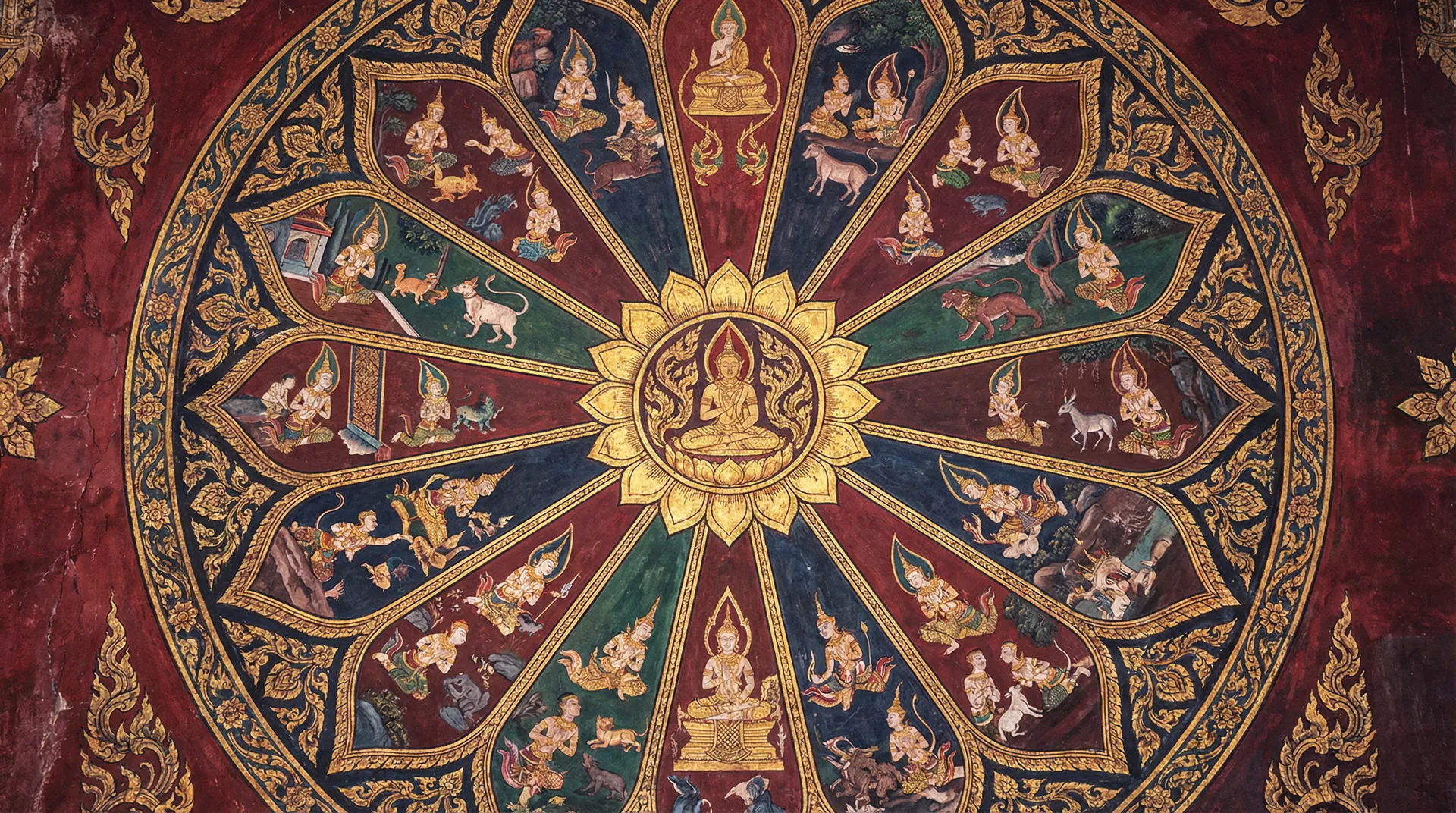
Mahā-sutasoma Jātaka
Mahā-sutasoma Jātaka
In the ancient city of Indapatta, ruled the wise and virtuous King Pāṇḍava. He was known for his righteousness and his unwavering commitment to justice. His son, Prince Mahāsutasoma, was a warrior of exceptional skill and courage, but also a scholar who delved deep into the teachings of the Dhamma.
One day, the kingdom was thrown into turmoil by the arrival of a fearsome Yaksha, a powerful demon named Puṇṇaka. Puṇṇaka was a cruel and bloodthirsty being who terrorized the surrounding lands, demanding human sacrifices from innocent villages. The people of Indapatta lived in constant fear, their lives overshadowed by the Yaksha's menace.
King Pāṇḍava, seeing the suffering of his people, was deeply troubled. He consulted with his wise ministers and scholars, but no one could devise a plan to defeat the powerful Yaksha. The kingdom seemed doomed to suffer under Puṇṇaka's tyranny.
Prince Mahāsutasoma, hearing of the people's plight, stepped forward. He was a warrior, trained in the arts of combat, but he also possessed a profound understanding of the Dhamma. He knew that true victory lay not only in physical strength but also in moral strength and wisdom. He vowed to face the Yaksha himself, not with the intention of killing him, but of seeking to understand and pacify him.
The King, though worried for his son's safety, admired his courage and his noble intention. He gave his blessing, and Prince Mahāsutasoma, accompanied by his loyal charioteer, set out to confront Puṇṇaka.
When the prince arrived at the Yaksha's lair, he found Puṇṇaka reveling in his cruelty, surrounded by the spoils of his conquests. The Yaksha, upon seeing the prince, let out a terrifying roar. 'Who dares to trespass in my domain?' he boomed, his voice like thunder. 'Are you here to offer yourself as my next meal?'
Prince Mahāsutasoma, calm and composed, replied, 'I am Mahāsutasoma, son of King Pāṇḍava. I have come not to fight you, but to speak with you. I have heard of your power, and I wish to understand the source of your suffering and your rage.'
Puṇṇaka was taken aback by the prince's courage and his unusual approach. He had expected a warrior ready for battle, not a scholar seeking dialogue. Intrigued, the Yaksha agreed to talk. They engaged in a lengthy discussion, with Prince Mahāsutasoma patiently listening to the Yaksha's grievances and explaining the futility of violence and hatred.
The prince spoke of the Dhamma, of the interconnectedness of all beings, and the suffering that arises from anger and greed. He explained that true power lay in compassion and wisdom, not in destruction. He challenged the Yaksha's beliefs and his destructive path, appealing to any remnant of goodness that might lie within his heart.
Puṇṇaka, accustomed to fear and violence, found himself disarmed by the prince's unwavering kindness and insightful words. He had never encountered such compassion. The prince's discourse began to chip away at the Yaksha's hardened exterior. He spoke of the consequences of his actions, the pain he inflicted, and the cycle of suffering he perpetuated.
After a long and intense dialogue, during which Prince Mahāsutasoma demonstrated immense patience and understanding, Puṇṇaka began to feel remorse. He saw the error of his ways and the immense suffering he had caused. He realized that his power was hollow and that his actions had brought him only misery.
In the end, Puṇṇaka, transformed by the prince's wisdom and compassion, renounced his destructive ways. He vowed to cease his terrorizing and promised to live a life of peace and non-violence. Prince Mahāsutasoma, having achieved his goal without resorting to violence, returned to his father, the King, with the news of his triumph.
The kingdom rejoiced, not only because the threat of the Yaksha was removed, but because it was achieved through wisdom and compassion. Prince Mahāsutasoma's victory became a testament to the power of understanding and dialogue in resolving conflict. He proved that even the most fearsome beings could be transformed when met with empathy and the profound teachings of the Dhamma.
— In-Article Ad —
💡Moral of the Story
True victory is achieved not through violence, but through wisdom, compassion, and understanding, which can transform even the most destructive forces.
Perfection: Wisdom (Paññā) and Patience (Khanti)
— Ad Space (728x90) —
More Jataka Tales You May Enjoy
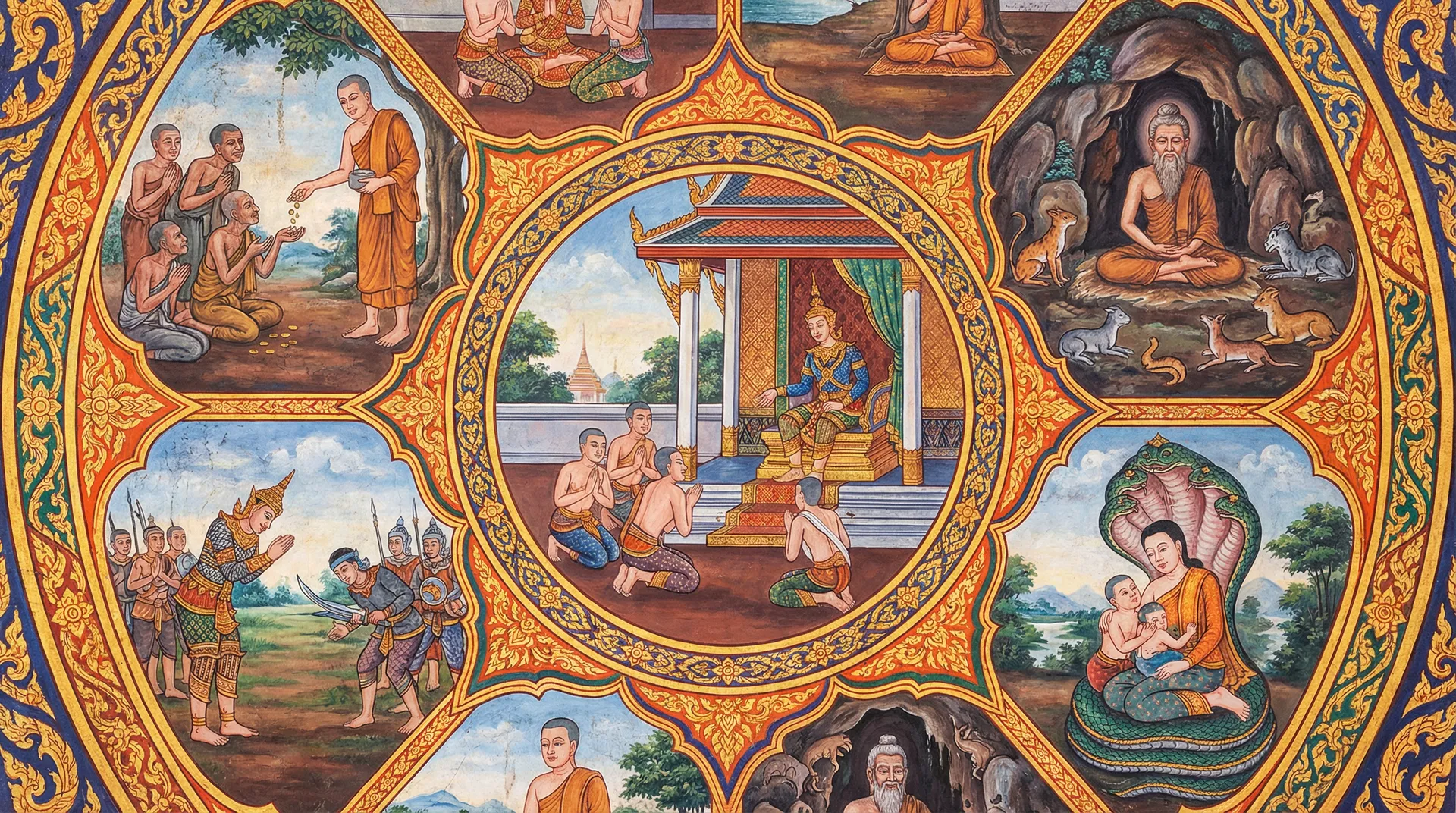 362Pañcakanipāta
Mahāsujava Jātaka
Mahāsujava JātakaIn a time long past, when gods and humans walked more closely, there flourished a g...
💡 True wealth and power lie not in material possessions or brilliant artifacts, but in the purity of one's heart, the cultivation of virtue, and selfless dedication to the well-being of others. Profound acts of generosity and unwavering adherence to righteousness can invoke positive forces and bring about miraculous solutions.
 74Ekanipāta
The Tale of the Sword
In the prosperous Kosala kingdom, within the renowned city of Savatthi, where King Pasenadi, the rig...
💡 True strength lies in collective effort, resourcefulness, and perseverance, not in mythical solutions.
41EkanipātaThe Tale of the Clever Crow
The Tale of the Clever Crow In the ancient city of Varanasi, nestled beside the sacred River Ganges...
💡 Disobedience to the teachings of experienced and benevolent individuals leads to suffering and destruction. Leaders must possess patience, sacrifice, and guide people towards the right path.
44EkanipātaThe Bodhisatta as the Elephant King
The Bodhisatta as the Elephant KingIn the heart of a magnificent, ancient forest, where trees touche...
💡 True leadership is demonstrated through selfless sacrifice and unwavering dedication to the welfare of others.
 246Dukanipāta
Kosiya Jataka
Kosiya JatakaIn the ancient city of Mithila, nestled amidst lush gardens and bustling marketplaces, ...
💡 True wealth is not measured in material possessions, but in the depth of one's compassion and the extent of one's generosity towards others.
56EkanipātaThe Jataka of Dighavu, the Wrathful Prince
In the magnificent city of Savatthi, in days long past, there reigned a king named Koravya. He posse...
💡 Beware of those who speak with honeyed words but harbor venom in their hearts. True wisdom lies not in seeking external remedies but in cultivating inner truth and understanding.
— Multiplex Ad —