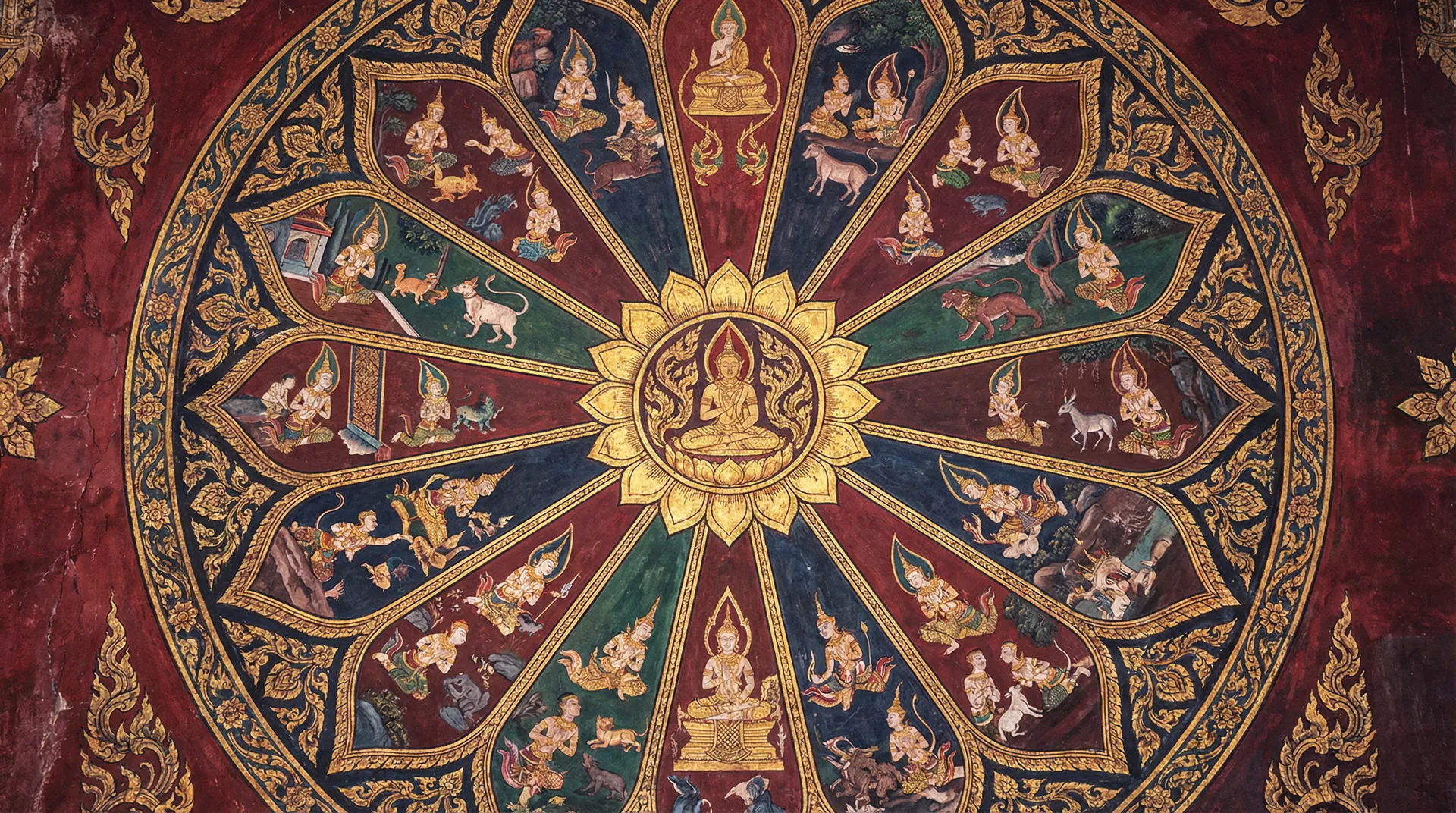
Vessantara Jātaka
Vessantara Jātaka
In the prosperous kingdom of Siwi, ruled the benevolent King Sanjaya. His queen, Phusati, was as virtuous as he, and together they reigned with wisdom and compassion. Their son, Prince Vessantara, was renowned throughout the land for his extraordinary generosity. He believed that giving was the greatest virtue, and his heart overflowed with compassion for all beings.
One day, a delegation of Brahmins arrived at the palace, their faces etched with hardship. They pleaded with the king for rain, as their lands were parched and their crops withered. King Sanjaya, though sympathetic, explained that he had no control over the weather. However, Prince Vessantara, overhearing their plight, felt his heart ache. He approached the Brahmins and, without a second thought, offered them his magnificent white elephant, a symbol of his kingdom's prosperity and a creature believed to possess the power to bring rain.
The Brahmins rejoiced, believing their prayers were answered. However, when the king learned of his son's gift, he was dismayed. The white elephant was not just a symbol; it was a vital asset that ensured the kingdom's well-being and its ability to attract rain. He reprimanded Vessantara, reminding him of his responsibilities as a prince.
Undeterred, Vessantara continued his practice of boundless giving. He gave away chariots, horses, jewels, and even his own possessions. His wife, Princess Maddi, though initially concerned, supported her husband's compassionate nature, understanding his deep-seated desire to alleviate suffering.
The climax of Vessantara's generosity came during a drought that struck the kingdom of Kalinga, which was suffering immensely. A poor Brahmin named Jujaka, desperate for a servant, approached Prince Vessantara, who was residing in a forest hermitage after being exiled from his kingdom due to his excessive giving, which was deemed a threat by some officials. Jujaka, hearing of Vessantara's famed generosity, begged for two of his children, Jali and Kanhā Jinā, to be his servants.
Prince Vessantara, despite his deep love for his children and the pleas of Princess Maddi, felt compelled by his vow of generosity. He believed that giving away his children, the dearest possessions he had, would be the ultimate act of charity and would bring immense merit. He handed over his beloved son and daughter to the cruel Jujaka.
Princess Maddi, heartbroken and distraught, searched for her children. She encountered the god Sakka, disguised as a hunter, who, moved by her sorrow, returned her children to her. Later, King Sanjaya, the prince's father, learned of his son's extreme sacrifice. Overcome with pride and remorse for having exiled his son, he journeyed to the forest hermitage to bring Vessantara and his family back to the kingdom.
Upon their return, Prince Vessantara was hailed as a hero, his immense generosity finally understood and celebrated. He continued to live a life dedicated to giving, inspiring his people to cultivate compassion and generosity in their own lives. The story of Vessantara became a powerful lesson, illustrating the profound spiritual merit and ultimate liberation that can be attained through the practice of perfect generosity, even when it involves the most difficult sacrifices.
— In-Article Ad —
💡Moral of the Story
Perfect generosity, even when it involves the most difficult sacrifices, leads to the highest spiritual merit and liberation.
Perfection: Generosity (Dāna)
— Ad Space (728x90) —
More Jataka Tales You May Enjoy
 388Chakkanipāta
Samkicca Jataka
Samkicca JatakaIn the vibrant city of Savatthi, a place alive with the chatter of merchants and the ...
💡 Honesty and integrity are the most valuable treasures. Even when faced with deception and adversity, speaking the truth and maintaining one's principles will ultimately lead to vindication.
 131Ekanipāta
Mugapakkha Jataka
The Tale of the Mute Prince In the ancient kingdom of Varanasi, nestled beside the sacred Ganges, li...
💡 True wisdom often lies not in speaking, but in knowing when and how to speak, especially when words are needed to uphold truth and compassion.
 179Dukanipāta
Mahāpuṇṇa Jātaka
Mahāpuṇṇa JātakaIn the heart of the kingdom of Kasi, a land blessed with fertile soil and a prospero...
💡 By consciously pausing and reflecting when anger arises, one can gain control over impulsive reactions, leading to wiser decisions, improved relationships, and inner peace. Cultivating patience and understanding is a path to great merit.
145EkanipātaMahosadha Jataka
The Tale of Mahosadha, the Wisest of All In the ancient city of Mithila, under the reign of King Ved...
💡 Profound wisdom, applied with compassion and foresight, can bring peace, prosperity, and justice to a kingdom and its people.
211DukanipātaKhaggavisana Jataka
The Horned Solitary OneIn the ancient city of Mithila, nestled amidst lush gardens and bustling mark...
💡 True happiness and peace are found through inner cultivation, detachment from worldly desires, and self-reliance, much like a solitary rhinoceros finds strength in its own horn.
 255Tikanipāta
Sattigumba-Jātaka
Sattigumba-JātakaIn the sprawling kingdom of Kasi, renowned for its skilled artisans and vibrant mar...
💡 True magnificence and strength lie in compassion, respect for nature, and harmonious coexistence, not in dominance or possession. Righteous rule is demonstrated through justice, empathy, and the protection of all living beings.
— Multiplex Ad —