
The Bodhisatta as the Generous King
The Bodhisatta as the Generous King
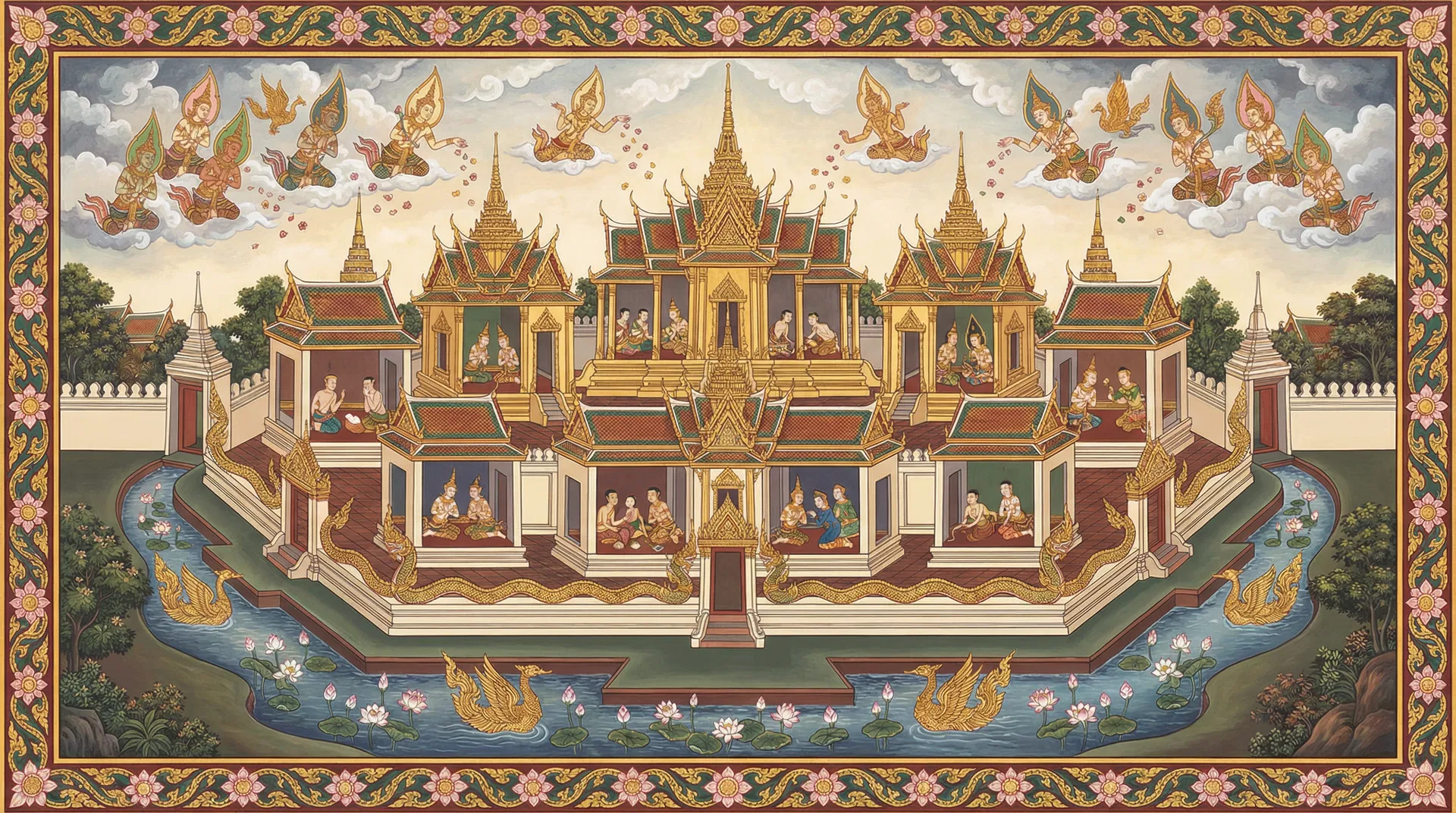
In the ancient and prosperous kingdom of Varanasi, ruled a king named Brahmadatta. But this was no ordinary king; he was the Bodhisatta, whose reign was a testament to boundless generosity and unwavering justice. His palace, a marvel of architecture, shimmered with gold and precious stones, but it was the king's heart, overflowing with compassion, that truly made his kingdom shine. The land was fertile, the people content, and the coffers of the kingdom were always full, not for personal gain, but to be distributed amongst those in need. The city of Varanasi was a vibrant hub of culture and trade, its streets bustling with merchants, artisans, and scholars, all living under the benevolent gaze of their king.
One day, a severe famine struck the neighboring kingdom of Kosala. The land became barren, the crops failed, and the people faced starvation. The king of Kosala, a man of pride and little wisdom, refused to acknowledge his kingdom's dire straits, clinging to the illusion of his own wealth and power. He sent emissaries to other kingdoms, not for aid, but to boast of his imaginary riches.
Word of the suffering in Kosala eventually reached King Brahmadatta. His compassionate heart ached for the starving people. He summoned his ministers, his face etched with concern. "Our neighbors in Kosala are suffering greatly," he announced. "I cannot stand by while they perish. We must send them aid."
His chief minister, a man of prudence, cautioned, "Your Majesty, while your compassion is noble, the king of Kosala is known for his arrogance. He may not accept our aid, viewing it as charity from a lesser kingdom."
The Bodhisatta, however, was unwavering. "Even if he refuses," he declared, "we will not refuse to give. Our duty is to help those in need, regardless of their pride. We will send them our finest grains, our wealthiest treasures, and our most skilled physicians."
Despite the minister's reservations, King Brahmadatta ordered his people to gather the kingdom's surplus grain, vast quantities of it, enough to feed Kosala for months. He also ordered that the royal treasury be opened, and jewels, gold, and silver be collected. He then personally oversaw the loading of these provisions onto a caravan of a thousand carts, each laden with the bounty of Varanasi.
When the caravan arrived at the borders of Kosala, the king of Kosala was indeed outraged. He met the emissaries with a haughty glare. "What is this?" he demanded. "Do you think I am a beggar, that you come to my kingdom with charity?"
The chief emissary of Varanasi, a man of great tact, bowed respectfully. "Your Majesty," he replied calmly, "our king, Brahmadatta, sends not charity, but a gesture of brotherhood. He understands that even the mightiest kingdoms can face hardship. This is but a token of our goodwill, and a demonstration of our shared humanity."
The king of Kosala, however, remained unmoved by the eloquent words. He scoffed and ordered the emissaries to leave, refusing even to look at the immense wealth and sustenance that had been brought. He saw it as an insult to his pride.
The emissaries returned to Varanasi, their faces crestfallen. They reported the king of Kosala's refusal to King Brahmadatta. The Bodhisatta listened patiently, his expression serene. He did not show anger or disappointment. Instead, he turned to his ministers and said, "Since the king of Kosala refuses to accept this aid, we will distribute it amongst our own people. Every citizen of Varanasi, even the poorest, shall receive a share of this abundance."
And so, King Brahmadatta, the Bodhisatta, ensured that the wealth intended for Kosala was instead used to further enrich his own kingdom. The surplus grain was distributed, filling the larders of the poor. The jewels and gold were used to fund public works, build schools, and care for the sick and elderly. The kingdom of Varanasi prospered even further, its people showering their king with love and gratitude.
Word of King Brahmadatta's extraordinary generosity, and the king of Kosala's foolish pride, eventually spread throughout the land. The king of Kosala, witnessing the contentment and prosperity of Varanasi, while his own people continued to suffer, was finally forced to confront his own folly. Shame and remorse washed over him, and he finally sent an emissary to Varanasi, not with arrogance, but with a humble plea for help. King Brahmadatta, ever merciful, readily agreed, sending further aid to Kosala, this time to a repentant king.
The Bodhisatta, through his unwavering generosity and his refusal to be deterred by pride, not only alleviated suffering but also taught a profound lesson about the true nature of wealth and leadership. He demonstrated that true prosperity lies not in hoarding, but in sharing, and that the greatest strength of a kingdom is the well-being of its people, a lesson that resonated throughout the land for generations to come.
— In-Article Ad —
💡Moral of the Story
True generosity is not deterred by pride or rejection; it finds ways to benefit all, demonstrating the highest form of leadership.
Perfection: Generosity
— Ad Space (728x90) —
More Jataka Tales You May Enjoy
 452Dasakanipāta
Sattigumba Jātaka
The Spear-Bearer's Grove Jātaka (Sattigumba Jātaka) In the flourishing kingdom of Kosala, lived a pr...
💡 True solutions often lie in understanding and working with nature's principles, rather than resorting to superficial rituals or force. Resourcefulness, respect for natural balance, and equitable sharing are key to overcoming hardship.
 460Ekādasanipāta
Vidhurap paṇḍita Jātaka
Vidhurap paṇḍita JātakaIn the ancient city of Indapatta, capital of the Kuru kingdom, there lived a ...
💡 Righteousness, truth, and compassion are the greatest treasures. True wisdom can overcome malice and bring about peace and understanding.
 366Pañcakanipāta
KUKKURA JATAKA
KUKKURA JATAKALong ago, in a kingdom nestled beside a sparkling river, there lived a king renowned f...
💡 True loyalty is an intrinsic quality, not merely a result of training. It stems from love, trust, and a genuine bond, and can manifest in unexpected ways, even leading to acts of selflessness.
 530Mahānipāta
Samyuttakapālajātaka
The Tale of the Broken Pot In the heart of a vibrant city, known for its skilled artisans and bustli...
💡 Anger can be destructive, preventing us from seeing new possibilities. When faced with setbacks and brokenness, it is important to manage our anger, adapt, and look for new ways to create and find beauty.
 391Chakkanipāta
Nimi Jataka
Nimi JatakaLong ago, in a kingdom of ancient India, lived King Nimi, a ruler renowned for his righte...
💡 True happiness is found in inner peace and wisdom, not fleeting pleasures. The ultimate goal is liberation from suffering.
 286Tikanipāta
The Monkey King (Mūgapakkha Jātaka)
The Monkey King (Mūgapakkha Jātaka) In the ancient kingdom of Mithila, nestled beside the mighty Gan...
💡 True leadership is demonstrated not by authority, but by selfless sacrifice and compassion for those under one's care, even when they err.
— Multiplex Ad —