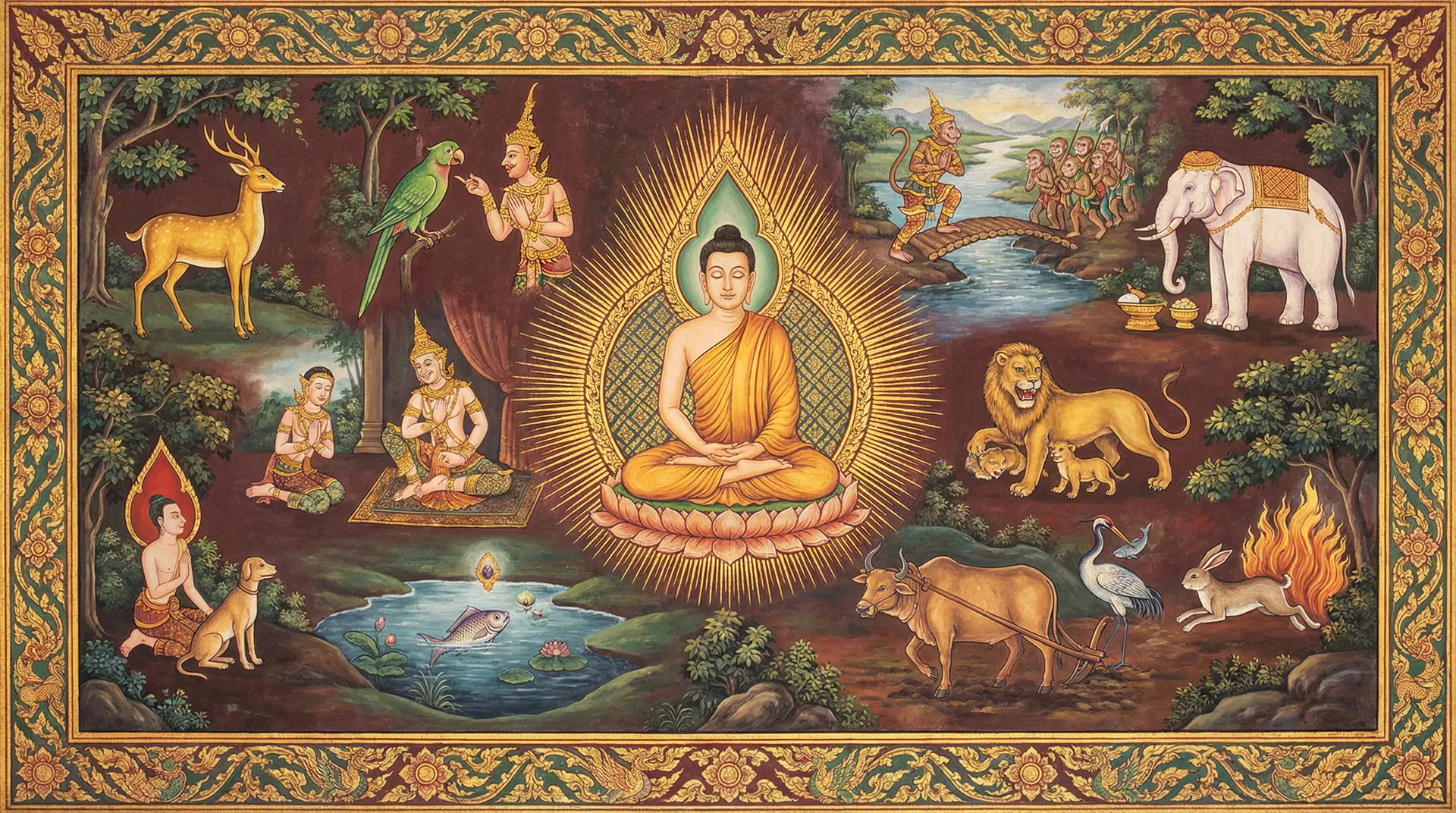
Maha-Ummagga Jataka
Maha-Ummagga Jataka
In the ancient kingdom of Mithila, ruled a wise and just king named Vedeha. His reign was marked by prosperity and peace, yet even the most enlightened rulers face tests. One day, a severe drought struck the land, parching the earth and threatening the lives of his people and the kingdom's abundant wildlife. The rivers dwindled to mere trickles, and the fields lay barren, their once-vibrant crops turned to dust. The king, deeply concerned, consulted his wise counselors, but none could offer a solution to this dire predicament. The people began to despair, their hopes fading with each passing sun-scorched day.
Meanwhile, in a humble dwelling on the outskirts of the city, lived a young boy named Mahosadha. Even from his youth, Mahosadha was renowned for his extraordinary intellect, his sharp wit, and his profound understanding of the world. He possessed a mind that could unravel the most complex problems with remarkable ease. News of the devastating drought reached Mahosadha, and his heart ached for his suffering countrymen. He knew he had to help.
One morning, as the sun cast its harsh glare upon the parched land, Mahosadha, with a determined gleam in his eyes, approached the royal palace. He was granted an audience with King Vedeha, who was weary from his fruitless attempts to find a solution. Mahosadha, with a calm and confident demeanor, presented himself. "Your Majesty," he began, his voice clear and resonant, "I believe I may have a way to alleviate this suffering."
The king, though initially skeptical of such a young advisor, was struck by the boy's earnestness and the intelligence that radiated from him. "Speak, young one," he commanded, his voice tinged with a flicker of hope. "What solution do you propose for this relentless drought?"
Mahosadha explained his plan. "Your Majesty, the earth is dry, but the water still exists deep beneath the surface. We must dig a great channel, a canal of immense proportions, that will reach the underground springs and bring forth life-giving water to our fields and our city. This will require the labor of many, and a unified effort from all the people."
King Vedeha was impressed by the foresight and ingenuity of the plan. He saw the logic in Mahosadha's words. "This is a monumental task, Mahosadha. But if it is indeed possible, we shall undertake it. Gather the people, and let us begin."
Mahosadha, now appointed as the overseer of this grand project, rallied the citizens of Mithila. He divided them into teams, assigning specific tasks and ensuring that everyone worked harmoniously. He himself worked tirelessly, his sharp mind anticipating every challenge and devising ingenious solutions. When disputes arose, he resolved them with fairness and wisdom. When morale faltered, he inspired them with his unwavering conviction.
Days turned into weeks, and weeks into months. The sun continued to beat down, but the spirit of the people, fueled by Mahosadha's leadership, remained strong. They dug with a fierce determination, their spades biting into the hardened earth. They faced setbacks – rocks that blocked their path, collapses that threatened their progress – but Mahosadha was always there, his quick thinking finding ways to overcome each obstacle.
One day, after weeks of relentless digging, a faint sound reached the ears of the workers. A soft, trickling sound, growing louder with each passing moment. Hope surged through their veins. They dug faster, their exhaustion forgotten. And then, it happened. Water, cool and clear, began to seep from the earth. It was a small stream at first, but as the channel deepened, the flow increased. The underground springs had been reached!
A joyous roar erupted from the workers, a sound of triumph that echoed across the parched land. The water, guided by the channel Mahosadha had masterfully designed, flowed towards the city and the fields. The people watched in awe as their land began to transform. The dust settled, replaced by the gentle murmur of flowing water. The once-barren fields began to absorb the life-giving liquid, and a new hope bloomed in the hearts of the people.
King Vedeha, witnessing this miraculous revival, summoned Mahosadha to his throne. "Mahosadha," he declared, his voice filled with gratitude, "you have saved our kingdom. Your wisdom and perseverance have brought forth life where there was only despair. You have shown us that even in the darkest of times, a brilliant mind and a determined spirit can overcome any adversity."
The drought was broken, and Mithila flourished once more. The great channel, a testament to Mahosadha's genius, became a symbol of hope and resilience. Mahosadha, the boy who had faced the king with a simple yet profound idea, was celebrated as the savior of Mithila. He continued to serve the king with his unparalleled wisdom, ensuring that the kingdom remained a beacon of prosperity and justice for generations to come. The Maha-Ummagga Jataka, the story of the great tunnel, became a legend, reminding all that with intelligence, hard work, and unwavering faith, even the most insurmountable challenges can be overcome.
— In-Article Ad —
💡Moral of the Story
True wisdom lies not only in understanding problems but in devising and implementing practical solutions, especially in times of crisis. Collective effort, guided by intelligent leadership, can overcome even the most daunting challenges.
Perfection: Wisdom (Panna)
— Ad Space (728x90) —
More Jataka Tales You May Enjoy
 191Dukanipāta
Kaccapajataka
Kaccapajataka In the ancient kingdom of Mithila, where palaces shimmered like lotus blossoms and riv...
💡 True wealth lies not in what we possess, but in our ability to be content with what we have. Greed is a bottomless pit that can never be filled.
 106Ekanipāta
Bhaddasala Jataka
The Tale of the Wise Elephant and the Foolish King In the ancient kingdom of Mithila, ruled a king n...
💡 True wisdom often comes from unexpected sources. A leader's true strength is shown not in anger or pride, but in humility, compassion, and the willingness to serve their people.
36EkanipātaThe Tale of the Horse-Breeder
In a past aeon, in the flourishing city of Varanasi, the Bodhisatta was born as a young Brahmin, end...
💡 The highest form of virtue is selfless compassion, willing to sacrifice for the well-being of others.
39EkanipātaThe Tale of the Proud Peacock
In a time long past, in the glorious city of Benares, King Brahmadatta ruled wisely. One day, as the...
💡 Wisdom and discernment, coupled with unwavering truthfulness, can expose deception and safeguard against manipulation.
 252Tikanipāta
Muni-Jātaka
Muni-JātakaIn the ancient land of Mithila, where wisdom was revered and philosophers debated the nat...
💡 True wisdom is not achieved by mere abstinence from speech, but by mindful communication and the cultivation of inner peace. Words, when used with truth, compassion, and clarity, are powerful tools for good, not inherently the cause of suffering.
158DukanipātaKaka Jataka
Kaka JatakaIn the ancient city of Varanasi, nestled beside the sacred river, lived a king renowned f...
💡 True charity requires not only the act of giving but also ensuring the sincerity and purity of the intention and the outcome.
— Multiplex Ad —