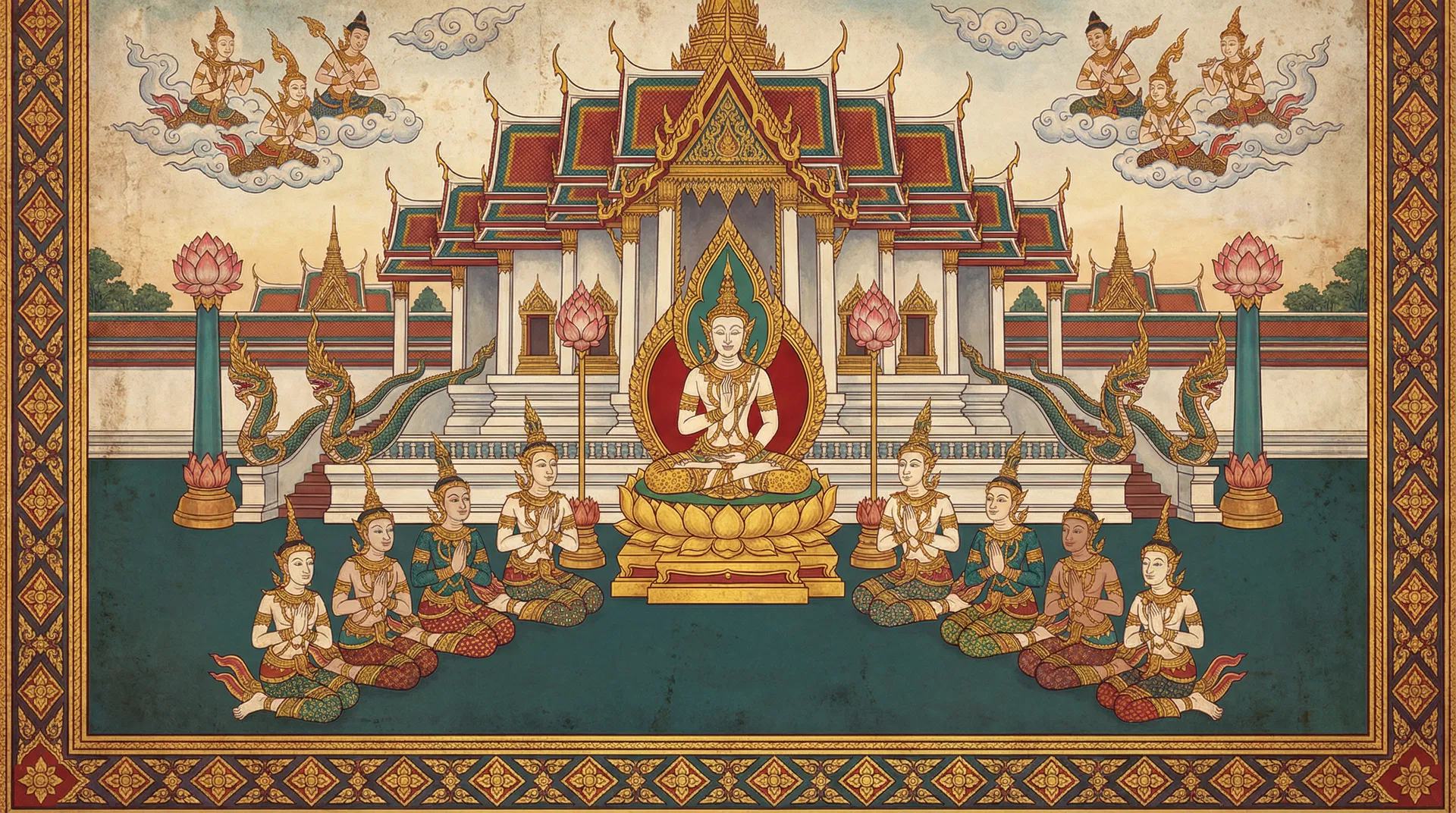
Saddanta Jataka
Saddanta Jataka
In the magnificent city of Pupphavati, renowned for its vibrant marketplaces and perfumed gardens, lived a wise and benevolent king. But the true jewel of the kingdom was not the king himself, but a magnificent white elephant, whose purity and strength were unmatched. This elephant, known as Saddanta, was the Bodhisatta in this life, a being of immense virtue and power, radiating an aura of peace and wisdom.
Saddanta possessed six tusks, each one gleaming like polished ivory, a testament to his extraordinary nature. He lived in a beautiful, tranquil forest clearing, where his presence brought peace to all the creatures that dwelled there. Birds sang sweeter melodies, and even the fiercest predators showed him reverence, their natural animosity softened by his gentle aura.
One day, a greedy and envious Brahman, consumed by a desire for wealth and recognition, heard tales of the magnificent white elephant. He learned of the immense value placed upon the elephant's tusks, believed to hold magical properties and bring great fortune to their possessor. Driven by avarice, the Brahman conceived a wicked plan: he would obtain those tusks for himself.
He journeyed to the elephant's forest, his heart filled with dark intentions. He found Saddanta resting peacefully, his white form a stark contrast against the verdant foliage. The Brahman, a skilled hunter, approached cautiously, his bowstring taut. He knew that a direct confrontation would be foolish; the elephant's power was legendary.
With a silent prayer to his own selfish gods, the Brahman drew his bow and loosed an arrow. The shaft, tipped with a deadly poison, found its mark, striking Saddanta in the side. The mighty elephant, though wounded, did not lash out in anger. His divine nature prevented him from succumbing to rage. Instead, a profound sorrow washed over him, not for himself, but for the misguided soul who would commit such a heinous act.
As Saddanta lay weakened, the Brahman, emboldened by his success, approached the injured elephant. He drew a sharp, cruel sword, intending to sever the tusks. But as he drew near, Saddanta, with a voice that resonated with ancient wisdom and boundless compassion, spoke. "Brahman," he said, his voice calm despite the pain, "why do you seek to harm me? What drives this insatiable greed within you?"
The Brahman, startled that the elephant could speak, stammered, "I... I desire your tusks. They are said to bring great wealth and power. I wish to possess them."
Saddanta looked at the Brahman with eyes filled with pity. "You seek fleeting worldly gains, Brahman, but true wealth lies not in possessions, but in virtue. These tusks, though precious, are but a part of me. If you truly desire them, and if it will satisfy your craving, I will give them to you willingly."
With these words, Saddanta, with a mighty effort, shook his head. The six gleaming tusks, released from their roots, fell gently to the ground before the astonished Brahman. The elephant, having made this ultimate sacrifice, felt a sense of peace, knowing he had fulfilled his compassionate purpose.
The Brahman, overwhelmed by the elephant's boundless generosity and the sheer magnitude of his sacrifice, was struck to the core of his being. He had come seeking material wealth, but he found himself confronted with a spiritual wealth that far surpassed anything he could have imagined. The act of selfless giving, the complete lack of anger or resentment, shattered his greed and envy.
He looked at the fallen tusks, then at the noble elephant, now bleeding but serene. Tears welled up in his eyes. He realized the depth of his own depravity and the profound virtue of the creature he had tried to exploit. He knelt before Saddanta, his heart filled with remorse. "Oh, noble elephant," he cried, his voice choked with emotion, "I have been a fool! Your generosity is beyond measure. You have given me not just your tusks, but a lesson that will change my life forever. I have wronged you grievously, and I beg for your forgiveness."
Saddanta, ever compassionate, nodded gently. "Go, Brahman," he said. "Let this experience purify your heart. Let it be the beginning of your transformation. Seek virtue, practice generosity, and cultivate wisdom. True happiness comes from giving, not from taking."
The Brahman, forever changed by his encounter with Saddanta, took the tusks and left the forest. He renounced his greedy ways and dedicated his life to acts of charity and spiritual practice. He shared the story of the great white elephant, inspiring countless others to embrace generosity and compassion, and to understand that the greatest treasures are not those we hoard, but those we give away.
And so, the legend of Saddanta, the six-tusked elephant, lived on, a timeless testament to the power of selfless giving, boundless compassion, and the transformative nature of true virtue.
— In-Article Ad —
💡Moral of the Story
True generosity lies in selfless giving, even at great personal cost. Compassion and forgiveness can transform even the most greedy and envious hearts, leading to spiritual awakening.
Perfection: Generosity (Dana), Compassion (Karuna), Patience (Khanti)
— Ad Space (728x90) —
More Jataka Tales You May Enjoy
 520Vīsatinipāta
Nemi Jataka
The Bodhisatta as King Nemi, The Righteous RulerIn the ancient city of Mithila, there reigned a king...
💡 True fulfillment comes from selfless service and compassion, not from personal comfort or heavenly pleasures. The law of karma is absolute, and our actions in this life determine our future destinies.
 34Ekanipāta
The King Unattached to Glory
The King Unattached to Glory In the ancient land of Benares, where the sun cast a golden hue upon s...
💡 Honesty and integrity are the noblest virtues. Even small matters should not be overlooked. Deceiving others will lead to severe consequences.
114EkanipātaCūḷaka-Seṭṭhi Jātaka
Cūḷaka-Seṭṭhi Jātaka In the ancient city of Mithila, a bustling hub of trade and commerce, lived a w...
💡 True wealth is not measured by possessions, but by the generosity of spirit and the goodwill cultivated through acts of kindness. Giving with a pure heart brings greater abundance.
66EkanipātaThe Great Crane Jataka
Long ago, in an age when the Buddha had not yet appeared, in a time immeasurably distant, the Bodhis...
💡 True wealth is measured not by the abundance of possessions, but by the happiness and prosperity of one's people. Greed leads to suffering, while generosity and compassion bring true prosperity.
20EkanipātaThe Elephant King's Wisdom
The Elephant King's WisdomIn the heart of a lush, ancient forest, where towering trees reached towar...
💡 Wise leadership, determination, and the ability to inspire trust can guide a community through perilous journeys to safety.
4EkanipātaThe Tale of the Excellent Archer
The Tale of the Excellent Archer In the ancient kingdom of Mithila, a land blessed with fertile pla...
💡 Accusing others without reason and having impure intentions inevitably lead to one's own suffering. Forgiveness and genuinely good deeds are the path to peace and happiness.
— Multiplex Ad —