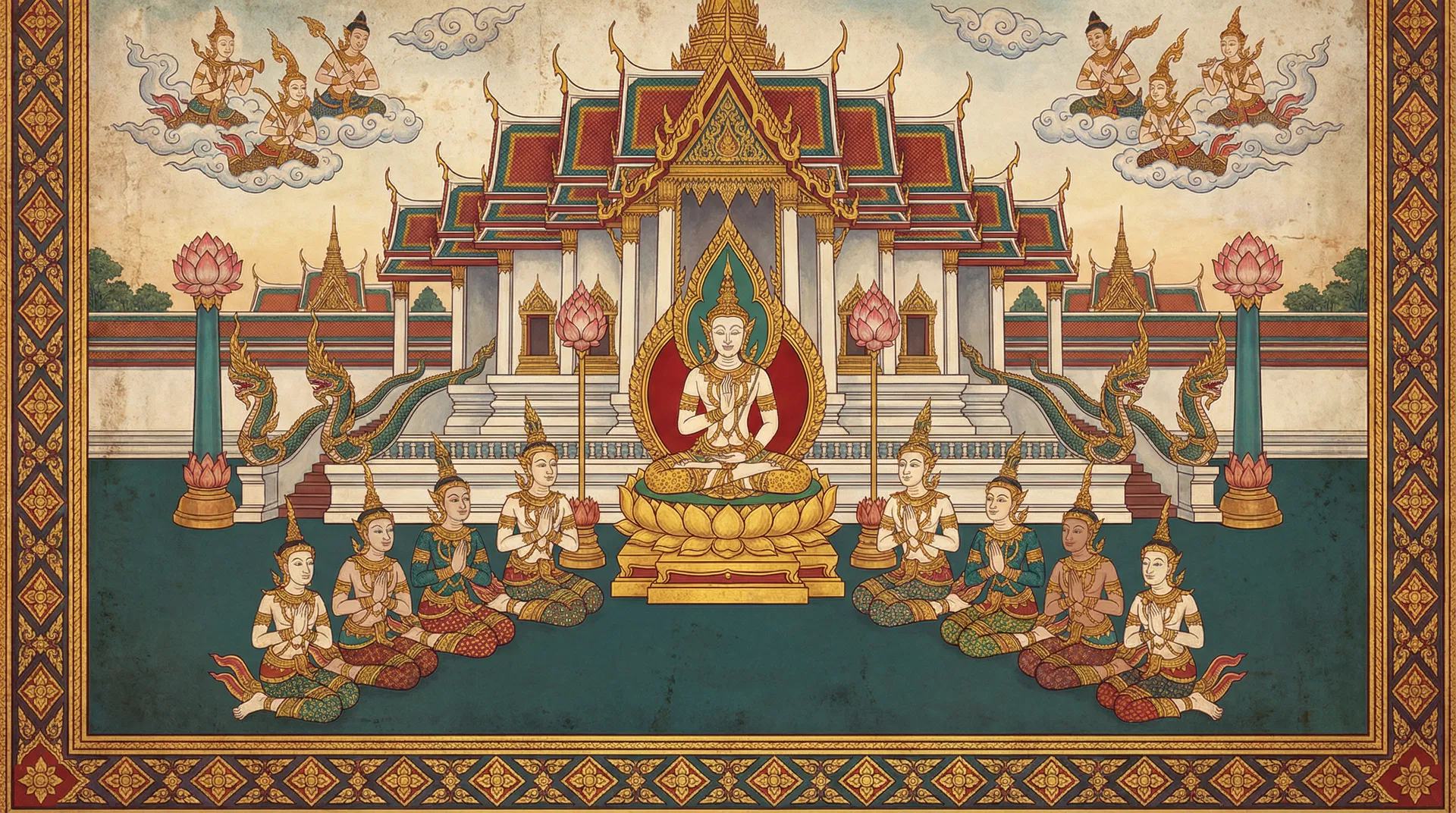
Nimi Jataka
Nimi Jataka
In the vibrant city of Mithila, nestled beside a flowing river and surrounded by fragrant gardens, lived King Nimi. He was a monarch of unparalleled virtue, his reign marked by justice, compassion, and a deep devotion to the welfare of his subjects. Yet, despite his earthly blessings, King Nimi harbored a profound spiritual yearning. He often pondered the nature of heaven and the celestial realms, seeking to understand the fruits of punya (merit) and the rewards of a virtuous life.
One day, the great celestial king, Sakka, ruler of the Tavatimsa heaven, observed King Nimi's earnest contemplation. Sakka, a being of immense cosmic power and wisdom, was impressed by the king's virtuous heart and his sincere quest for spiritual understanding. He decided to offer King Nimi a glimpse into the divine realms.
Sakka summoned his celestial charioteer, Matali, and commanded him, "Matali, prepare my divine chariot. We shall visit King Nimi of Mithila. He is a king of great merit, and I wish to show him the wonders of the Tavatimsa heaven. Let him witness the fruits of his good deeds and inspire him further on the path of righteousness."
Matali, ever obedient, readied the magnificent chariot, its wheels adorned with celestial jewels and its steeds white as the driven snow. They descended from the heavens, their arrival heralded by a gentle shimmering light, and alighted in the royal courtyard of Mithila. King Nimi, engaged in matters of state, was astonished by the sudden appearance of the divine vehicle and the radiant figure of Matali.
Matali bowed respectfully and addressed the king, "Hail, King Nimi! I am Matali, the charioteer of Sakka, King of the Gods. Sakka has observed your virtuous life and your deep spiritual inquiry. He invites you to visit the Tavatimsa heaven and witness the rewards of merit."
King Nimi, his heart filled with awe and excitement, readily accepted. He entrusted his kingdom to his wise ministers and, with Matali as his guide, ascended into the divine chariot. As they soared through the sky, King Nimi marveled at the breathtaking panorama below. The earthly realm, with its cities and forests, seemed to shrink into insignificance.
Upon arriving in Tavatimsa, King Nimi was overwhelmed by the sheer magnificence. He saw celestial palaces, their spires reaching towards the heavens, adorned with gems and radiant light. He witnessed devas and celestial beings, their forms resplendent, moving with grace and joy. The air was filled with divine music and the scent of celestial flowers.
Matali led King Nimi through the various celestial realms, explaining the origins of the beings they encountered. "This deva," Matali would say, pointing to a radiant being, "earned his place here through acts of immense generosity in his past life. That celestial musician achieved his station through his dedication to art and the dissemination of beauty."
King Nimi's heart swelled with understanding. He saw firsthand how acts of kindness, generosity, compassion, and spiritual discipline bore fruit, not just in this life, but in future existences. He witnessed beings enjoying heavenly pleasures, their lives filled with bliss, all as a direct result of their accumulated merit.
Sakka himself welcomed King Nimi, showering him with hospitality and further explaining the laws of karma and rebirth. "King Nimi," Sakka said, his voice resonating with divine wisdom, "you see now the tangible results of virtuous actions. The heavens are not merely places of random fortune, but realms earned through the diligent cultivation of merit. Every act of kindness, every moment of mindfulness, every selfless deed contributes to one's future well-being."
As their visit drew to a close, Sakka offered King Nimi a choice: he could remain in Tavatimsa and enjoy eternal bliss, or he could return to his kingdom, carrying the profound wisdom he had gained, to guide his people towards a more virtuous life.
King Nimi, after deep reflection, chose to return. While the allure of heaven was undeniable, his heart was still bound to his earthly responsibilities. He understood that his true mission was to share the teachings he had received, to inspire his people to cultivate their own merit and work towards their own spiritual liberation. He knew that true enlightenment was not just about experiencing heaven, but about transforming oneself and one's world.
Upon his return to Mithila, King Nimi was a changed man. His reign became even more dedicated to upholding righteousness. He established public works of merit, encouraging acts of charity, fostering spiritual learning, and ensuring that justice and compassion prevailed in his kingdom. He often recounted his celestial journey, not as a boast, but as a testament to the power of punya and the boundless possibilities of a life lived virtuously. His people, inspired by his wisdom and his example, followed his teachings, and the kingdom of Mithila flourished, becoming a beacon of righteousness, its citizens working diligently towards their own future well-being, both in this life and in the realms beyond.
— In-Article Ad —
💡Moral of the Story
Virtuous actions and the cultivation of merit lead to happiness and favorable rebirths. True leadership involves not only ruling justly but also guiding one's people towards spiritual understanding and well-being.
Perfection: Generosity (Dana), Virtue (Sila), Wisdom (Prajna)
— Ad Space (728x90) —
More Jataka Tales You May Enjoy
 489Pakiṇṇakanipāta
Sama Jātaka
Sama JātakaIn the dense, verdant forests that bordered the kingdom of Kosala, lived a sage named Sam...
💡 Compassion, forgiveness, and non-violence are virtues that not only protect oneself but also extend their blessings to others, bringing salvation and restoring balance even in times of great hardship.
 117Ekanipāta
Kakara Jataka
Kakara Jataka In a verdant forest, where sunlight dappled through the thick canopy and streams sang ...
💡 Unity, courage, and wise leadership are essential to overcome adversity. Facing challenges with a clear mind and a united front, rather than succumbing to fear, leads to survival and prosperity.
134EkanipātaSattubhatta Jataka
The Tale of the King Who Sought True Happiness In the ancient and prosperous city of Kasi, ruled a k...
💡 True and lasting happiness is an inner state, cultivated through self-understanding, mindfulness, detachment, and compassion, rather than being dependent on external circumstances or possessions.
64EkanipātaThe Bodhisatta's Compassion in Times of Famine
The Bodhisatta's Compassion in Times of Famine In the ancient kingdom of Benares, a time of unprece...
💡 Keeping one's promises is extremely important. Breaking a vow will lead to bad karma.
67EkanipātaThe Bodhisatta's Compassion for His Foes
In the glorious city of Rājagaha, the capital of Magadha, in an age when kingdoms were often rife wi...
💡 True strength is a combination of physical power, wisdom, and restraint. It is important to protect oneself and one's domain, but to do so without unnecessary violence.
 364Pañcakanipāta
Kuṇāla Jātaka
Kuṇāla JātakaIn the magnificent city of Sāvatthī, under the reign of a wise and just king, lived the...
💡 True beauty resides not in physical appearance, but in inner purity, wisdom, and virtue. Sacrifice made for the sake of righteousness and truth can lead to profound spiritual insight and liberation, transcending physical limitations and worldly suffering.
— Multiplex Ad —