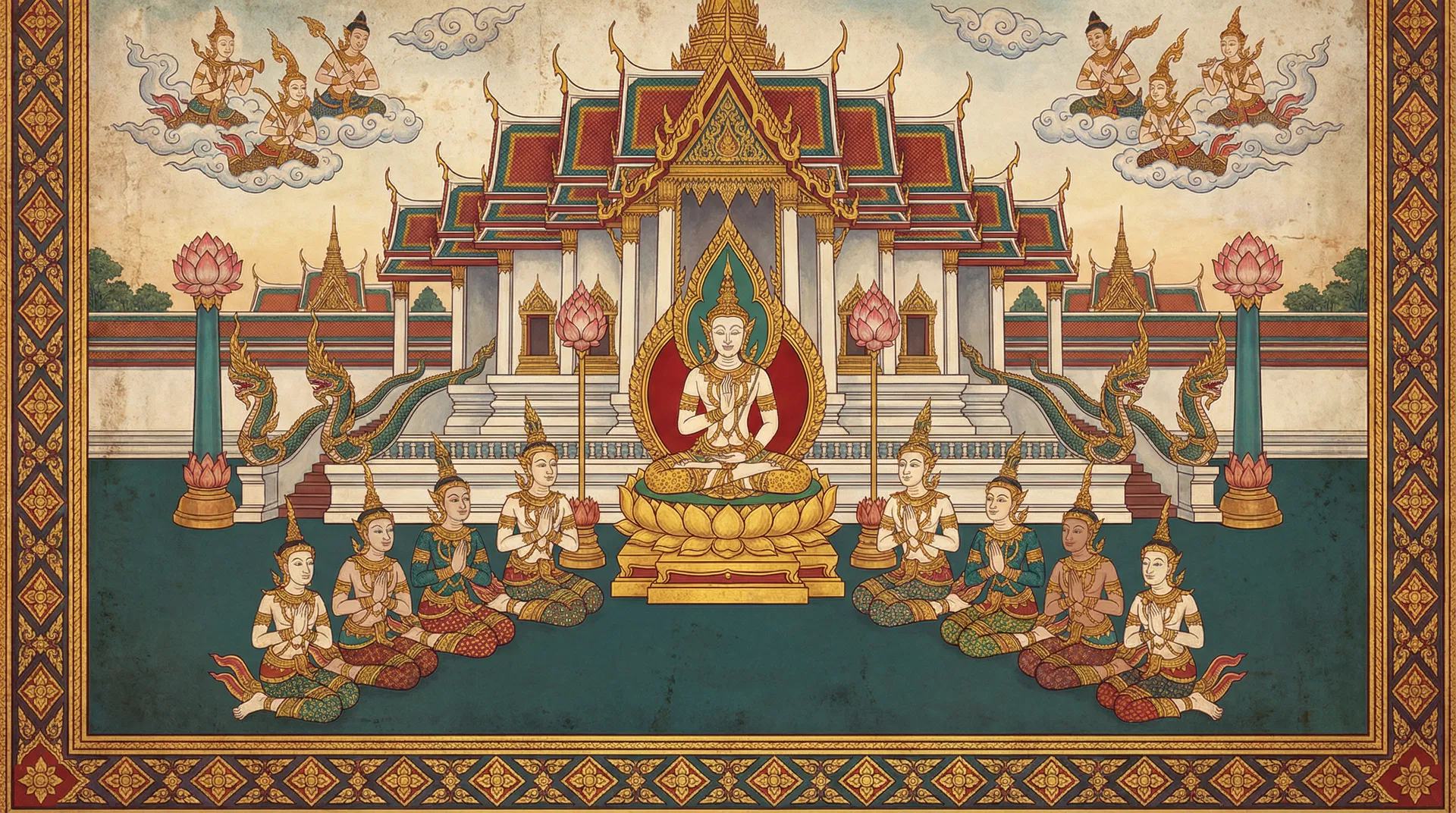
Sakuna Jataka
The Tale of the Virtuous Bird
In the heart of a dense forest, where ancient trees reached for the sky and sunlight dappled the forest floor, lived a remarkable bird. This was no ordinary creature; it was a Bodhisatta in a previous life, a being destined for enlightenment, who had taken the form of a magnificent peacock. His plumage shimmered with iridescent blues and greens, and his call was a melody that echoed through the tranquil woods.
The Bodhisatta peacock lived a life of purity and virtue. He subsisted on fallen fruits and tender shoots, never harming any living being. His days were spent soaring through the canopy, his evenings meditating under the moonlit sky. He was a beacon of peace in the forest, respected by all the creatures who dwelled there.
One day, a terrible drought descended upon the land. The streams dwindled to trickles, the leaves turned brown and brittle, and the once-lush forest became a parched and dusty wasteland. The animals grew weak with thirst and hunger. Fear and desperation began to spread.
Among the creatures in distress was a mighty elephant, a beast of great strength but little wisdom. He was accustomed to his dominance, and in his desperation, he began to lash out at the other animals, blaming them for his plight. 'It is your fault!' he trumpeted, his voice hoarse with anger and thirst. 'You have not done enough to find water! You are weak and useless!'
The smaller animals cowered in fear, but the Bodhisatta peacock, witnessing this injustice, felt a pang of compassion. He knew that anger and blame would not solve their problem. He also knew that his own life, though virtuous, was not enough to overcome the widespread suffering.
He flew down from his perch, his magnificent tail feathers trailing behind him. He landed gracefully before the enraged elephant. 'Great Elephant,' he said, his voice clear and melodious, 'your anger is misplaced. Blaming others will not quench your thirst nor fill your belly. We are all suffering together.'
The elephant snorted, unimpressed. 'And what would you know, little bird? You have wings to fly away and find shelter. We are trapped here, dying!'
'I may have wings,' the peacock replied calmly, 'but my heart aches for all of us. I have lived a life of virtue, and I have accumulated merit. Perhaps, if I offer this merit, it can help us all.'
The elephant scoffed. 'Merit? What good is merit against a parched throat?'
Undeterred, the Bodhisatta peacock spread his wings, his iridescent feathers catching the dim light. He closed his eyes and began to chant, his voice resonating with a power that silenced the forest. He recalled every act of kindness, every moment of selflessness, every instance of compassion he had ever experienced or performed. He offered all this accumulated spiritual energy, all his merit, for the well-being of every creature in the forest.
As he chanted, a miracle began to unfold. The air grew heavy with moisture. A faint mist began to swirl around the trees. The elephant, his anger momentarily forgotten, looked up in astonishment. And then, a single drop of water fell from the sky, followed by another, and another. Soon, a gentle rain began to fall, a blessed relief from the scorching heat.
The animals cheered, their parched throats finally receiving the life-giving liquid. The elephant, humbled and ashamed, bowed his head before the peacock. 'Forgive me, noble bird,' he rumbled. 'I was foolish and selfish. Your virtue has saved us all.'
The Bodhisatta peacock simply bowed his head in return. 'It is not my virtue alone, but the merit we all share through interconnectedness. Let this be a lesson: in times of hardship, anger divides, but compassion and shared merit unite us and can bring about change.'
The rain continued, replenishing the streams and reviving the wilting plants. The forest slowly returned to its former glory, and the animals, having learned a valuable lesson, lived in greater harmony. The Bodhisatta peacock continued to live his virtuous life, a testament to the power of selfless giving and the profound impact of accumulated merit, proving that even the smallest act of compassion, when fueled by pure intention, can bring salvation to many.
— In-Article Ad —
💡Moral of the Story
Compassion, selflessness, and the accumulation of spiritual merit have the power to overcome great adversity and benefit all beings. In times of crisis, unity and shared good deeds are far more powerful than anger and division.
Perfection: Generosity (Dana), Morality (Sila), Patience (Khanti), Wisdom (Prajna)
— Ad Space (728x90) —
More Jataka Tales You May Enjoy
 209Dukanipāta
Sona Nataka
Sona Nataka In the ancient kingdom of Uttarapatha, nestled between rugged mountains and vast plains,...
💡 True worth is measured not only by skill and achievement but by the depth of one's compassion and the willingness to prioritize the well-being of others, especially during times of hardship.
204DukanipātaMahosadha Jataka
Mahosadha Jataka In the prosperous kingdom of Mithila, nestled amidst fertile plains and bordered by...
💡 Wisdom, foresight, and compassion are more powerful than aggression. Addressing the root causes of conflict with understanding and kindness can lead to lasting peace.
180DukanipātaKacchapa Jātaka
Kacchapa JātakaIn a time long past, when the Himalayas stood as young giants and the rivers flowed w...
💡 Great efforts and noble intentions are essential, but they must be accompanied by discipline and the adherence to instructions. A single lapse in concentration or a breach of trust can undo immense progress and lead to tragic consequences.
177DukanipātaKuṅku Jātaka
Kuṅku JātakaIn the verdant plains of Kosala, where emerald rice paddies stretched as far as the eye ...
💡 True strength and peace originate from within. External objects, however comforting, cannot replace inner resilience, wisdom, and the courage to face adversity with integrity. Letting go of attachments, even cherished ones, can be an act of liberation.
 280Tikanipāta
Sattubhatta Jataka
The Tale of the Generous Merchant and the Ungrateful Friend In the bustling port city of Bharukaccha...
💡 Generosity is a noble virtue, but it must be balanced with wisdom and discernment. True friendship requires reciprocity and responsibility; enabling ungratefulness is ultimately harmful.
206DukanipātaKosiya Jataka
Kosiya Jataka In the ancient city of Varanasi, nestled beside the sacred River Ganges, there lived a...
💡 True wealth is not measured by possessions, but by the generosity and compassion shown to others. The greatest joy comes from alleviating suffering and contributing to the well-being of the community.
— Multiplex Ad —