Kaccābu Jātaka
Kaccābu Jātaka
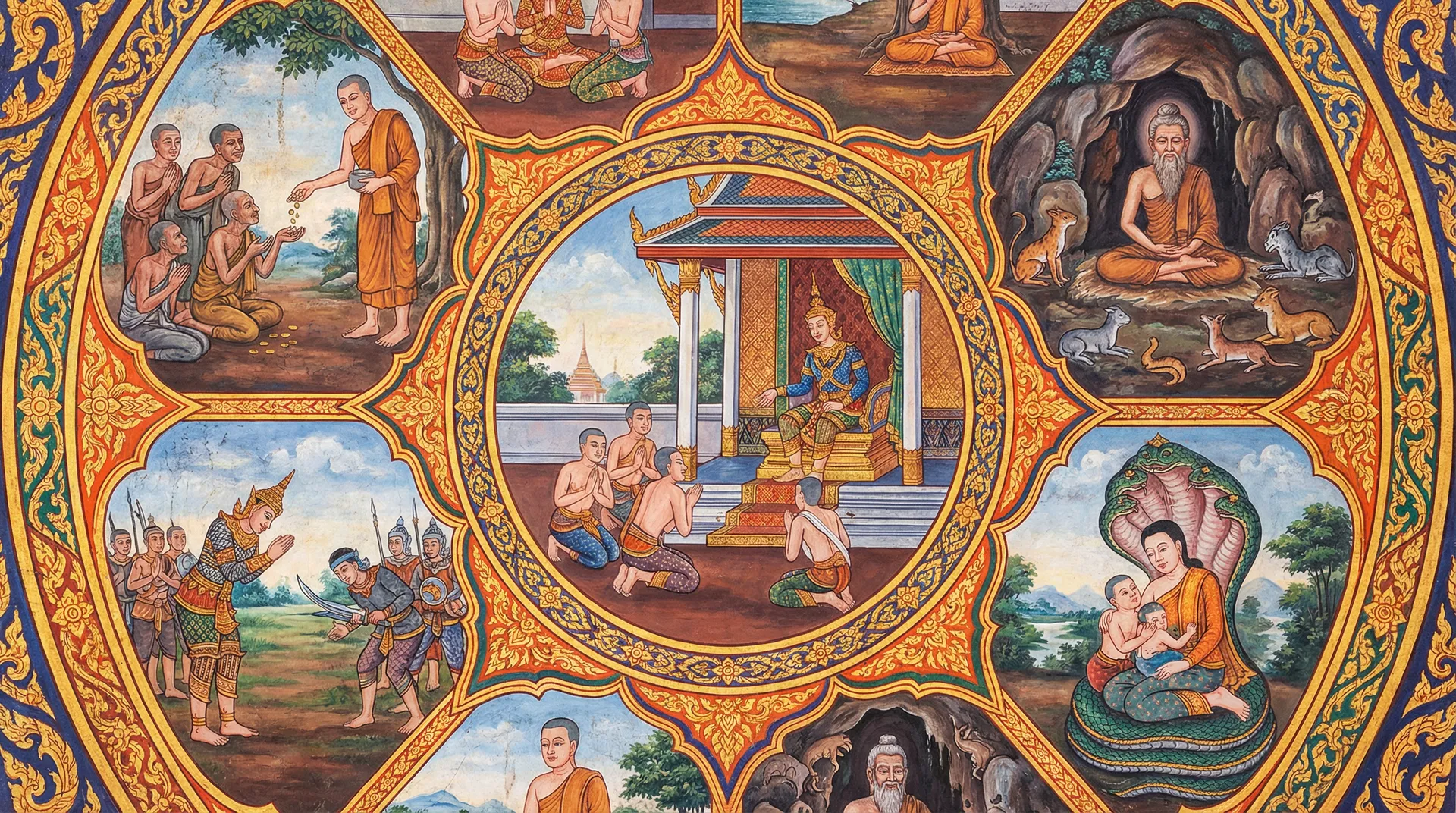
In the ancient kingdom of Mithila, ruled by a benevolent king, there lived a Bodhisatta in his previous existence as a wise and compassionate physician named Kaccābu. Kaccābu was not just skilled in the art of healing; he possessed a deep understanding of the human mind and the interconnectedness of physical and mental well-being. His clinic, a humble abode adorned with medicinal herbs and fragrant incense, was a sanctuary for all who suffered, regardless of their social standing.
Kaccābu's reputation spread far and wide. People came from distant villages and even neighboring kingdoms seeking his remedies. He treated not only physical ailments but also the afflictions of the heart – anger, greed, delusion, and despair. He believed that a true physician must address the root cause of suffering, which often lay in the imbalance of the mind.
One day, a wealthy merchant, known for his avarice and his constantly quarrelsome nature, arrived at Kaccābu's clinic. The merchant was plagued by an unbearable itching that no amount of scratching could relieve. His skin was raw and inflamed, and his temper, already notorious, had become even more volatile. He had tried every ointment and remedy known to man, but nothing had worked.
Kaccābu, with his characteristic gentle demeanor, welcomed the merchant. He examined the inflamed skin, noting the intensity of the itching. He observed the merchant's agitated state, his sharp words, and the restless darting of his eyes. Kaccābu listened patiently as the merchant complained bitterly about his affliction, blaming everyone and everything but himself.
After a thorough examination, Kaccābu prepared a special herbal paste. He instructed the merchant, "This paste is made from the rarest herbs, known for their soothing properties. Apply it generously to the affected areas. However, there is a condition. You must apply it with a calm mind, thinking only of peace and well-being. If your mind is filled with anger or greed while applying it, the paste will be ineffective, and your itching will worsen."
The merchant, desperate for relief, agreed. He took the paste and returned to his opulent home. He opened the container, and the pleasant aroma of the herbs filled his nostrils. He began to apply the paste, but his mind was a tempest. He was thinking about a business deal that had gone slightly awry, about a rival merchant who was gaining an advantage, and about the sheer injustice of his suffering. As he applied the paste with these agitated thoughts, the itching, instead of subsiding, intensified. It became unbearable, and he cried out in frustration.
The next day, the merchant, his condition worse and his temper even fouler, returned to Kaccābu. "Your medicine is useless!" he exclaimed, his voice hoarse. "It has made my itching ten times worse!"
Kaccābu listened calmly. "Honorable merchant," he said, "did you apply the paste with a calm mind, as I instructed?"
The merchant, forced to admit his failure, stammered, "Well, I... I was thinking about my business. And my rivals. It's hard to be calm when one is suffering so much!"
Kaccābu smiled gently. "Ah, I see the problem. The herbs are potent, but they require a pure vessel to work their magic. Your anger and greed are like a fierce wind that blows away the gentle rain of healing. Your itching is not merely a skin condition; it is a manifestation of your inner turmoil. Your avarice and your constant dissatisfaction fuel the fire of your suffering."
Kaccābu then prepared a different remedy, a decoction of calming herbs. He gave it to the merchant and said, "Drink this twice a day. As you drink, focus your mind on the suffering of others. Contemplate the impermanence of wealth and the true value of compassion. Think of those who are truly destitute, who have no relief for their pains. Cultivate empathy and let go of your obsession with material gain and your constant state of agitation."
The merchant, though skeptical, was also intrigued. He followed Kaccābu's instructions diligently. He drank the decoction, and as he did, he forced himself to think about the less fortunate. He recalled stories of people who had lost everything, who suffered from incurable diseases, and who lived in abject poverty. Slowly, a sense of humility began to dawn within him. He started to feel a pang of guilt for his relentless pursuit of wealth and his lack of concern for others.
With each dose, his inner agitation lessened. He found himself less preoccupied with his rivals and his business dealings. He began to notice the world around him, the struggles of the common people, the simple joys of a shared meal. As his mind calmed, a remarkable thing happened. The intense itching began to subside. His skin started to heal, the redness fading, the raw patches smoothing over. Within a week, the itching was completely gone, and his skin was clear and healthy.
Overjoyed and deeply humbled, the merchant returned to Kaccābu's clinic, not with complaints, but with gratitude. He bowed deeply, tears welling in his eyes. "Physician Kaccābu," he said, his voice filled with emotion, "you have not only healed my body but also my soul. My itching is gone, but more importantly, my heart has been cleansed of its greed and anger. I understand now that true well-being comes not from wealth, but from a peaceful and compassionate mind."
From that day forward, the merchant transformed. He became known for his generosity and kindness. He established charitable foundations, supported the needy, and lived a life of contentment. He often recounted his experience, teaching others that physical ailments can often be a reflection of inner imbalances, and that the path to true healing lies in cultivating a virtuous and compassionate mind.
Kaccābu, the Bodhisatta physician, continued to heal countless others, always reminding them that the most potent medicine is the one that purifies the heart and stills the restless mind. He taught that by letting go of greed, anger, and delusion, one could find true and lasting relief from all forms of suffering.
— In-Article Ad —
💡Moral of the Story
Physical ailments are often a reflection of inner mental and emotional imbalances. Cultivating a calm, compassionate, and virtuous mind is essential for true healing and well-being, as it addresses the root causes of suffering rather than just its symptoms.
Perfection: Medicine (Bhesajja Pāramī)
— Ad Space (728x90) —
More Jataka Tales You May Enjoy
 173Dukanipāta
Sīṅgāla Jātaka
Sīṅgāla JātakaIn the bustling city of Varanasi, where merchants hawked their wares and scholars deba...
💡 True understanding comes not just from hearing words, but from observing actions, listening to tone, and discerning the underlying intentions. Honesty and integrity are the foundations of genuine success and respect.
 30Ekanipāta
The Bodhisatta as a Tortoise King
The Bodhisatta as a Tortoise KingIn the tranquil waters of a vast, ancient lake, where lotus blossom...
💡 True leadership, guided by wisdom and compassion, inspires courage and unity to overcome daunting challenges.
 381Chakkanipāta
Mūkapacca Jātaka
Mūkapacca Jātaka In the ancient city of Mithila, nestled within the prosperous kingdom of Videha, li...
💡 Deceit and greed ultimately lead to downfall, while honesty and integrity are the true foundations of lasting prosperity.
32EkanipātaThe Bodhisatta as a Compassionate King
The Bodhisatta as a Compassionate KingIn the prosperous kingdom of Avanti, renowned for its fertile ...
💡 True leadership is defined by profound compassion, and tending to suffering with kindness can overcome calamities.
179DukanipātaMahāpuṇṇa Jātaka
Mahāpuṇṇa JātakaIn the heart of the kingdom of Kasi, a land blessed with fertile soil and a prospero...
💡 By consciously pausing and reflecting when anger arises, one can gain control over impulsive reactions, leading to wiser decisions, improved relationships, and inner peace. Cultivating patience and understanding is a path to great merit.
4EkanipātaThe Tale of the Excellent Archer
The Tale of the Excellent Archer In the ancient kingdom of Mithila, a land blessed with fertile pla...
💡 Accusing others without reason and having impure intentions inevitably lead to one's own suffering. Forgiveness and genuinely good deeds are the path to peace and happiness.
— Multiplex Ad —