
The Bodhisatta as a Physician (Sutasoma Jātaka)
The Bodhisatta as a Physician (Sutasoma Jātaka)
In the bustling city of Sāvatthī, a place renowned for its vibrant markets and learned scholars, lived a Bodhisatta, who in this lifetime, embodied the qualities of a master physician. He was known not only for his profound knowledge of herbs and remedies but also for his unparalleled empathy and unwavering dedication to healing all who sought his aid, regardless of their station in life. His hands, gentle yet firm, could diagnose the most obscure ailments, and his words, spoken with kindness and wisdom, offered solace to the suffering.
The Bodhisatta, who was also a skilled ascetic, lived a life of simplicity, dedicating himself to the study and practice of medicine. His small hermitage, situated on the outskirts of the city, was a sanctuary for the sick and the poor. People from all walks of life—kings and beggars, merchants and farmers—flocked to him, trusting in his ability to restore their health.
One day, a terrible plague swept through Sāvatthī. It was a virulent disease, characterized by a burning fever, excruciating pain, and a swift, agonizing death. Fear gripped the city. The people were terrified, and the established physicians, overwhelmed by the sheer scale and deadliness of the epidemic, began to despair. Many fled the city, abandoning their patients to their fate.
The Bodhisatta, however, remained steadfast. He saw the suffering, the fear, and the desperation, and his heart ached with compassion. He knew that this was a time when his skills and his resolve were most needed. He gathered his disciples, young men and women who had learned from him the art of healing.
"My dear students," he said, his voice calm despite the grim circumstances. "A great sickness afflicts our city. Many have succumbed to fear and have fled. But we, who have dedicated ourselves to the art of healing, must not falter. We must stand firm, for this is our duty, our calling. We must tend to the sick, alleviate their suffering, and offer them hope, even in the face of death."
Under the Bodhisatta's guidance, they worked tirelessly. They brewed potent herbal concoctions, dressed festering wounds, and administered comfort to the dying. The Bodhisatta himself ventured into the most afflicted areas of the city, often carrying the sick to his hermitage when their families were too afraid or too weak to help. He would sit by their bedsides, offering soothing words, bathing their fevered brows, and sometimes, holding their hands as they took their last breath.
One of his disciples, a young man named Kesi, was particularly dedicated but began to show signs of weariness and despair. He saw so much suffering, so many lives lost, and he began to question the efficacy of their efforts. "Master," Kesi said one evening, his voice heavy with exhaustion. "We do all we can, but still, the sickness claims so many. Is there no end to this suffering? Are we truly making a difference?"
The Bodhisatta looked at Kesi with gentle eyes. "Kesi, my son, the outcome of our efforts is not always within our control. The seeds we sow may not always bear fruit immediately, or in the way we expect. But our duty is to sow the seeds with diligence, with compassion, and with unwavering effort. The true measure of our success is not in whether every patient is cured, but in whether we have given our absolute best, with a heart full of love and a mind free from selfishness."
He continued, "We are physicians, not gods. We can alleviate suffering, we can offer comfort, and we can show love. These are the true remedies, the ones that can never be taken away. Even if a life cannot be saved, the love and care we offer can bring peace to the dying and solace to their loved ones. That, Kesi, is a profound difference."
Inspired by his master's words, Kesi found renewed strength. The Bodhisatta and his disciples continued their work, day and night. They did not give up, even when faced with the most dire situations. Their unwavering dedication and selfless compassion became a beacon of hope in the darkened city. Slowly, as the plague began to recede, and the people recovered, they looked upon the Bodhisatta and his disciples with immense gratitude and reverence. The king himself, hearing of their extraordinary service, bestowed upon the Bodhisatta the title of 'Supreme Healer of the Realm' and ensured that his hermitage was well-supplied, so that he could continue his noble work for all who needed it.
— In-Article Ad —
💡Moral of the Story
True compassion is shown through selfless action and unwavering dedication to alleviate suffering, even in the face of overwhelming adversity. The effort and intention are as important as the outcome.
Perfection: Compassion (Karuna) and Diligence (Virya)
— Ad Space (728x90) —
More Jataka Tales You May Enjoy
 57Ekanipāta
The Young Prince's Filial Devotion
In the ancient city of Rājagaha, the capital of Magadha, there lived a wealthy merchant named Mahādh...
💡 Heed the warnings of the wise, even when they seem improbable. Do not let skepticism or the doubts of others blind you to potential dangers. Preparation and foresight can avert great suffering.
281TikanipātaMahājanaka Jātaka
Mahājanaka JātakaIn the ancient city of Mithila, nestled beside the sacred river Aciravatī, reigned ...
💡 Even in the face of overwhelming adversity, perseverance and unwavering courage can lead to success. Never give up on your dreams, no matter how difficult the path may seem.
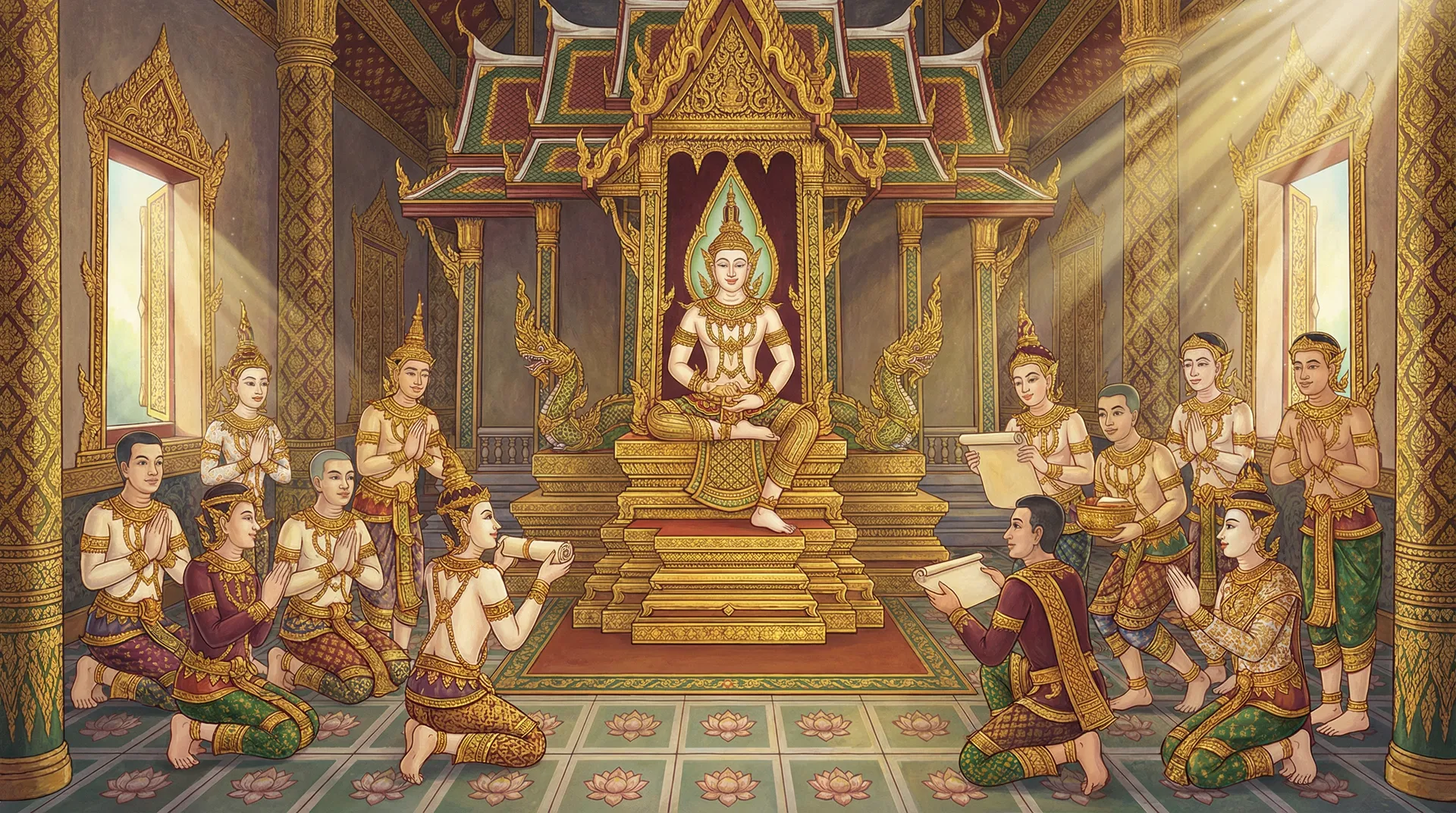 520Vīsatinipāta
Nemi Jataka
The Bodhisatta as King Nemi, The Righteous RulerIn the ancient city of Mithila, there reigned a king...
💡 True fulfillment comes from selfless service and compassion, not from personal comfort or heavenly pleasures. The law of karma is absolute, and our actions in this life determine our future destinies.
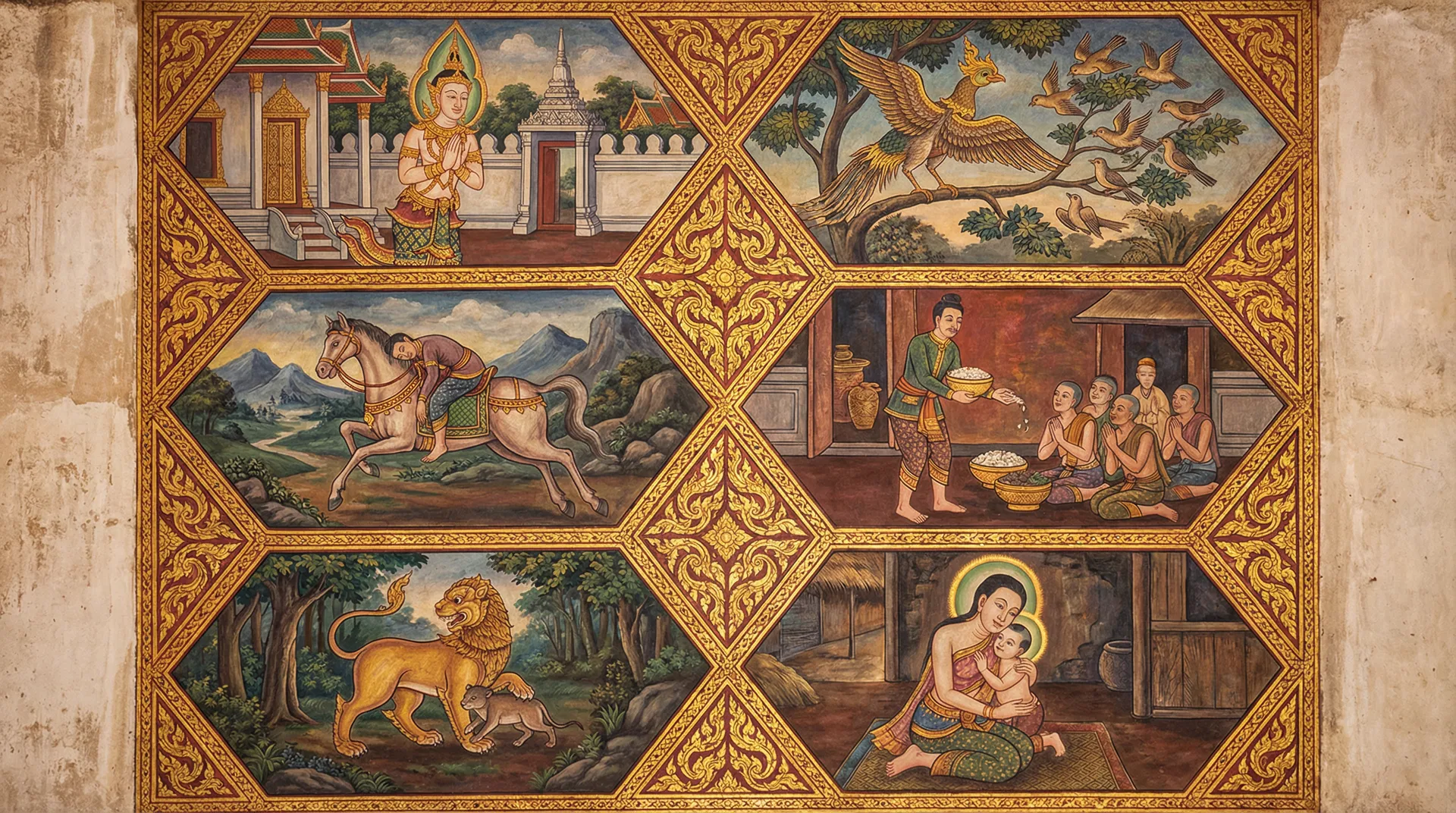 389Chakkanipāta
Mahasutasoma Jataka
Mahasutasoma JatakaIn a distant land, where ancient trees touched the heavens and rivers flowed like...
💡 True power lies in wisdom, compassion, and self-control, not in force or selfish indulgence. Understanding the nature of suffering and craving is the path to liberation.
284TikanipātaMahāpaduma Jātaka
Mahāpaduma JātakaIn the heart of a lush forest, far from the clamor of human settlements, lived a Bo...
💡 True beauty and value lie within the heart, not in external possessions or trophies. Greed and cruelty ultimately lead to sorrow and regret.
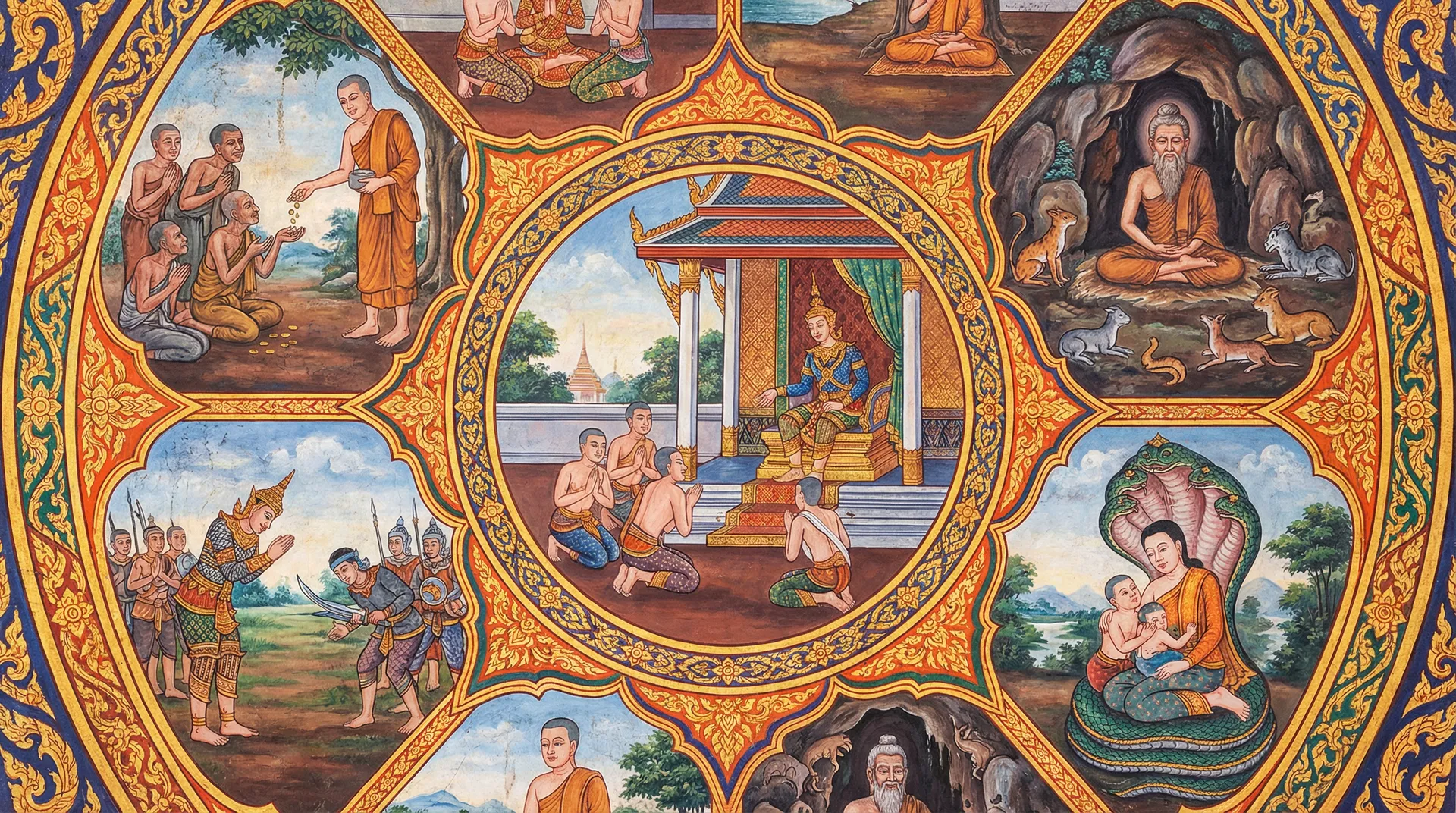 365Pañcakanipāta
Sādhina Jātaka
Sādhina JātakaIn the ancient land of Kasi, there was a prosperous city ruled by a wise and just king...
💡 True prosperity and the integrity of a kingdom depend on the unwavering commitment to righteousness and honesty in all dealings, especially in matters of wealth. Selfless dedication to truth and virtue can overcome corruption and restore purity.
— Multiplex Ad —