
Mahāpaduma Jātaka
Mahāpaduma Jātaka
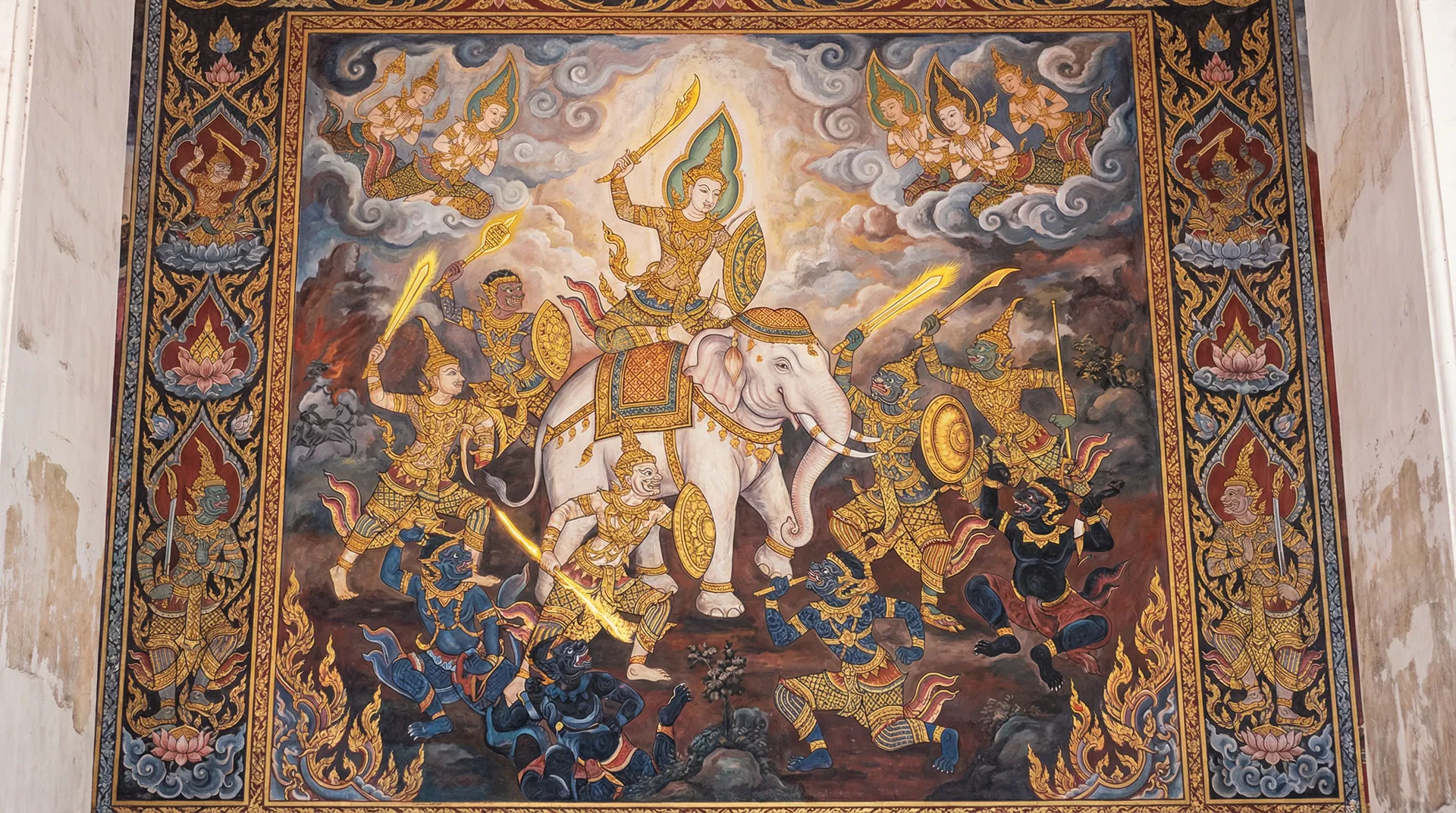
In the heart of a lush forest, far from the clamor of human settlements, lived a Bodhisattva in the form of a noble elephant named Mahāpaduma. He was a creature of immense strength and unparalleled beauty, with tusks of pure ivory that gleamed like moonlight. Mahāpaduma dwelled with his herd, leading them with wisdom and kindness, ensuring their safety and well-being. He was deeply devoted to his mother, an aging elephant whose sight had begun to fail.
One day, a cruel and envious hunter, renowned for his skill and his insatiable desire for rare trophies, ventured into the forest. He had heard tales of the magnificent Mahāpaduma and his extraordinary ivory tusks. The thought of possessing such a prize filled him with a dark excitement. He set out to track the noble elephant, his heart filled with malice.
The hunter, skilled in the art of deception, devised a cunning trap. He disguised himself as a fallen tree, camouflaging himself with leaves and branches, and waited patiently for Mahāpaduma to pass by. The herd, led by their vigilant leader, moved cautiously through the forest. Mahāpaduma, ever watchful, sensed an unusual stillness in the air, a subtle discord in the natural symphony of the woods.
As they approached the hunter's hiding place, Mahāpaduma's keen senses picked up a faint scent of human. He stopped abruptly, trumpeting a warning to his herd. But before they could react, the hunter sprang from his concealment, aiming his poisoned arrow directly at Mahāpaduma's flank. The arrow found its mark, inflicting a grievous wound. The poison, swift and potent, began to spread through the elephant's massive body.
Mahāpaduma, in immense pain, staggered, but his first thought was not of himself. He looked back at his herd, ensuring they were safe. Then, with the last of his strength, he turned towards his ailing mother, who stood watching in horror. He approached her, gently nuzzling her with his trunk, a silent farewell.
The hunter, exultant, rushed forward to claim his prize. But as he drew near, he saw the profound grief and dignity in the dying elephant's eyes. He also saw the devoted herd, surrounding their fallen leader, their sorrow palpable. The hunter, a man hardened by his cruel profession, felt an unexpected pang of remorse. He saw not just a trophy, but a noble creature whose life had been unjustly taken.
Mahāpaduma, his body wracked with pain, spoke his last words, his voice a low rumble. "Hunter," he said, "your arrow has taken my life, but it cannot extinguish the light of truth and compassion. Know this: my tusks, though magnificent, are but temporary adornments. True beauty lies within the heart. You sought worldly gain, but you have gained only sorrow and the weight of a life unjustly ended."
With these words, Mahāpaduma collapsed, his great body falling to the forest floor. His herd let out mournful trumpets, their cries echoing through the trees. The hunter, deeply affected by the elephant's words and the sorrow of the herd, felt the full weight of his actions. He realized that in his pursuit of fleeting glory, he had destroyed something truly precious and irreplaceable.
The hunter, his heart heavy with regret, left the forest, abandoning his prize. He could not bear to desecrate the body of the noble elephant. From that day forward, he renounced his cruel trade, dedicating his life to protecting the creatures of the forest, forever haunted by the memory of Mahāpaduma and the profound lesson he had imparted.
— In-Article Ad —
💡Moral of the Story
True beauty and value lie within the heart, not in external possessions or trophies. Greed and cruelty ultimately lead to sorrow and regret.
Perfection: Great Love (Maha-metta) and Sacrifice (Tyaga)
— Ad Space (728x90) —
More Jataka Tales You May Enjoy
 221Dukanipāta
Dhammapala Jataka
Dhammapala JatakaIn the ancient kingdom of Varanasi, nestled beside the sacred Ganges, there lived a...
💡 True love and genuine intentions will always be revealed, and ultimately triumph over deceit and superficiality. Compassion and justice, when guided by truth, lead to the greatest happiness.
 522Mahānipāta
Ghata Jataka
Ghata JatakaIn a time long past, when the Bodhisatta was born as a wise and exceptionally strong pot...
💡 True strength is not measured by outward displays of force or arrogance, but by inner fortitude, skill, integrity, and the quiet power of diligence and honest work.
 147Ekanipāta
Sutasoma Jataka
Sutasoma JatakaIn the ancient kingdom of Kampila, nestled amidst verdant plains and gurgling rivers,...
💡 True victory is achieved not by defeating an enemy through violence, but by transforming them through compassion, understanding, and the power of righteous living.
134EkanipātaSattubhatta Jataka
The Tale of the King Who Sought True Happiness In the ancient and prosperous city of Kasi, ruled a k...
💡 True and lasting happiness is an inner state, cultivated through self-understanding, mindfulness, detachment, and compassion, rather than being dependent on external circumstances or possessions.
132EkanipātaKuddala Jataka
The Tale of the Weaver's Son Long ago, in the bustling city of Savatthi, renowned for its vibrant ma...
💡 A truly prosperous kingdom is one where the well-being of its poorest citizens is a priority, and where systematic compassion is integrated into governance.
187DukanipātaKakoli Jataka
The Tale of the Talking BirdIn the vibrant land of Kashi, there once stood a magnificent monastery, ...
💡 Envy can lead to great wickedness, but true virtue, resilience, and wisdom will ultimately overcome betrayal.
— Multiplex Ad —