
Masa Jataka
Masa Jataka
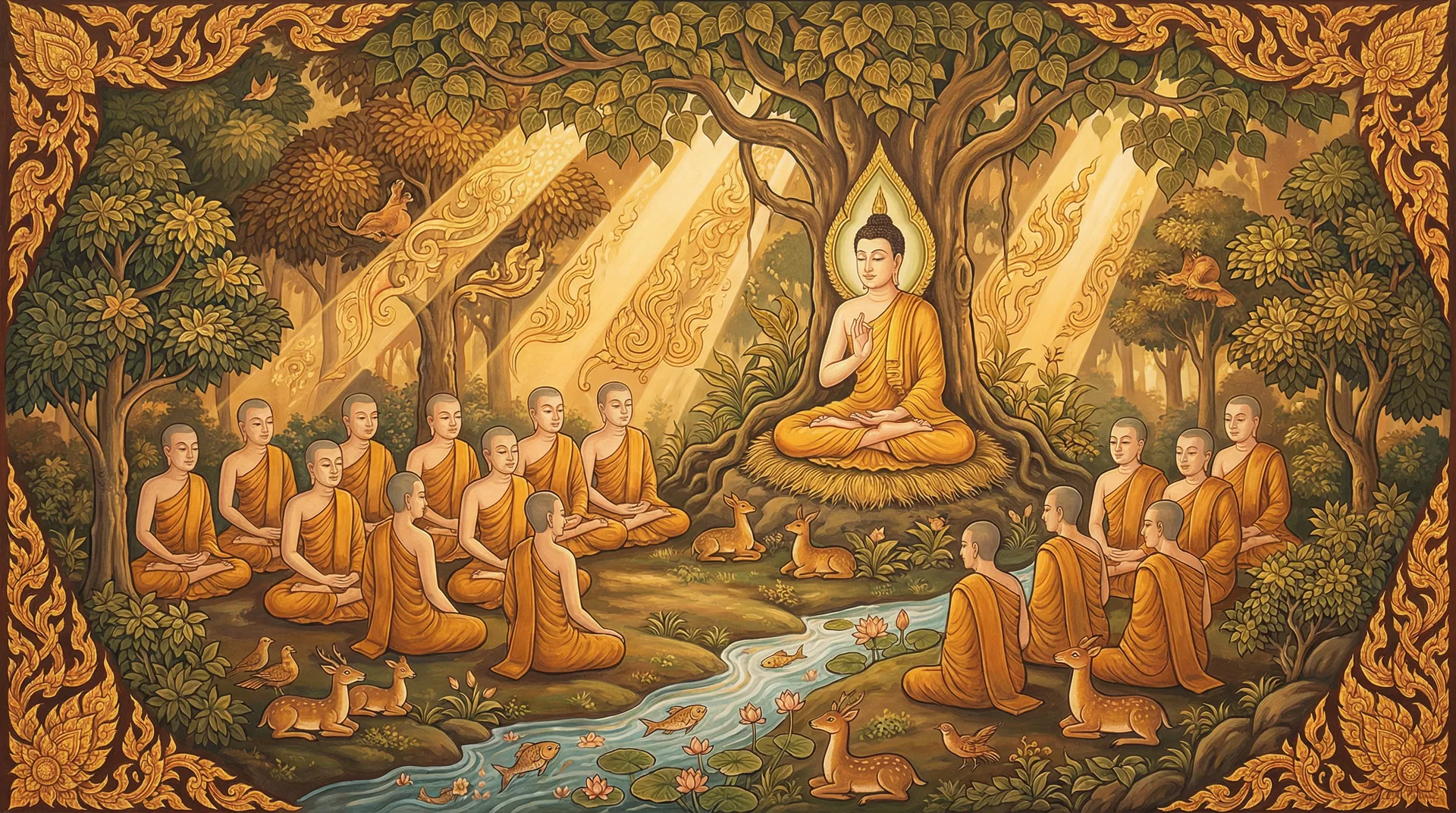
In a serene monastery nestled amidst rolling hills, lived a devout monk named Bodhisattva. He was known throughout the land for his profound wisdom, his unwavering compassion, and his simple, ascetic lifestyle. The monastery was a sanctuary of peace, where monks from all walks of life came to learn and to meditate. Bodhisattva, however, harbored a secret yearning – a desire to understand the depths of human attachment and the pain that it often brought.
One day, a wealthy merchant arrived at the monastery, seeking spiritual guidance. He was a man of the world, accustomed to luxury and possession, and he found the monks' detachment from material things both baffling and admirable. He spent several days observing them, listening to their teachings, and engaging in discussions. During his stay, he noticed Bodhisattva, the most respected monk, who seemed to possess an extraordinary inner peace.
Intrigued, the merchant approached Bodhisattva. 'Venerable sir,' he began, his voice respectful, 'I have observed many monks here, but none radiate such tranquility as you. I, though surrounded by wealth, am constantly plagued by worry and desire. What is the secret to your contentment?'
Bodhisattva smiled gently. 'My dear friend, true contentment is not found in possessing much, but in desiring little. It is a state of mind, cultivated through understanding and detachment.' The merchant, while appreciating the words, found them difficult to grasp. He was a man who believed that value was in tangible things, in possessions accumulated over a lifetime.
Bodhisattva, sensing the merchant’s struggle, decided to impart a deeper lesson. 'Tomorrow,' he said, 'I will show you something that will help you understand. Come to the meditation hall at dawn.' The merchant, eager for enlightenment, agreed.
The next morning, as the first rays of sun peeked over the hills, the merchant arrived at the meditation hall. Bodhisattva was already there, sitting serenely. In front of him lay a single, tiny seed. The merchant looked at it, puzzled. 'Venerable sir,' he asked, 'you asked me to come at dawn to see... a seed?'
Bodhisattva nodded. 'This,' he said, holding up the seed, 'is a mustard seed. It is small, seemingly insignificant. But within it lies the potential for a mighty tree, for sustenance, for shade, and for countless other fruits. Yet, this seed itself is not the tree. It is merely the beginning, the potential.'
He then continued, 'Consider this seed as your desires, your attachments, your possessions. They may seem small and manageable at first, like this seed. But if left unchecked, if nurtured solely by ego and craving, they can grow into something that overwhelms you. They can become the mighty tree that casts a shadow over your peace, that bears the bitter fruits of worry and dissatisfaction.'
The merchant listened intently, his eyes fixed on the tiny seed. Bodhisattva went on, 'Just as this seed needs the right conditions to grow into a tree, so too do our desires need to be understood and managed. If we cultivate them with wisdom, with detachment, they can lead to growth and fulfillment. But if we water them with greed and cling to them with possessiveness, they will become our tormentors.'
Bodhisattva then placed the seed on the floor. 'Now,' he said, 'imagine this seed is something you deeply desire. Perhaps it is wealth, or fame, or even the affection of another. If you were to hold onto it too tightly, to believe that your happiness depended entirely on it, what would happen?'
The merchant, picturing himself clutching the seed with all his might, imagined it being crushed, or slipping through his fingers. 'I would fear losing it,' he admitted. 'And if I lost it, I would be devastated.'
Bodhisattva’s eyes twinkled with understanding. 'Precisely. This is the nature of attachment. It binds us, it makes us fearful, and it steals our peace. The wisdom of detachment is not about not caring, but about understanding that true happiness comes from within, not from external objects or circumstances. It is about appreciating the seed for its potential, but not becoming enslaved by the idea of the tree.'
He then picked up the seed and offered it to the merchant. 'Take this seed. Plant it, water it, and watch it grow. But as it grows, remember the lesson. Appreciate its journey, enjoy its fruits, but never forget that your own inner peace is the most precious possession, and it requires no external seed to flourish.'
The merchant, deeply moved by the profound simplicity of the lesson, accepted the seed. He left the monastery with a new perspective. He understood that while possessions and desires are a part of life, it is our attachment to them that causes suffering. He began to practice mindfulness, to appreciate what he had without clinging to it, and to find contentment in the present moment. The tiny mustard seed, once planted, grew into a small plant, a constant reminder of the profound truth he had learned in the quiet sanctuary of the monastery.
— In-Article Ad —
💡Moral of the Story
Attachment to desires and possessions leads to suffering. True contentment comes from inner peace and detachment, not from external things.
Perfection: Renunciation (Nekkhamma)
— Ad Space (728x90) —
More Jataka Tales You May Enjoy
152DukanipātaSālaka Jātaka
Sālaka JātakaLong ago, in the bustling city of Benares, lived a wise and benevolent king. His kingdo...
💡 True wealth lies not in hoarding, but in sharing. Contentment and moderation lead to a harmonious and prosperous life.
 528Mahānipāta
Sāriputtajātaka
The Tale of the Steadfast Scholar In the bustling city of Varanasi, where merchants hawked their war...
💡 True wisdom is not merely intellectual knowledge but a profound inner transformation achieved through diligent practice, patience, and steadfast discipline. The journey of self-discovery is as important as the destination.
 5Ekanipāta
The Monkey King's Sacrifice
The Monkey King's SacrificeIn the dense, emerald heart of the Vindhya Mountains, where ancient trees...
💡 True leadership is defined by selfless sacrifice for the well-being of others.
223DukanipātaCullapada Jataka
Cullapada JatakaIn the bustling city of Mithila, a jewel of the eastern lands, ruled King Janaka, a ...
💡 Honesty and integrity, even regarding minor flaws or imperfections, build trust and are more valuable than a superficial claim of perfection. True worth is found in acknowledging reality.
122EkanipātaKusa Jataka
Kusa Jataka Long ago, in the land of Mithila, reigned a king named Okkaka, a ruler whose reign was m...
💡 Suffering and adversity, when faced with courage and perseverance, can forge inner strength and lead to true enlightenment and righteous leadership.
22EkanipātaThe Bodhisatta as a Skilled Physician
The Bodhisatta as a Skilled PhysicianIn the ancient city of Varanasi, renowned for its spiritual lea...
💡 True skill and compassion, combined with determination, can overcome formidable obstacles and bring about healing.
— Multiplex Ad —