
Sasa Jataka
The Tale of the Hare Who Gave Himself to the Gods
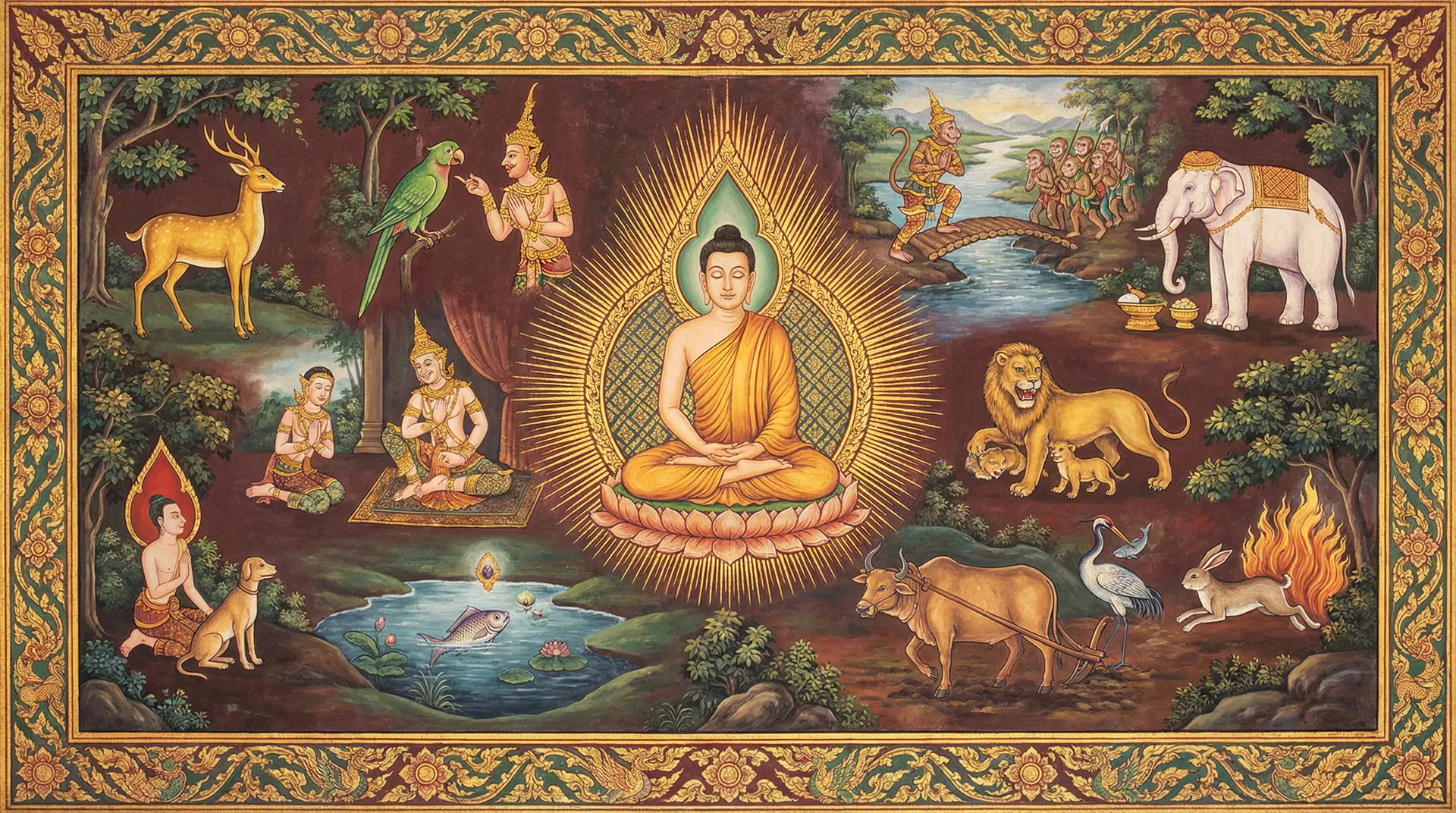
In a time long past, when the Bodhisattva was born as a hare, the world was a peaceful place. This hare lived in a forest near a village, known for his extraordinary intelligence and compassion. He was not just any hare; he was wise beyond his years, understanding the interconnectedness of all living beings.
One day, a great famine struck the land. Rivers dried up, the earth cracked, and food became scarce. The villagers, desperate for sustenance, searched everywhere but found nothing. Their suffering grew day by day.
The Bodhisattva hare, witnessing this immense suffering, felt a deep pang of sorrow. He saw the hunger in the eyes of the villagers, the despair in their hearts. He knew he had to do something, even though he was just a small animal.
One evening, as the moon shone brightly, the hare heard voices. Three gods, disguised as hermits, had come to the village seeking alms. They were hungry and weary, and the villagers, though having little, offered them what meager food they had: roots and wild fruits.
The Bodhisattva hare, watching from the edge of the forest, felt a profound realization. He possessed something that could truly help. He was pure, and his flesh was wholesome. If he offered himself as food, he could save not only the villagers but also these divine beings.
With a calm and determined heart, the hare approached the hermits. He bowed respectfully and said, "O venerable hermits, I have heard your plight and the suffering of the villagers. I possess a gift that can alleviate your hunger. Please, accept me as your meal."
The hermits, surprised by the hare's offer, looked at him with curiosity. "You are but a small creature," one of them said. "How can you help us?"
"I am pure and my flesh is nourishing," the hare replied. "I am willing to lay down my life for the sake of all beings. Please, gather some dry grass, build a fire, and cook me. My sacrifice will be a meal for you and a lesson for humanity."
The hermits were astonished by the hare's selfless resolve. They knew he was no ordinary animal. One of them, the god Sakka (Indra), revealed his true divine form. "Noble hare," Sakka declared, his voice resounding with divine power, "your compassion and selflessness are unparalleled. You offer your very life to save others. This act of supreme sacrifice will not be forgotten."
Sakka then instructed the other gods to gather dry grass. They built a fire, and as the hare leaped into the flames, he felt no pain, only a profound sense of peace and fulfillment. His body was cooked, and the gods, taking the flesh, presented it to the villagers, who were miraculously sustained by this divine offering.
But Sakka wanted the world to remember this extraordinary act of compassion. He took the ashes of the hare's burnt body and, with his divine power, cast them upon the face of the moon. To this day, if you look closely at the full moon, you can see the image of a hare, a permanent reminder of the Bodhisattva's ultimate sacrifice.
The image of the hare on the moon became a symbol of unconditional love, selflessness, and the profound interconnectedness of all life. It inspired generations to be more compassionate, to look beyond their own needs, and to recognize the power of sacrifice for the greater good.
The villagers, sustained by the divine meal and inspired by the hare's act, learned a valuable lesson. They understood that even the smallest among us can make the greatest difference through selfless love. The famine eventually ended, but the memory of the hare on the moon lived on, a beacon of hope and a testament to the Bodhisattva's boundless compassion.
— In-Article Ad —
💡Moral of the Story
Selfless sacrifice and compassion for all beings are the highest virtues.
Perfection: Generosity (Dana)
— Ad Space (728x90) —
More Jataka Tales You May Enjoy
 177Dukanipāta
Kuṅku Jātaka
Kuṅku JātakaIn the verdant plains of Kosala, where emerald rice paddies stretched as far as the eye ...
💡 True strength and peace originate from within. External objects, however comforting, cannot replace inner resilience, wisdom, and the courage to face adversity with integrity. Letting go of attachments, even cherished ones, can be an act of liberation.
 441Dasakanipāta
Mugapakkha Jataka
Mugapakkha JatakaIn the ancient land of Mithila, ruled a king named Janaka, a monarch known for his ...
💡 True wealth lies not in personal gain, but in the collective well-being fostered by righteousness and compassion.
174DukanipātaKuṅkuṇavaṅga Jātaka
Kuṅkuṇavaṅga JātakaIn the verdant land of Kasi, a kingdom renowned for its vibrant silks and skilled...
💡 True mastery and excellence are achieved through unwavering patience, dedication, and meticulous attention to detail. Haste and impatience lead to flaws and mediocrity.
26EkanipātaThe Bodhisatta as a Wise Monkey
The Bodhisatta as a Wise MonkeyIn the vibrant heart of a lush jungle, teeming with life and echoing ...
💡 True courage and leadership lie in intelligence and outwitting adversaries, ensuring the safety of others.
187DukanipātaKakoli Jataka
The Tale of the Talking BirdIn the vibrant land of Kashi, there once stood a magnificent monastery, ...
💡 Envy can lead to great wickedness, but true virtue, resilience, and wisdom will ultimately overcome betrayal.
4EkanipātaThe Tale of the Excellent Archer
The Tale of the Excellent Archer In the ancient kingdom of Mithila, a land blessed with fertile pla...
💡 Accusing others without reason and having impure intentions inevitably lead to one's own suffering. Forgiveness and genuinely good deeds are the path to peace and happiness.
— Multiplex Ad —