
Samkhapala Jataka
Samkhapala Jataka
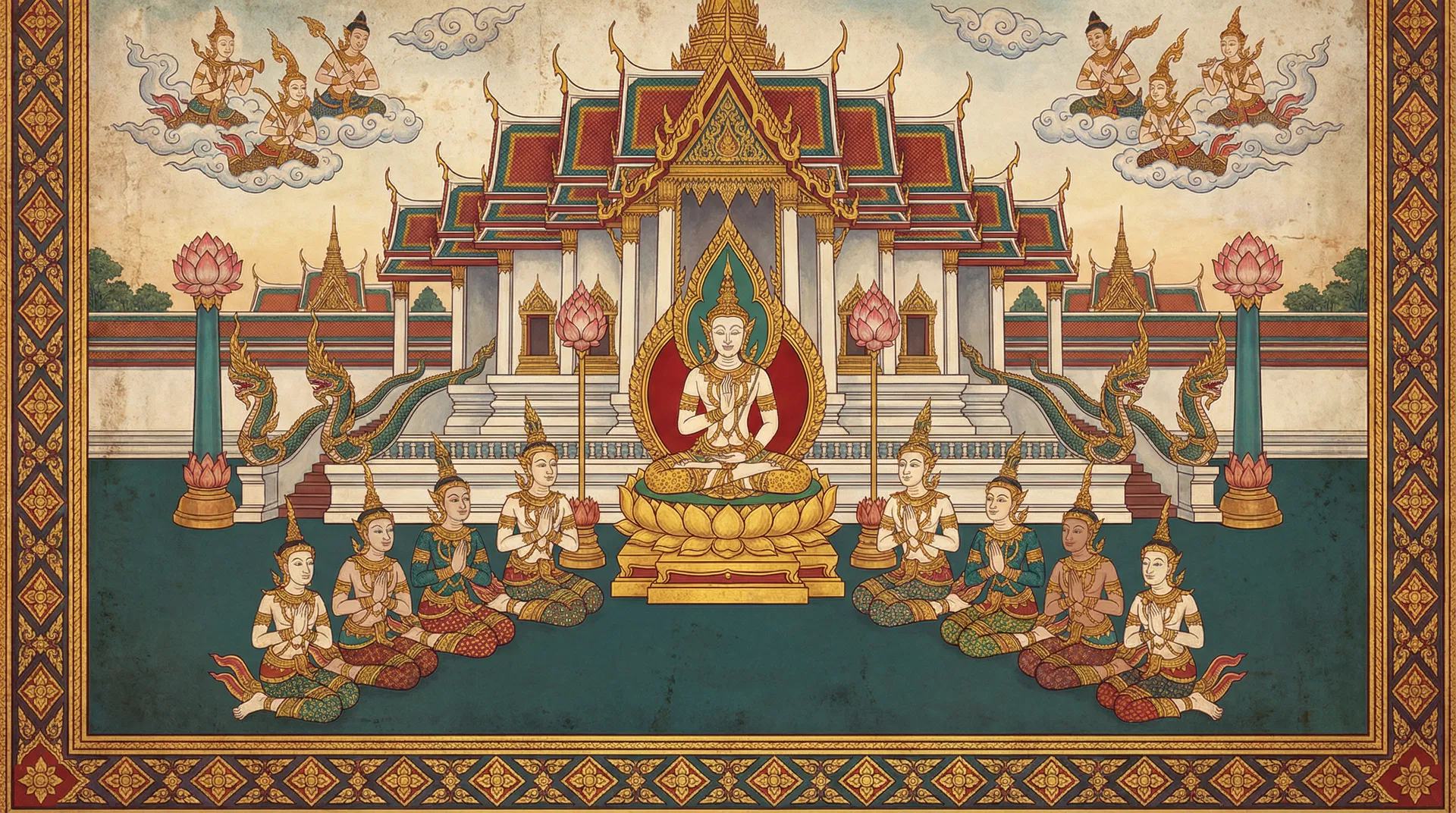
In a time long past, when the mighty Himalayas stood as silent sentinels of the earth, there dwelled a magnificent serpent king named Samkhapala. This was no ordinary snake; his scales shimmered with the brilliance of a thousand jewels, and his eyes held the wisdom of ages. He was a being of immense power and profound virtue, a guardian of the hidden treasures of the earth and a protector of the balance of nature.
Samkhapala lived in a secret, crystalline cave deep within the mountains, a place of unparalleled beauty and tranquility. The cave was filled with luminous gems and rare herbs, and a gentle stream of pure water flowed through it, sustaining a vibrant ecosystem of rare flowers and plants. He was revered by all the creatures of the mountains, who recognized his benevolent rule and his commitment to preserving the sanctity of their domain.
Yet, even in this secluded paradise, the shadow of human ambition could cast its gloom. A king named Mahasagara, ruler of a vast kingdom at the foot of the mountains, was a man consumed by a relentless desire for power and wealth. He heard whispers of the legendary serpent king and the untold riches hidden within his mountain domain. Driven by avarice, King Mahasagara conceived a plan to capture Samkhapala and seize his treasures.
The king assembled a large army, equipped with formidable weapons and elaborate traps. He led his forces into the mountains, their passage disturbing the peace of the pristine wilderness. The animals, sensing the impending danger, fled in terror, their natural harmony shattered by the intrusion.
Samkhapala, with his heightened awareness, felt the tremors of the approaching army. He knew that the king's intentions were malicious, driven by greed rather than respect. He could have unleashed his immense power, incinerating the invaders with a single breath or crushing them with his mighty coils. However, Samkhapala was a Bodhisatta, a being committed to the path of enlightenment. He understood that true strength lay not in retaliation, but in wisdom and compassion.
As the army reached the entrance of Samkhapala's cave, the serpent king emerged. He did not strike, nor did he roar in anger. Instead, he spoke in a voice that resonated with the deep wisdom of the earth itself. 'O King Mahasagara,' he said, his voice calm yet powerful, 'why do you disturb the peace of this sacred mountain? What is it you seek that drives you to such reckless ambition?'
King Mahasagara, momentarily stunned by the serpent king's articulate speech and imposing presence, quickly regained his composure. 'Great Serpent,' he declared, his voice laced with arrogance, 'I have heard tales of the immeasurable wealth hidden within your domain. I have come to claim what is rightfully mine, as the ruler of this land.'
Samkhapala listened patiently to the king's greedy pronouncements. He understood that the king's heart was clouded by delusion. He knew that the true treasures of the mountains were not gold and jewels, but the purity of nature, the harmony of life, and the wisdom that arises from respecting the balance of the world.
Instead of fighting, Samkhapala offered the king a different kind of treasure. 'King,' he said, 'you seek wealth, but you fail to see the true riches that surround you. These mountains hold wonders far more valuable than any gold. They hold the wisdom of ages, the serenity of existence, and the profound understanding of the interconnectedness of all life. If you truly wish for wealth, I shall offer you a treasure that will enrich you beyond measure.'
The king, intrigued by the serpent's words, lowered his weapons. 'What treasure do you offer, O wise one?' he asked.
Samkhapala then began to speak, not of gems and gold, but of the Dhamma. He expounded on the principles of virtue, generosity, and compassion. He spoke of the impermanence of material possessions and the enduring peace that comes from cultivating inner riches. He explained how true wealth lies in a contented mind, a benevolent heart, and a life lived in harmony with the natural and spiritual laws of the universe.
As Samkhapala spoke, his words, imbued with his inherent virtue and wisdom, resonated deeply within King Mahasagara's heart. The king, who had always been driven by external pursuits, began to feel a stirring of inner peace. The arrogance and greed that had consumed him started to dissipate, replaced by a sense of humility and awe.
The king and his soldiers listened for hours, mesmerized by Samkhapala's teachings. They realized the folly of their mission and the superficiality of their desires. The true treasure was not in the glittering gems of the cave, but in the profound wisdom being shared.
When Samkhapala finished, King Mahasagara, humbled and transformed, bowed before the serpent king. 'You have given me a treasure far greater than any gold,' he said, his voice filled with sincerity. 'You have opened my eyes to the true meaning of wealth and happiness. I shall no longer pursue material riches, but shall strive to cultivate the virtues you have taught me.'
King Mahasagara and his army left the mountains, not with stolen jewels, but with enlightened hearts. The king returned to his kingdom and ruled with justice and compassion, dedicating his life to the principles of Dhamma. The story of Samkhapala, the serpent king who offered wisdom instead of wealth, became a legend, a testament to the fact that the greatest treasures are not found in material possessions, but in the cultivation of virtue, wisdom, and inner peace.
— In-Article Ad —
💡Moral of the Story
True wealth is not measured by material possessions, but by inner virtues such as wisdom, compassion, contentment, and a life lived in harmony with the natural and spiritual order.
Perfection: Wisdom (Panna), Truthfulness (Sacca), Resolution (Adhitthana), Loving-kindness (Metta)
— Ad Space (728x90) —
More Jataka Tales You May Enjoy
 237Dukanipāta
Sasa Jataka
Sasa JatakaLong ago, in a time when the forest was a realm of wonder and the animals lived in harmon...
💡 True generosity lies in offering what one has, even one's own life, without expecting anything in return. Acts of selfless compassion can inspire countless beings.
 427Navakanipāta
Sakuna Jataka
The Tale of the Virtuous Bird In the heart of a dense forest, where ancient trees reached for the sk...
💡 Compassion, selflessness, and the accumulation of spiritual merit have the power to overcome great adversity and benefit all beings. In times of crisis, unity and shared good deeds are far more powerful than anger and division.
171DukanipātaMahīsosaka Jātaka
Mahīsosaka JātakaIn the ancient kingdom of Mithila, nestled amongst rolling hills and verdant forest...
💡 True loyalty and affection cannot be bought or coerced. The worth of a creature, or a person, is not determined by external forces but by their inner spirit and their bonds with those who truly care for them.
 258Tikanipāta
Sutasoma Jātaka
Sutasoma JātakaIn the ancient city of Indapattha, a kingdom blessed with fertile lands and prosperou...
💡 True immortality is found not in the fear of death, but in the legacy of virtuous deeds and selfless sacrifice.
169DukanipātaDhammapāla Jātaka
Dhammapāla JātakaIn a land of rolling hills and verdant valleys, where the air was often perfumed wi...
💡 Integrity and truth, when faced with malice and deception, should be met with patience and steadfastness rather than retaliation. True virtue will eventually be recognized.
110EkanipātaMora Jataka
The Tale of the King, the Queen, and the Golden Peacock In the prosperous kingdom of Varanasi, nestl...
💡 True beauty lies not in outward appearance but in inner virtues like wisdom, compassion, and kindness. Superficial fascination can blind us to the enduring value of character.
— Multiplex Ad —