
The Steadfast Brahmin
The Steadfast Brahmin
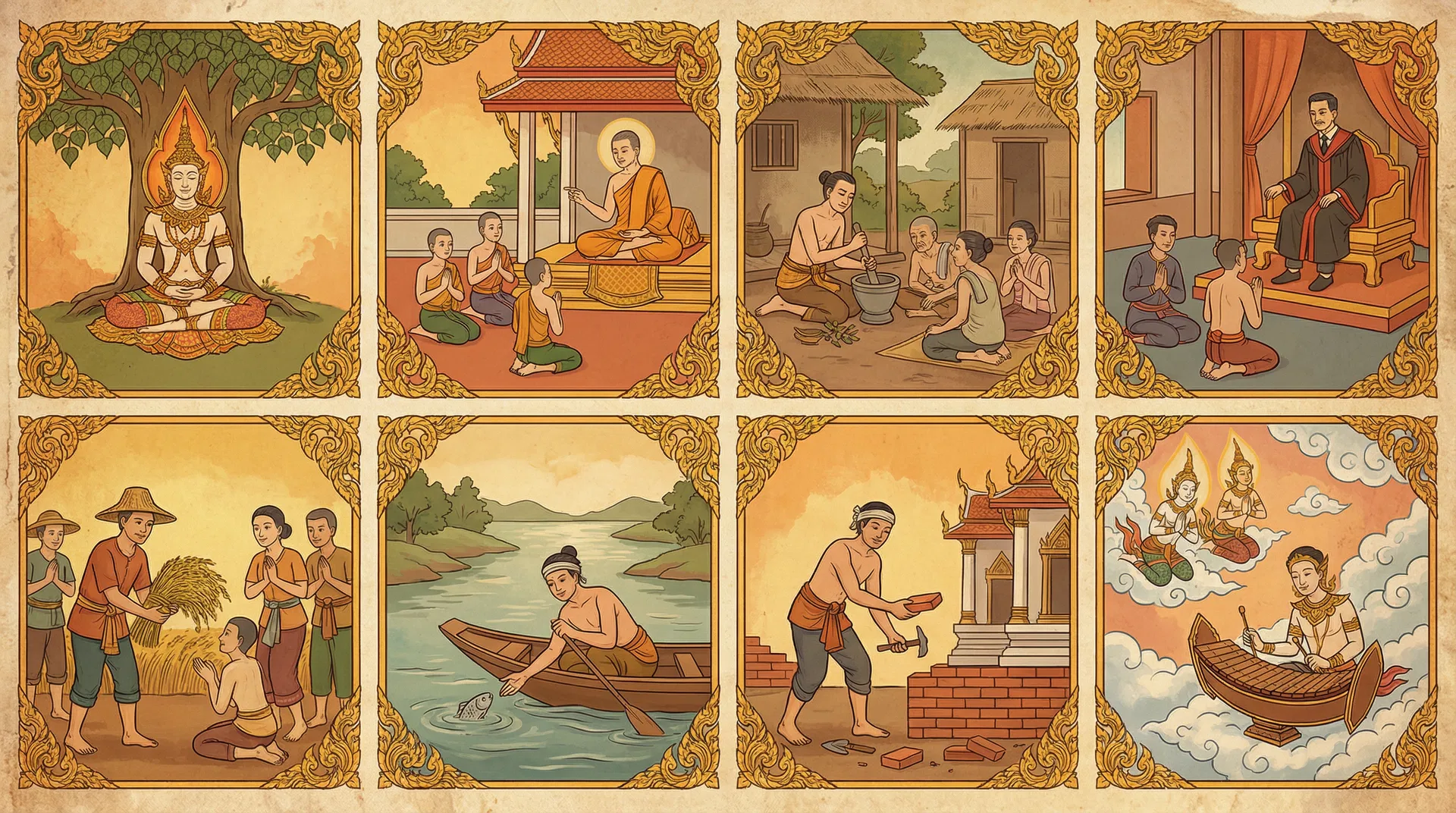
In the ancient city of Varanasi, a beacon of spiritual learning, lived a devout Brahmin named Gautama. He was a man of profound knowledge, his life dedicated to the pursuit of truth and the practice of righteous conduct. Despite his scholarly achievements, Gautama lived a life of extreme simplicity, his needs minimal, his mind focused on the liberation of all beings. The atmosphere of Varanasi, usually filled with the chanting of Vedic hymns and the scent of incense, was particularly serene around Gautama's humble dwelling.
One day, a terrible calamity befell the city. A fierce storm, unlike any seen before, raged for days, unleashing floods that devastated the land and swept away homes and livelihoods. The people of Varanasi, accustomed to the placid flow of the Ganges, were plunged into chaos and despair. The sacred city, usually a place of spiritual solace, was now a scene of destruction and suffering. The air, once filled with sacred chants, now echoed with the cries of the displaced and the desperate.
Gautama, witnessing the widespread destruction, felt a deep compassion for his fellow beings. He saw the fear in their eyes, heard their pleas for help, and knew that his duty was to offer solace and aid. However, he himself possessed nothing but his learning and his unwavering faith. The atmosphere in the city was one of utter helplessness, and Gautama, despite his spiritual strength, felt the weight of the collective suffering.
He approached the King of Varanasi, a ruler known for his piety and his commitment to his people. "Your Majesty," Gautama said, his voice calm and steady, "our city is in ruins. Many have lost their homes and their means of sustenance. We must come together to rebuild and to offer comfort to those in need." The King, his face etched with worry, replied, "Brahmin, I have opened the royal treasury, but the needs are overwhelming. What more can be done?" The atmosphere in the royal court was one of grim resignation, the enormity of the task seeming insurmountable.
Gautama, with a serene smile, said, "Your Majesty, true strength lies not in material wealth alone, but in the unwavering commitment to righteousness and the steadfast practice of virtue. I have nothing to offer in terms of material goods, but I can offer my unwavering resolve and my commitment to guide our people." He then proposed that he would personally oversee the rebuilding efforts, ensuring that every individual, no matter how humble, was cared for. The King, inspired by Gautama's selfless dedication, readily agreed. The atmosphere began to shift, a sense of organized effort replacing the widespread panic.
Gautama began his tireless work. He organized the displaced into temporary shelters, personally tending to the sick and the injured, and overseeing the distribution of the limited provisions available. He worked from dawn till dusk, his own needs secondary to the well-being of others. He would often forgo his own meager meals to ensure that the most vulnerable were fed. The atmosphere of the reconstruction sites was one of intense, focused effort, fueled by Gautama's unwavering example. He would often comfort the disheartened, saying, "Even in the darkest of times, our spirit and our commitment to righteousness must remain steadfast. Together, we shall rebuild."
His unwavering dedication and purity of purpose inspired everyone around him. The King, witnessing Gautama's selfless efforts, felt a profound sense of shame for his own anxieties. He began to actively participate in the rebuilding, his royal status set aside in favor of shared labor. The people, motivated by Gautama's example, worked with renewed vigor, their despair replaced by a sense of communal purpose. The atmosphere of Varanasi, once filled with the sounds of destruction, gradually transformed into one of industrious rebuilding and shared hope.
As the city slowly began to regain its former glory, the King, deeply impressed by Gautama's steadfastness and his ability to inspire such unity, offered him immense wealth and position. Gautama, however, politely declined. "Your Majesty," he said, "my reward is the well-being of the people and the restoration of righteousness. I seek no material gain." The King, humbled by his virtue, recognized the true meaning of steadfastness. The moral of this tale is that unwavering steadfastness in the face of adversity, coupled with a pure heart and a commitment to righteousness, can inspire others and lead to the rebuilding of not just physical structures, but also of hope and community. The perfection practiced was Steadfastness, an unyielding commitment to truth and duty.
— In-Article Ad —
💡Moral of the Story
Unwavering steadfastness and a pure heart can inspire others and lead to rebuilding.
Perfection: Steadfastness
— Ad Space (728x90) —
More Jataka Tales You May Enjoy
125EkanipātaMugapakkha Jataka
Mugapakkha Jataka In the ancient city of Uttarapancala, there lived a wise and just king named Dighi...
💡 True atonement and spiritual growth can be achieved through sincere repentance, mindful silence, and the cultivation of inner peace, leading to the rectification of past mistakes and the well-being of all.
114EkanipātaCūḷaka-Seṭṭhi Jātaka
Cūḷaka-Seṭṭhi Jātaka In the ancient city of Mithila, a bustling hub of trade and commerce, lived a w...
💡 True wealth is not measured by possessions, but by the generosity of spirit and the goodwill cultivated through acts of kindness. Giving with a pure heart brings greater abundance.
 419Aṭṭhakanipāta
Sutasoma Jataka
The Tale of the Compassionate PrinceIn the ancient city of Indrapura, there was a wise and benevolen...
💡 Selfless sacrifice and profound compassion can transform even the most wicked beings and bring peace.
149EkanipātaTemiya Jataka
Temiya JatakaIn the opulent kingdom of Sankhapura, a kingdom renowned for its splendor and its flour...
💡 True freedom and peace are found not in worldly possessions or power, but in detachment from impermanence and the realization of the true, eternal nature of the self.
5EkanipātaThe Monkey King's Sacrifice
The Monkey King's SacrificeIn the dense, emerald heart of the Vindhya Mountains, where ancient trees...
💡 True leadership is defined by selfless sacrifice for the well-being of others.
33EkanipātaThe Bodhisatta as a Brave Lion
The Bodhisatta as a Brave LionIn the heart of a vast and ancient forest, where towering trees formed...
💡 True courage is demonstrated by the willingness to make the ultimate sacrifice for the well-being of others.
— Multiplex Ad —