
The King's Generous Decree
The King's Generous Decree
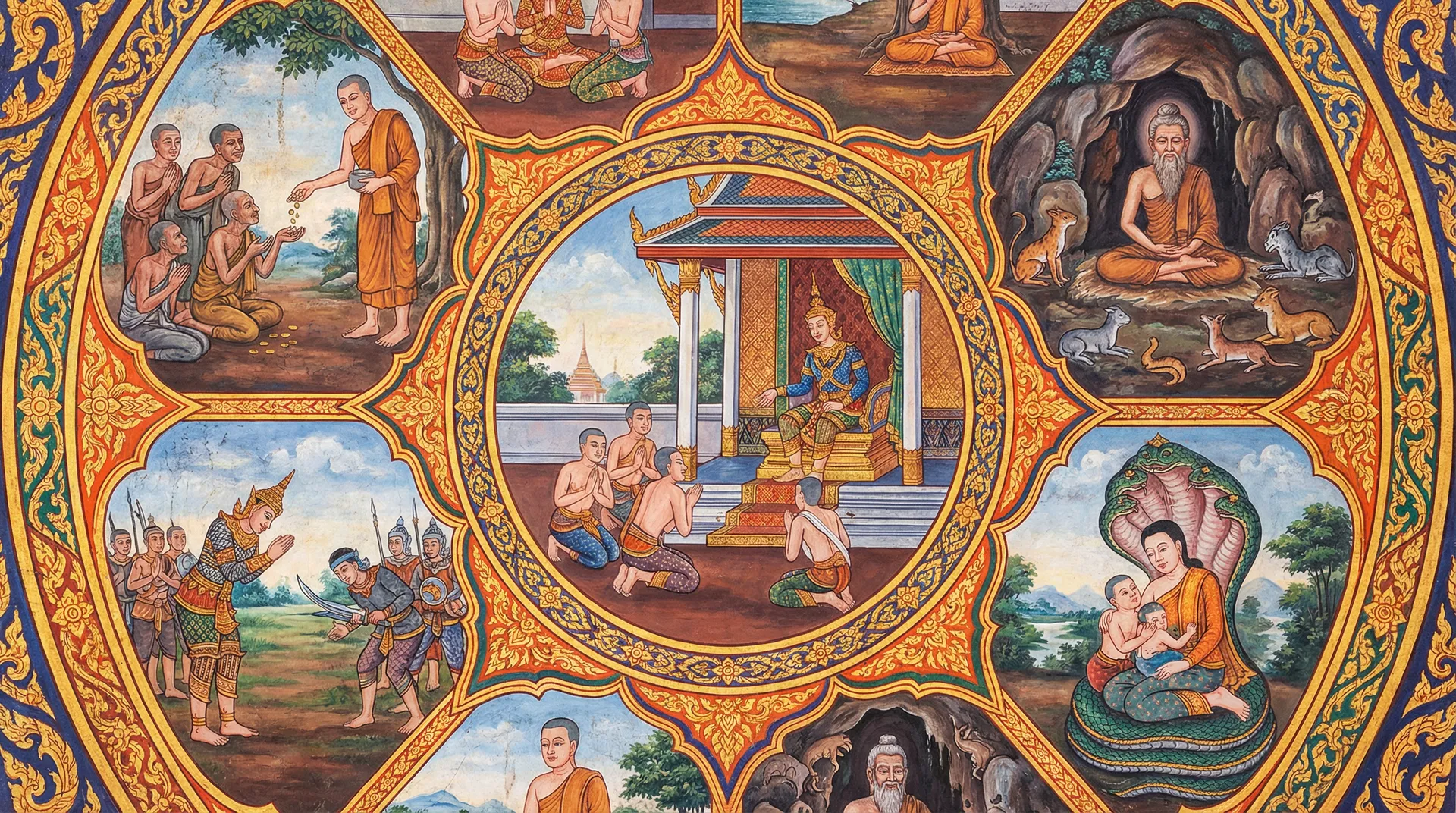
In the prosperous kingdom of Mithila, ruled a wise and benevolent king named Janaka. His reign was marked by justice, prosperity, and a deep concern for the welfare of his subjects. His palace, adorned with exquisite art and surrounded by lush gardens, was a symbol of his kingdom's opulence, yet the King himself lived a life of simplicity, his heart focused on the well-being of his people. The atmosphere of Mithila was one of contented peace, the sounds of happy citizens and thriving commerce filling the air.
One year, however, a severe famine struck the land. The rains failed, the fields yielded no harvest, and the granaries began to empty. The people of Mithila, accustomed to abundance, faced the grim reality of starvation. The joyous atmosphere of the kingdom turned somber, replaced by the gnawing fear of hunger. The King, deeply distressed by the suffering of his subjects, summoned his ministers and advisors to the royal court. The usually vibrant court was filled with a palpable sense of anxiety.
"My loyal ministers," King Janaka declared, his voice filled with concern, "our kingdom is facing a grave crisis. The famine is severe, and our people are starving. We must find a way to alleviate their suffering." A senior minister, his brow furrowed with worry, replied, "Your Majesty, our royal granaries are dwindling. We have distributed all that we can spare. The situation is dire." Another advisor added, "Perhaps we should impose stricter rationing, Your Majesty, to conserve what little we have left." The atmosphere in the court was heavy with the weight of the problem, the usual flow of ideas stifled by the scarcity.
King Janaka, however, was not one to accept defeat. He remembered the ancient scriptures that spoke of the power of selfless giving and the blessings that accrue from true generosity. He looked at his ministers, his gaze steady and resolute. "I have an idea," he announced. "We shall not ration. Instead, we shall proclaim a decree throughout the kingdom: all those who have abundance, whether it be grain, food, or any other sustenance, shall share it with those who have less. And for every act of generosity, the kingdom shall offer its gratitude and a token of appreciation." The ministers exchanged hesitant glances, the concept of such a widespread, open-handed sharing unusual in times of scarcity.
The King then ordered the royal heralds to ride to every corner of Mithila and proclaim his decree. The proclamation resonated through the villages and towns, a message of hope and shared responsibility. "Hear ye, hear ye!" the heralds proclaimed. "By the decree of His Majesty, King Janaka, all citizens of Mithila are urged to share their abundance. Let no one suffer from want while another has plenty. For every act of kindness, the King himself shall express his deepest gratitude." The atmosphere in the kingdom began to shift, a sense of shared purpose slowly replacing the pervasive fear.
Initially, there was some hesitation. Some wealthy landowners, accustomed to hoarding their riches, were reluctant to part with their stores. However, as the King himself began to lead by example, distributing vast quantities of grain from the royal stores, and personally visiting families in need, their hearts began to soften. He would spend hours in the humble homes of his subjects, sharing their meager meals and offering words of encouragement. The atmosphere in the villages, once shadowed by despair, began to fill with a quiet, communal spirit of sharing.
The King's generosity was infectious. Wealthy merchants opened their stores, farmers shared their remaining harvests, and even the poorest families, who had little, offered what they could to their neighbors. The act of giving, once a hesitant act of obligation, became a joyous expression of community and compassion. The atmosphere throughout Mithila transformed from one of desperate survival to one of vibrant communal effort, a testament to the King's inspiring leadership.
As the famine continued, the kingdom, through this collective act of generosity, managed to sustain itself. When the rains finally returned and the fields began to yield their bounty once more, the people of Mithila were not only relieved but also profoundly transformed. They had learned the true meaning of compassion and the immense strength that lies in unity. King Janaka, seeing his kingdom thrive again, was filled with immense joy. He continued to rule with wisdom and benevolence, always remembering the lessons learned during the famine. The moral of this tale is that true leadership inspires generosity, and collective compassion can overcome even the most dire of hardships, fostering a stronger and more resilient community. The perfection practiced was Generosity, a selfless and abundant giving for the betterment of all.
— In-Article Ad —
💡Moral of the Story
True leadership inspires generosity, and collective compassion can overcome dire hardships.
Perfection: Generosity
— Ad Space (728x90) —
More Jataka Tales You May Enjoy
15EkanipātaThe Bodhisatta as a Scholar
The Bodhisatta as a ScholarIn the hallowed halls of an ancient monastery, nestled amidst serene, rol...
💡 True wisdom is demonstrated through the compassionate application of knowledge for the well-being of others.
 512Vīsatinipāta
Avasaka Jataka
The Bodhisattva's Unwavering ResolveIn a kingdom renowned for its prosperity and the wisdom of its r...
💡 Upholding principles of righteousness and integrity, even in the face of challenges and skepticism, leads to true and lasting success. Ingenuity within ethical boundaries can achieve greater results than compromise.
 367Pañcakanipāta
SAMUDDAPALA JATAKA
SAMUDDAPALA JATAKAIn the ancient city of Varanasi, where the Ganges flowed like a silver ribbon, liv...
💡 True leadership lies in selfless sacrifice for the well-being of the people. Compassion and virtue have the power to transform even the most avaricious hearts and bring about lasting prosperity.
 297Tikanipāta
Muni Jataka
The Muni Jataka: The Ascetic of the Forest In the verdant forests of Kashi, where ancient trees whis...
💡 True strength lies not in the power to inflict harm, but in the wisdom to overcome one's own negative emotions and to respond to violence with compassion and forgiveness. Wisdom is the greatest treasure, for it leads to inner peace and liberation from suffering.
 317Catukkanipāta
Sutasoma Jataka
Sutasoma JatakaIn the ancient kingdom of Gandhara, nestled amidst rolling hills and verdant valleys,...
💡 True liberation from suffering comes through selfless sacrifice and detachment from worldly attachments, particularly the craving for existence.
304CatukkanipātaMahasattva Jataka
Mahasattva JatakaIn the heart of the Himalayas, where snow-capped peaks touched the heavens and anci...
💡 True compassion involves selfless sacrifice for the well-being of others, even at the cost of one's own life. The greatest strength lies in the willingness to give.
— Multiplex Ad —